 Listicle
7 Signs Your Pool Technician Is Skipping Steps
Last Updated: November 8, 2026
Quick Summary
Signs your pool technician is skipping steps include cloudy or green water that keeps returning, debris left in corners and steps, a full skimmer basket, strange pump sounds, no water readings shared, missed visits, and no documentation. These signs usually mean water chemistry, brushing, vacuuming, or equipment checks were rushed or skipped.
- Check the skimmer basket the evening after a visit; a full basket means nobody emptied it.
- Every visit should include documented readings for chlorine, pH, alkalinity, and stabilizer at minimum.
- The filter pressure gauge should be read at every visit, with backwashing triggered by a pressure rise.
- Take dated photos of the pool surface, skimmer basket, and filter gauge after each scheduled visit.
- One missed visit with notice is normal; three in a month means the route is overloaded.
Table of Contents
- Why Skipped Steps Show Up in the Water First
- 7 Signs Your Pool Technician Is Skipping Steps
- The Pool Service Checklist a Real Visit Should Follow
- Pool Technician Water Testing: What Every Visit Should Show
- What to Do If Pool Service Misses a Visit
- Questions to Ask a Pool Service Company Before You Sign
- How to Verify the Work Without Relying on Appearance
- Request a Quote and Get a Documented Maintenance Plan
- Frequently Asked Questions
Why Skipped Steps Show Up in the Water First
Water is honest. It records every shortcut a pool technician takes, usually within a week or two. You do not need to watch every visit to know whether the work happened. The pool tells you.
A skipped step is rarely dramatic. Nobody forgets to shock a pool and leaves a smoking crater. They skip brushing the walls, rush the water test, or backwash "next time." The damage compounds quietly. According to the CDC's guidance on healthy swimming and pool water quality, poorly maintained water chemistry is a leading factor in recreational water illness outbreaks, which is why consistent testing and sanitizing matter more than occasional deep cleans.
By the time water turns green, you are usually not seeing one missed visit. You are seeing a pattern. Below, we walk through the seven signs that pattern leaves behind, plus a checklist to verify the work yourself.
7 Signs Your Pool Technician Is Skipping Steps
Several warning signs can separate a thorough maintenance visit from a rushed one. Watch for these, in roughly the order they tend to appear.
| Sign | What You Notice | What It Usually Means |
|---|---|---|
| Cloudy or green water | Recurring haze or algae blooms | Rushed water chemistry or skipped sanitizing |
| Debris in corners and steps | Leaves and grit in dead zones | No brushing or vacuuming |
| Full skimmer basket | Clogged basket, weak surface pull | Basket not emptied |
| Strange pump sounds | Whining, grinding, gurgling | Skipped filter and pump basket checks |
| No water readings | No numbers shared after visits | Water test skipped or faked |
| Missed visits | No-shows with no notice | Scheduling and accountability gaps |
| No documentation | No photos, no notes, no report | Work cannot be verified |
Cloudy or Green Water That Keeps Coming Back
Algae that returns within days of a "full service" is the loudest sign of skipped steps. Green water means chlorine dropped below the level needed to keep algae in check, and cloudy water often points to a filter that is not running long enough or a chemistry balance that was never corrected. If your pool service clears the water and it fogs up again by midweek, ask for the actual water test results from each visit.
Debris in the Corners, Steps, and Skimmer Basket
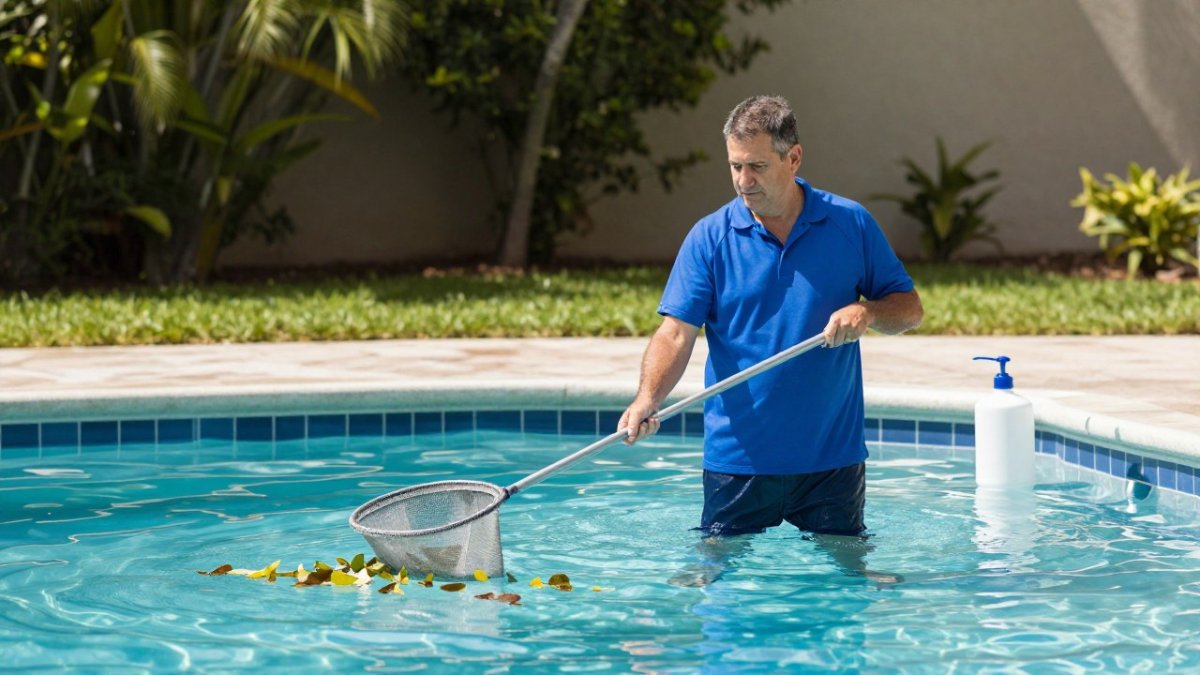
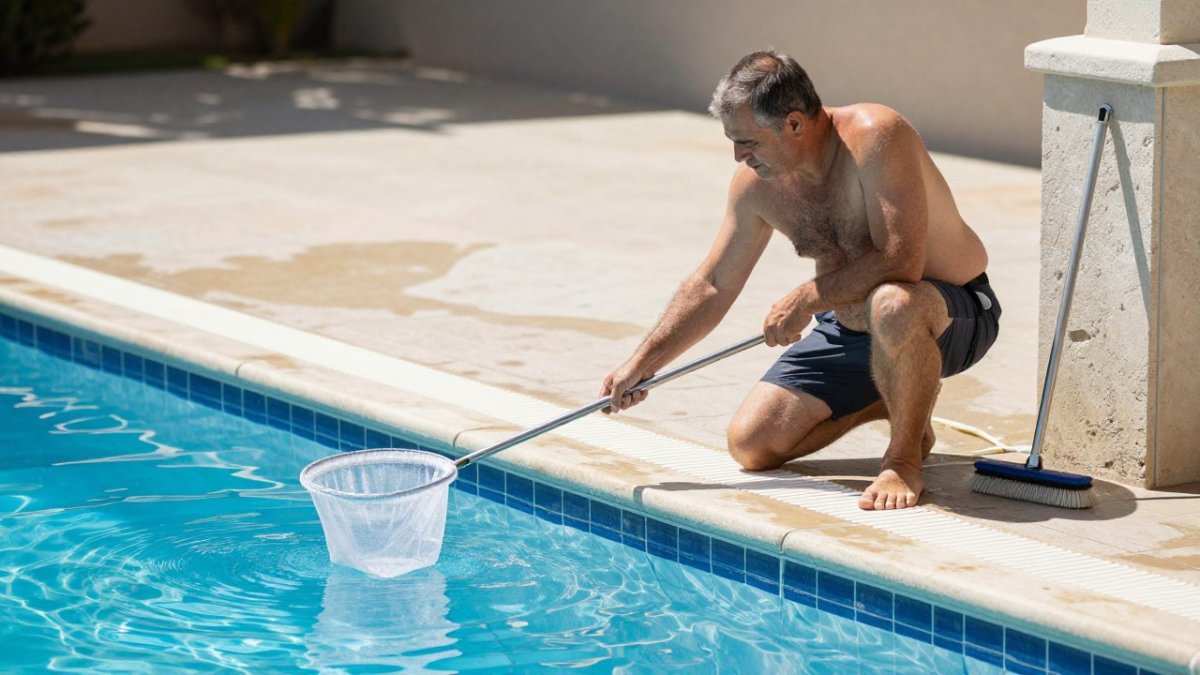
Leaves collect in corners, on steps, and along the waterline because those spots need hands-on work: skimming, brushing, and vacuuming. A technician who only nets the surface leaves the rest behind. Check your skimmer basket the evening after a visit. A full basket means nobody emptied it, and a clogged basket cuts surface suction for the whole week.
Filters and Pumps That Sound Wrong
Grinding, whining, or gurgling from the equipment pad is a symptom, not a personality quirk. Those noises often trace back to a clogged filter, a full pump basket, or air in the lines from a low water level. A technician who checks equipment performance catches these early. One who skips the pad inspection lets a small clog turn into a pump repair. If the sound is new, our guide to signs of pool pump failure explains what each noise likely means and how urgent it is.
The Pool Service Checklist a Real Visit Should Follow
A proper maintenance visit is a sequence, not a splash-and-dash.
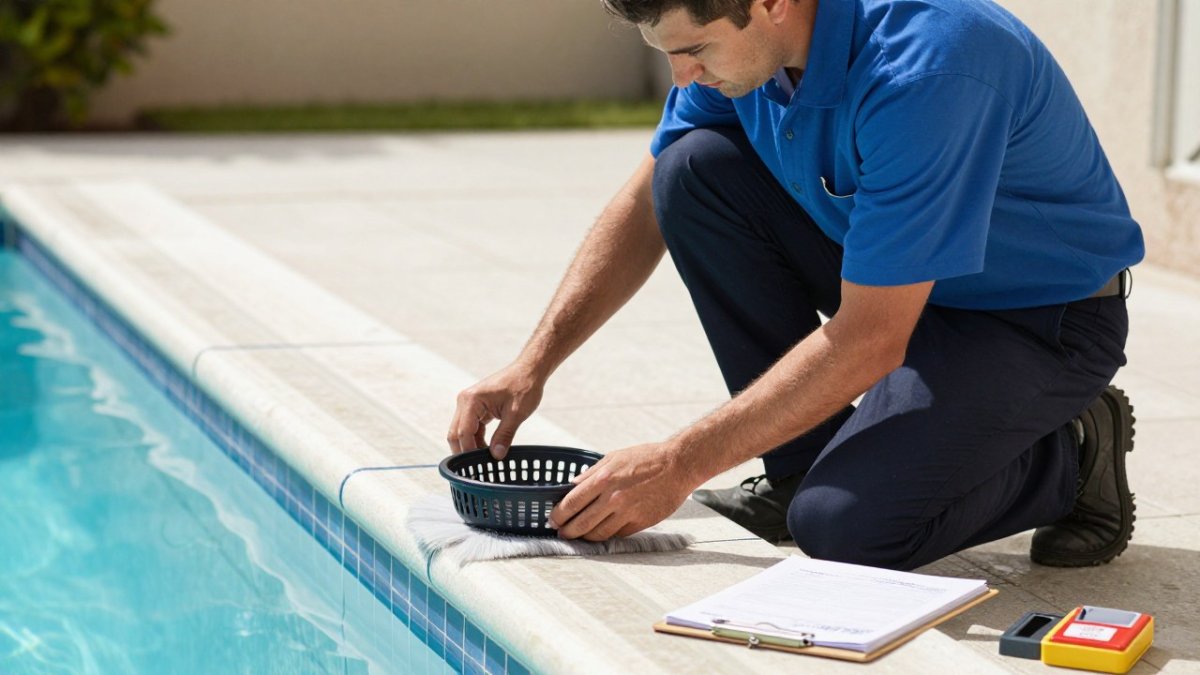
- Skim leaves and surface debris
- Empty skimmer and pump baskets
- Brush walls, floor, and steps
- Vacuum the pool where debris settled
- Test and balance water chemistry
- Check filter pressure and backwash if needed
- Inspect pump, heater, and return jets
- Confirm water level and circulation
A checklist only helps if you know what a completed step looks like. Here is how to verify each task, and what a skipped version leaves behind.
Skimming. A complete skim removes floating leaves, insects, and pollen from the entire surface, not just near the skimmer.
Basket emptying. Both the skimmer basket and the pump basket at the equipment pad should be empty after a visit.
Brushing. Brushing is the step most often skipped because it is labor-intensive and invisible when done.
Vacuuming. Vacuuming removes debris that settled on the floor, especially in dead zones where circulation is weak.
Water testing and balancing. Every visit should include a test of chlorine, pH, alkalinity, and stabilizer at minimum, followed by adjustment. A technician who tests properly records the numbers.
Filter pressure check and backwash. The filter pressure gauge should be read at every visit.
Equipment inspection. The pump, heater, and return jets should be checked for unusual noise, leaks, and proper flow.
Water level and circulation. The water level should be at the midpoint of the skimmer opening so the skimmer can pull surface debris effectively.
Watch out: a technician who performs every task but rushes the brushing and vacuuming can still leave a pool that looks clean for a few days and then clouds up.
If you want the full picture of what a professional visit should include, our article on what to expect from professional pool service covers each step in detail so you can compare it to what you are actually getting.
Pool Technician Water Testing: What Every Visit Should Show
Every visit should end with documented water test results: chlorine, pH, alkalinity, and stabilizer at minimum. A pool technician who tests properly writes the numbers down. If you never see readings, the test was skipped, rushed, or improvised.
Water chemistry is not guesswork. The EPA's recreational water quality criteria sets the benchmarks that public pools follow, and the same principles apply at home: sanitizer in range, pH balanced, and alkalinity stable so pH does not swing. Ask how readings are recorded and shared. Digital reports with photos and numbers make it easy to spot a skipped test, and our guide on how to verify professional pool water readings shows you exactly how to check the numbers against your own test strip.
What to Do If Pool Service Misses a Visit
A missed visit happens to good companies. A pattern of missed visits is a different problem. Separate a one-off from a recurring service failure with evidence collected over time, not a single observation.
Start with a phone call and ask for the service log. If there is no log, that is your answer.
Document everything in a simple routine. Take a dated photo of the pool surface, the skimmer basket, and the filter pressure gauge after each scheduled visit.
Then decide based on pattern, not a single event. One missed visit with notice and a makeup service is normal, especially after heavy rain or a holiday.
If the pattern continues, escalate in writing. Send a short email that lists the dates of missed or incomplete visits, attaches your photos, and asks for a specific remedy: a makeup visit, a credit, or a corrected schedule.
Review your service agreement before you escalate. The FTC's guidance on service contracts and consumer rights explains the terms to watch for in recurring service agreements, including cancellation and refund provisions.
If it becomes a pattern, our guide on why to switch your pool service provider walks through the practical steps, including how to end an agreement cleanly and what to ask the next company.
Questions to Ask a Pool Service Company Before You Sign
Ask these before signing anything, and listen for specifics rather than reassurances.
- What exactly happens on each weekly visit, step by step?
- How do you record and share water readings and photos?
- What is your policy when a visit is missed or rained out?
- Are you fully licensed and insured?
- What is included versus billed as an extra repair?
A company that answers with a checklist and a sample report is showing you its process. A company that answers with "don't worry, we've got it" is showing you nothing. The FTC's guidance on service contracts and consumer rights is worth a read before you sign any recurring service agreement, so you know what terms to watch for.
How to Verify the Work Without Relying on Appearance
Clear water is not proof of a complete visit. Verify with evidence instead of appearance.
- Check the basket. A full skimmer basket after a visit means it was not emptied.
- Test the water yourself. A basic test strip takes a minute and confirms the reported readings.
- Look at the tile line. Brushing leaves a visible clean line; skipped brushing leaves a film.
- Read the report. Photos and numbers dated to each visit are the strongest proof of work.
- Watch the equipment pad. Note filter pressure after each visit; a rising number means the filter is loading up.
Appearance can be faked for a week. A paper trail cannot.
Request a Quote and Get a Documented Maintenance Plan
The best defense against skipped steps is a service that documents every one of them. Clear Water Pools provides consistent weekly pool cleaning and equipment repair, with digital service reports that include photos and water readings. Our team is fully licensed and insured.
You do not have to take our word for it. Ask for the report. Review our weekly pool cleaning service and request a quote to see exactly what a documented maintenance plan includes for your pool.
Skipped steps cost more than they save, and the water always keeps the receipt. If your pool keeps slipping back to cloudy or green no matter who services it, it is time for a plan you can verify. Clear Water Pools offers consistent weekly maintenance, digital reports with photos and readings, and proactive equipment monitoring so nothing gets skipped. Get started with Clear Water Pools and request a documented maintenance plan for your pool.
Frequently Asked Questions
What should a pool technician do during a routine service visit?
A complete visit covers skimming the surface, brushing walls, floors, and steps, vacuuming, emptying the skimmer and pump baskets, testing and balancing the water, and checking the filter, pump, and return jets. The technician should also leave a written or digital report with water readings. If your pool technician skips any of these on a regular basis, debris and chemistry problems build up fast, and you will usually see cloudy water or algae within a couple of weeks.
How can I tell if my pool service was done properly?
Look beyond the water surface. Check the skimmer basket for leaves, run your hand along the tile line for film, and look at the steps and corners for settled debris. Ask for the water test results from that visit and compare them to the prior week. A pool service checklist with photos and readings gives you a record you can compare over time, which is far more reliable than a quick glance at the pool after the technician leaves.
Should my pool technician test the water at every visit?
Yes. Chlorine, pH, and alkalinity shift constantly in warm weather, especially in Central Florida where heavy rain and high temperatures change water chemistry quickly. Pool technician water testing should happen on every visit, and the results should be recorded. If you only see a chemical dump with no readings, ask for the numbers. Testing every visit is how a technician catches a problem before it turns into green water or equipment damage.
What should I do if my pool service misses a visit?
Document the missed visit with the date and any water changes you notice, then contact the company in writing. Ask when the make-up visit is scheduled and whether the missed service will be credited. Review your service agreement to see what it says about missed visits and notice. If missed visits become a pattern, that is a strong signal to ask questions about staffing and scheduling before you renew.