 How-to
How Do You Prevent Pool Equipment Failure?
Last Updated: November 19, 2026
Quick Summary
Preventing equipment failure in Florida pools means running a preventive maintenance routine on a schedule instead of waiting for a breakdown. Check filter pressure, empty pump and skimmer baskets, and inspect seals weekly, since heat, humidity, and year-round use wear down pumps, filters, and plumbing faster here.
- UV exposure breaks down plastic housings and rubber seals, while high humidity speeds corrosion on metal parts.
- A half-full pump basket is the most common cause of a pump losing prime.
- Clean the filter whenever pressure rises above its clean baseline, often every few weeks in heavy use.
- Before a storm, turn off power at the breaker and add a surge protector to the equipment circuit.
- Fix seal leaks promptly, because water reaching a motor bearing turns a cheap repair into a motor replacement.
Table of Contents
- Why Pool Equipment Fails Faster in Central Florida
- A Component-by-Component Preventive Maintenance Schedule
- Pool Pump Troubleshooting: Early Warning Signs and Diagnostic Thresholds
- Pool Filter Maintenance That Protects the Whole Filtration System
- Pool Equipment Hurricane Preparation and Post-Storm Inspection
- Your Printable Pool Maintenance Checklist
- Repair or Replace? Planning for Equipment Lifespan and Costs
- Request a Quote From Clear Water Pools
- Frequently Asked Questions
Why Pool Equipment Fails Faster in Central Florida
Preventing equipment failure in Florida pools starts with one hard truth: your equipment pad sits in a punishing environment.
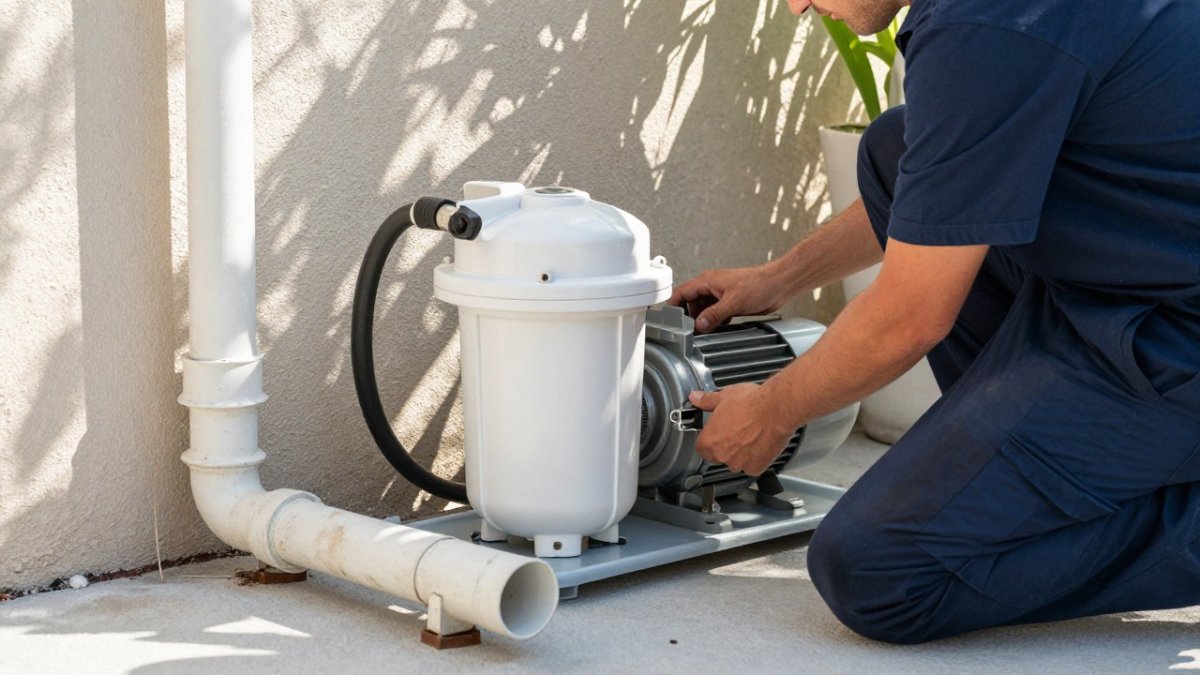
A preventive maintenance routine is the single best defense. It means checking, cleaning, and adjusting equipment on a schedule instead of waiting for a breakdown.
Most pool owners call for help only after something stops working. By then, small problems have already become expensive ones.
Here is what accelerates wear in our climate:
- UV exposure breaks down plastic housings and rubber seals
- High humidity speeds corrosion on metal parts and electrical connections
- Constant heat makes motors run hotter and shortens their life
The fix is not complicated. It is consistent.
A Component-by-Component Preventive Maintenance Schedule
A good schedule splits tasks by how often they need doing and by which component they protect. General advice like "check the equipment" is useless on a Saturday morning when you are standing at the pad. The schedule below assigns each task to a specific component, a specific interval, and a specific reading or condition to look for.
Daily and Weekly Tasks at the Equipment Pad
- Filter pressure: Read the gauge and write down the number. Note the clean baseline after a fresh filter clean. When pressure rises noticeably above that baseline, service the filter.
- Pump basket and skimmer baskets: Empty debris before it restricts flow. A half-full pump basket is the most common cause of a pump losing prime.
- Water flow: Confirm strong flow at the return jets. Weak flow with normal pressure points to a suction-side blockage; weak flow with high pressure points to a dirty filter.
Monthly Checks
- Pump motor noise: Listen for grinding, squealing, or rattling. Grinding usually means a bearing; squealing often means the seal is failing and water is reaching the motor.
- Filter media: Clean the cartridge, backwash the sand filter, or backwash and recharge the DE filter. In heavy-use months, cartridge filters may need cleaning more often.
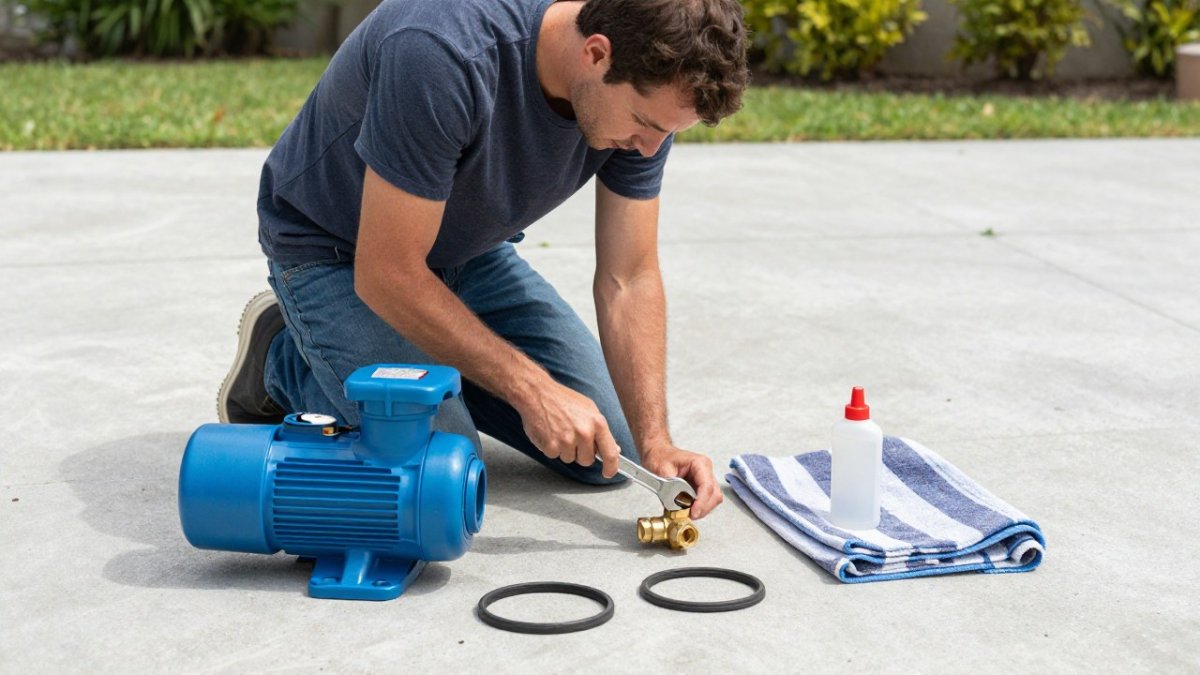
- Seals and O-rings: Inspect the pump lid O-ring, union O-rings, and valve stem O-rings for cracks or flattening. Lubricate with a silicone-based pool lubricant, not petroleum jelly.
- Safety equipment: Test the pool alarm and confirm the anti-entrapment drain cover is secure and undamaged. A loose drain cover is a serious hazard, not a maintenance nuisance.
Quarterly and Seasonal Checks
- Valves: Exercise every valve through its full range so stems do not seize. A valve that has not moved in a year may not move when you need it during a storm.
- Plumbing: Inspect PVC joints and unions for stress cracks, especially after a freeze or heat wave.
- Pump performance: Compare flow at the returns to the flow you remember when the system was new. A gradual drop over months usually means impeller wear or scale buildup.
- Heater anode or sacrificial component: If your heater has one, inspect it. Corrosion protection is cheaper than a heat exchanger.
A common mistake is skipping the pressure gauge. That single reading tells you more about filter health than anything else on the pad. Another is treating the schedule as fixed, after a storm, a heavy pollen week, or a large pool party, move the filter clean and basket check up rather than waiting for the calendar.
Pool Pump Troubleshooting: Early Warning Signs and Diagnostic Thresholds
Pool pump troubleshooting comes down to catching symptoms early. The pump is the heart of your water circulation, and it rarely fails without warning.
Watch for these early warning signs:
- Loud grinding or squealing from the pump motor
- Weak water flow at the returns
- The pump losing prime or running dry
- Visible leaks under the housing
Diagnostic thresholds help you decide when to act. Because a rising pressure reading often points to a clogged filter, consistent pool filter maintenance helps keep the baseline meaningful and makes developing problems easier to spot.
For a deeper look at warning signs, see our guide on the 7 signs of pool pump failure. If the pump is noisy but still running, our noisy pool pump diagnostic guide walks through each cause step by step.
Pool Filter Maintenance That Protects the Whole Filtration System
Pool filter maintenance is the cheapest insurance you can buy for your filtration system.
The rule we follow: clean the filter whenever pressure rises above its clean baseline. For most Central Florida pools, that means a cartridge clean every few weeks during heavy use.
Match the task to your filter type:
- Cartridge filters: rinse or soak the cartridge, replace when pleats stay soiled
- Sand filters: backwash, then do a deeper clean periodically
- DE filters: backwash and recharge with fresh media
Watch out: running a filter past its service point does not just hurt the filter. It strains the motor and can push debris back into the pool, clouding water quality.
Pool Equipment Hurricane Preparation and Post-Storm Inspection
Pool equipment hurricane preparation protects both your gear and your pool safety. Storms bring flooding, power surge risks, and flying debris that can wreck an equipment pad in minutes.
Before a storm:
- Turn off power at the breaker to the pump and heater
- Add a surge protector to the equipment circuit if you do not have one
- Lower the water level slightly to leave room for rain
- Remove loose items and store pool furniture
After the storm, inspect before you restart anything. Check the electrical system for water intrusion. Clear debris from the skimmer and pool drain.
If anything looks damaged, keep the power off and call a professional. Restarting a flooded motor can turn a repair into a replacement.
Your Printable Pool Maintenance Checklist
A pool maintenance checklist turns good intentions into a routine. Print this and keep it on the equipment pad. For a fuller version, grab our weekly pool maintenance checklist.
| Task | Frequency | What to Watch |
|---|---|---|
| Check filter pressure | Weekly | Rising above baseline |
| Empty baskets | Weekly | Debris and clogging |
| Test water chemistry | Weekly | pH and chlorine balance |
| Inspect for leaks | Weekly | Drips at valves and seals |
| Clean filter | Every few weeks | Soiled media |
| Test safety equipment | Monthly | Alarm and anti-entrapment |
| Check electrical and corrosion | Quarterly | Rust and loose fittings |
| Full equipment inspection | Seasonally | Wear and tear |
Repair or Replace? Planning for Equipment Lifespan and Costs
Every piece of equipment has a lifespan, and planning beats panic. The useful question is not "how long does a pump last" in the abstract but "what is the expected service life of this specific component in this climate, and at what point does repair stop making financial sense." Below are general service-life considerations for equipment in a hot, humid, year-round-use environment, along with indicators that tell you replacement may be approaching.
Typical Service Life by Component
- Pump motor: shorter if the pump runs dry or overheats repeatedly, and longer with regular seal and bearing care.
- Pump seal and bearings: these are wear items and the most common repair.
- Cartridge filter element: lifespan depends on cleaning frequency and water quality.
- Sand filter media: eventually channels or clogs beyond backwashing.
Actual life varies. A pump that has been run dry, a heater that has sat with unbalanced water, or a control board that has taken a surge will tend to fail sooner.
Repair-Versus-Replace Decision Framework
Use three tests together rather than any one alone:
- Age against expected life. If the unit is well past its expected service life and the repair is a major component (motor, heat exchanger, compressor, control board), replacement deserves serious consideration.
- Repair cost against replacement cost. As a general consideration, if a single repair approaches the cost of a comparable new unit, replacement may be the better long-term value, especially when the old unit is already near end of life.
- Failure frequency. One repair in five years is normal. Two major repairs in two years on the same unit is a pattern, and patterns favor replacement.
Small wear-item repairs, seals, O-rings, baskets, lids, pressure gauges, filter cartridges, almost always favor repair regardless of age. They are inexpensive and they protect the expensive components behind them.
What Drives Cost Up in This Climate
Heat, humidity, and year-round operation push equipment harder than in cooler markets. Motors run hotter and longer, seals dry and crack faster, and electrical connections corrode.
Maintenance Actions That Extend Service Life
- Keep the pump basket and skimmer clear so the motor is not fighting restricted flow.
- Fix seal leaks promptly; water reaching a motor bearing is what turns a cheap seal repair into a motor replacement.
- Keep water chemistry in range so scale does not build on the heater and corrosion does not attack fittings.
- Confirm surge protection on the equipment circuit; surge damage is a leading cause of premature control and motor failure.
To keep repair bills down, stay ahead of preventive maintenance. Our guide on avoiding unnecessary pool equipment repair costs covers where owners overspend and how to stop it. Equipment lifespan planning also helps property managers avoid surprise breakdowns during peak season, when a failed pump means a closed pool and unhappy guests.
Request a Quote From Clear Water Pools
Preventing equipment failure is a routine, not a one-time fix. It takes the right checks and a consistent schedule.
That is where we come in. Clear Water Pools provides weekly pool cleaning and equipment repair services in Central Florida.
Whether you own one home or manage several rentals, we keep your pool ready. For pump, filter, or heater issues, find the problem and restore the flow with a repair assessment.
Your pool should not be a source of stress. It should be ready when you are.
Frequently Asked Questions
What pool equipment needs regular maintenance?
Every component on the equipment pad needs attention: the pool pump and motor, the filter and its pressure gauge, the valves and plumbing, the skimmer and drain lines, and the electrical connections and surge protection. Water chemistry and circulation affect all of them, so chemical balance and flow checks belong on the same schedule. A written pool maintenance checklist that covers each component weekly, monthly, and quarterly is the simplest way to catch wear and tear before it turns into equipment failure.
How can I tell if my pool pump is failing?
Watch for a filter pressure that climbs or drops outside its normal range, weak water flow at the returns, grinding or whining from the motor, the pump overheating or shutting off on its own, and visible leaks at the seals. Any one of these is an early warning sign worth acting on. Pool pump troubleshooting starts with checking the skimmer and pump basket for debris, then the filter pressure; if the problem persists, have a licensed technician inspect the motor and electrical system before a small repair becomes a replacement.
Should I turn off pool equipment during a hurricane?
Yes. As part of pool equipment hurricane preparation, shut off power at the breaker before the storm arrives, not just at the pump switch. Lower the water level slightly if heavy rain is forecast, secure or store loose items, and cover exposed equipment where possible. After the storm, do not restart anything until you have checked for flooding, debris, and damage, and have a licensed professional inspect the electrical system. A power surge or submerged motor can be dangerous if the equipment is energized too soon.
When should pool equipment be repaired by a professional?
Call a licensed professional when you see water leaking from the pump or filter housing, a motor that trips the breaker, scorched wiring, persistent pressure changes after cleaning, or any damage following a storm. These point to problems beyond routine cleaning. Clear Water Pools provides equipment repair alongside weekly service, with digital reports showing photos and water readings so you can see exactly what was found and why a repair is recommended.