 How-to
Does Your Florida Pool Keep Growing Algae?
Last Updated: November 12, 2026
Quick Summary
Preventing pool algae in Florida comes down to three habits: test free chlorine and pH weekly, shock on a schedule rather than in a panic, and brush, skim, and vacuum on rotation. Keep free chlorine at 1-3 ppm and pH between 7.2 and 7.8, and test again within 24 hours after heavy rain or high heat.
- Water above roughly 80°F speeds up algae reproduction, and Florida pool water sits in that range much of the year.
- Shock weekly during swim season and add it in the evening, since shocking in full sun burns off chlorine fast.
- Skim debris daily because leaves and pollen sink, rot, and feed algae.
- Brush shaded walls, steps, corners, and the area behind ladders and lights where circulation is poor.
- Pool algaecide is a backup treatment, not a substitute for chlorine, so skip it when chlorine and pH are balanced.
Table of Contents
- Why Florida Pools Grow Algae Faster Than Anywhere Else
- Best Practices to Prevent Algae Growth in a Pool
- How to Prevent Algae in a Pool Naturally
- Pool Algaecide: When to Use It and When to Skip It
- How to Prevent Algae in a Pool Over Winter
- Troubleshooting Algae When Your Water Tests Look Fine
- Storm and Power-Outage Recovery for Central Florida Pools
- Request a Weekly Pool Care Quote from Clear Water Pools
- Frequently Asked Questions
Why Florida Pools Grow Algae Faster Than Anywhere Else
Preventing algae in Florida swimming pools starts with understanding why the state is algae's favorite habitat. Warm water, heavy rain, and constant sun create ideal growing conditions for most of the year.
Algae is a single-celled plant that feeds on sunlight, warmth, and nutrients in the water. In most climates, it has a short season. Here, it has a full one.
A pool that stays clear for months in cooler regions can turn green in days here.
Heat, Rain, and Runoff: The Three Drivers
Water above roughly 80°F speeds up algae reproduction. Florida pool water sits in that range for much of the year.
Then rain adds a second problem. Storm runoff carries dirt, leaves, lawn fertilizer, and phosphates straight into the pool. Those nutrients feed algae spores already in the water.
Sunlight is the third driver. Long, bright days give algae the energy it needs to spread fast.
Put heat, rain, and runoff together and you get algae blooms that can appear overnight. That is why a weekly routine matters more here than almost anywhere else.
For a broader look at summer-specific care, see our guide to Florida summer pool maintenance.
Best Practices to Prevent Algae Growth in a Pool
The best practices to prevent algae growth in a pool come down to three habits: test the water on a schedule, shock with a purpose, and clean the surfaces. Skip any one of them and algae gets a foothold, especially in warm water where a bloom can go from a faint haze to green water in a couple of days.
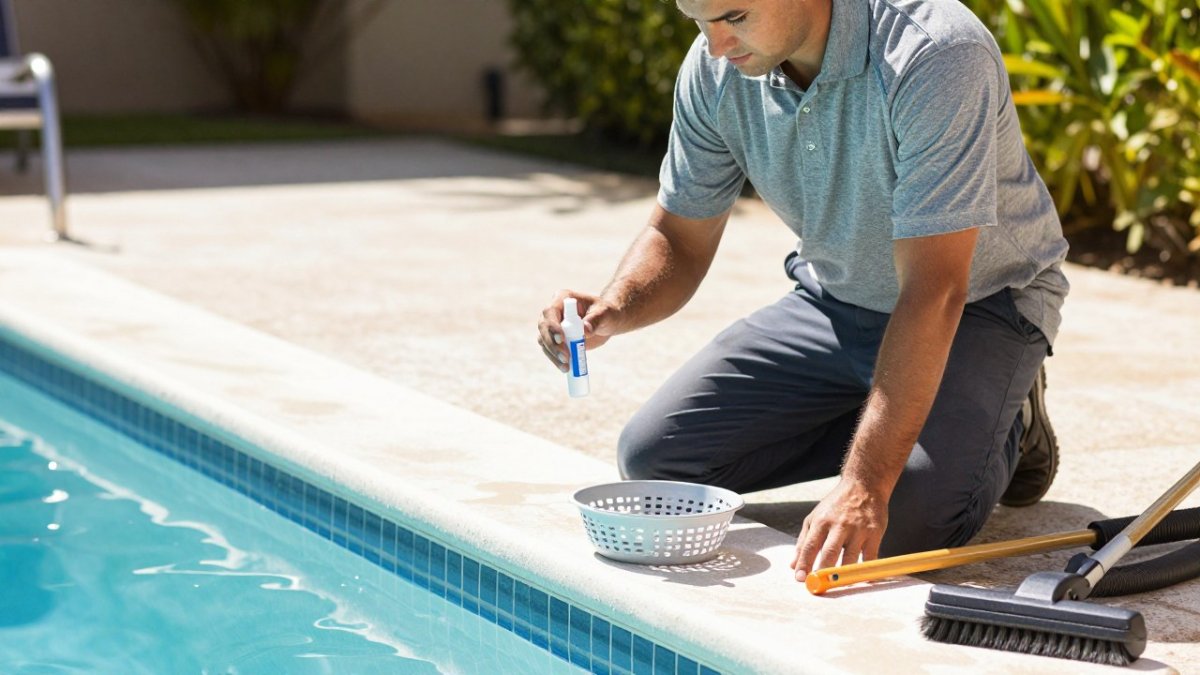
Step 1: Test Free Chlorine and pH Every Week, and After Every Storm
Free chlorine is the active sanitizer that kills algae before it spreads. Test it at least once a week, and again within 24 hours after heavy rain or a stretch of high heat.
Aim to keep free chlorine in the 1-3 ppm range and pH between 7.2 and 7.8. When either drifts, algae gets its opening. Most practitioners also watch total chlorine: if total chlorine reads higher than free chlorine, the difference is combined chlorine (chloramines), which means the chlorine is being used up and you need to shock rather than simply add more.
Cyanuric acid matters too. Stabilizer protects chlorine from sunlight, but too much of it locks chlorine into a weaker form. A common target is roughly 30-50 ppm; when stabilizer climbs well above that, chlorine can test in range and still fail to keep algae down. If your water looks dull despite a “normal” free chlorine reading, check stabilizer before adding anything else.
For a full walk-through of testing, read our step-by-step water chemistry guide.
Step 2: Shock on a Schedule, Not on a Panic
Shocking means adding a high dose of chlorine to reset the water. Do it weekly during swim season, not just when the water turns cloudy.
Scheduled shocking keeps chlorine residual steady and stops small algae problems before they bloom. Panic shocking, by contrast, means you are already behind. A useful rule of thumb is to shock after any event that eats chlorine fast: a heavy rain, a crowded swim day, or a long stretch above 90°F.
Watch out: shocking in full sun burns off chlorine fast. Add shock in the evening so it has all night to work, and never mix shock with other chemicals in the same container or pour them together.
Step 3: Brush, Skim, and Vacuum on Rotation
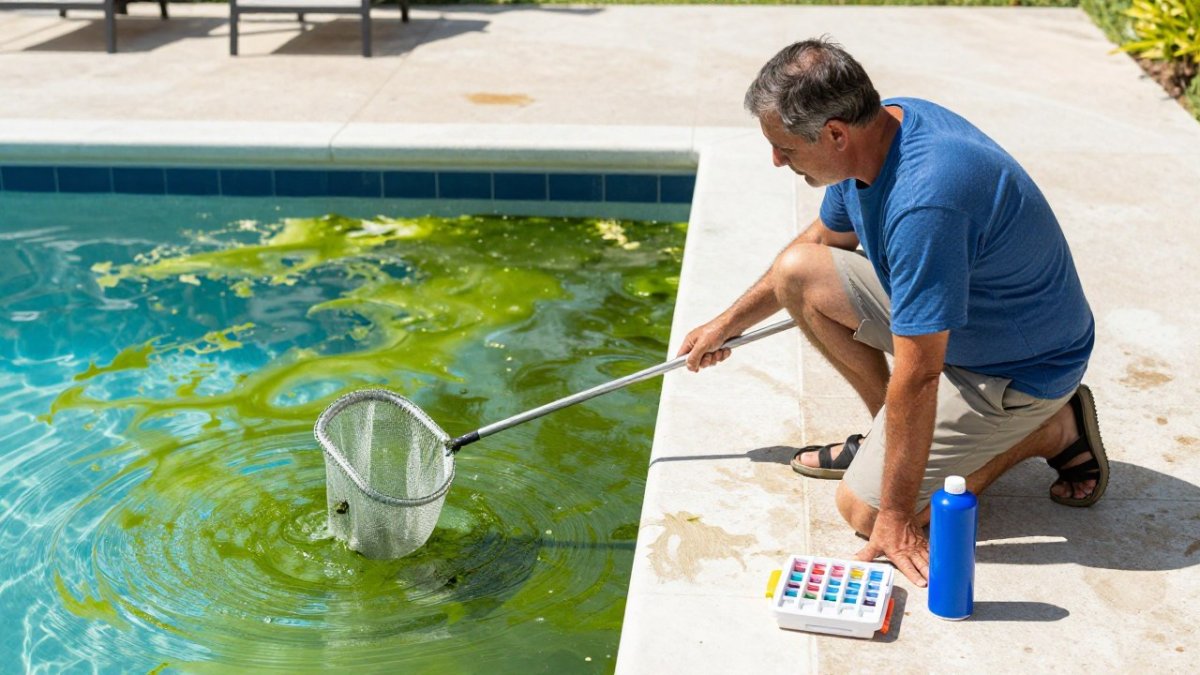
Algae clings to pool walls and floors, where chlorine levels are weakest. Brushing breaks that film loose so the filter and sanitizer can do their jobs. Pay extra attention to shaded walls, steps, corners, and the area behind ladders and lights, dead spots where circulation is poor.
Skim debris off the surface daily. Leaves and pollen sink, rot, and feed algae. After a storm, skim before you do anything else so the filter is not working against a load of leaves.
Vacuum weekly, and clean the filter when pressure rises above its clean starting pressure. A clogged filter means poor circulation and stagnant water, which is exactly where algae thrives. Backwash sand and DE filters per the manufacturer’s guidance, and hose cartridge filters until the pleats run clear.
| Task | How Often | Why It Matters |
|---|---|---|
| Test free chlorine, pH, and stabilizer | Weekly, plus after storms | Catches chemistry drift early |
| Shock the pool | Weekly in season, and after heavy rain or high bather load | Resets chlorine residual |
| Skim debris | Daily | Removes algae food source |
| Brush walls, steps, and corners | Weekly | Breaks up clinging algae in dead spots |
| Vacuum and clean filter | Weekly, or when pressure rises 8-10 psi | Keeps water flowing |
| Check pump run time | Monthly | Confirms full turnover |
A Practical Weekly and Post-Storm Testing Routine
A simple routine beats a complicated one you will not follow. Test free chlorine and pH at the same time each week, and note the readings so you can spot a trend before it becomes a bloom. After a storm, test within a day, remove debris, and shock if free chlorine has dropped below about 1 ppm or the water looks hazy.
If you use well water to top off the pool, test it once before assuming it is neutral, well water can carry iron, minerals, or nutrients that feed algae and stain surfaces. Municipal water is more predictable, but it still adds to the pool’s stabilizer and mineral load over time. Because water source, mineral load, and salt-cell output can all affect chlorine, Pool Perfection LLC connects recurring algae to the balance and circulation issues that let it return.
Screened enclosures cut down on leaves and debris but also reduce airflow and can trap heat, so water stays warm longer. Unscreened pools collect more runoff and need more frequent skimming and brushing after storms. Neither setup removes the need to test, they just change how often you clean.
How to Prevent Algae in a Pool Naturally
You can prevent algae in a pool naturally by running the pump long enough to turn the water over, keeping the filter clean, and staying ahead of debris. Good circulation and filtration do more than any single product, because algae needs still water and a food source to take hold.
The pump moves water through the filter, which captures particles including algae spores and the organic matter they feed on.
Run the pump long enough in summer to turn the pool's water over, and longer during heat waves or after storms. Moving water resists algae; still water invites it.
Keep the filter clean and the baskets empty. Brush the walls so nothing clings in the shade. Check that return jets point away from corners and steps so water does not sit in the same spots day after day.
Water source changes the routine. Well water can bring in iron, minerals, and nutrients that feed algae and stain plaster, so test a sample before using it to top off. Municipal water is more consistent but still adds to the pool’s stabilizer and mineral load over time.
Pool Algaecide: When to Use It and When to Skip It
Pool algaecide is a backup treatment, not a substitute for chlorine. Use it to prevent algae when chlorine is low, or to clear a light bloom after shocking.
Skip it when your chlorine and pH are already balanced. Algaecide adds cost and, in some cases, copper that stains surfaces.
Watch out: some algaecides foam or stain if you overdose. Follow the label and never mix products.
For chemicals and supplies with local guidance, see pool supplies without the heavy lifting.
How to Prevent Algae in a Pool Over Winter
How to prevent algae in a pool over winter comes down to one rule: never let the water sit still and untreated. Even in cooler months, Florida pools can grow algae.
Keep testing chlorine weekly. Run the pump a few hours a day. Remove leaves before they sink and rot.
If you close the pool, shock it first and cover it. But most Central Florida owners keep pools open year round, so a lighter version of the summer routine works fine.
Troubleshooting Algae When Your Water Tests Look Fine
Green water with normal test results usually means one of three things: poor circulation, a dirty filter, or algae hiding in cracks and behind lights. The numbers can look perfect while algae grows in dead spots.
Check the pump run time and filter pressure first. Then brush every surface, including steps and corners.
If the problem persists, our guide on why pool water turns green breaks down the deeper causes and fixes.
Storm and Power-Outage Recovery for Central Florida Pools
After a storm or outage, assume the water needs attention. Pumps that stop running leave water stagnant, and debris floods in fast.
Here is the recovery order:
- Remove debris and empty the skimmer baskets
- Restore power and confirm the pump runs
- Test chlorine and pH, then shock
- Brush and vacuum within a day or two
- Recheck chemistry after 24 hours
Acting fast after a storm is one of the most reliable ways to stop an algae bloom before it starts.
Request a Weekly Pool Care Quote from Clear Water Pools
Algae prevention is a routine, not a rescue. The homeowners and property managers who stay algae-free are the ones who test, shock, and clean on a schedule, week after week.
That is exactly what we do at Clear Water Pools. Our weekly service includes digital reports with photos and water readings so you can see the work. We are fully licensed and insured.
If you would rather hand off the routine, request a weekly pool care quote and see the plan for your pool.
Algae will keep testing your pool every summer. The fix is consistency, and that is hard to sustain alone. Clear Water Pools brings weekly cleaning, documented water readings, and proactive equipment checks to every visit. Get started with Clear Water Pools and keep your water clear all season.
Frequently Asked Questions
What can I put in my pool to prevent algae?
Free chlorine is the main defense. Keep free chlorine at a steady level and shock during warm months. Cyanuric acid protects chlorine from sunlight, so keep it in check. Brushing and running the pump long enough matter as much as any chemical you add.
How often should I test pool water to prevent algae?
Test free chlorine and pH regularly, more often in summer. After heavy rain or a pool party, test chlorine again soon after. Consistent testing catches a problem before green water appears.
Can poor circulation cause algae in a swimming pool?
Yes. Stagnant water in corners, behind ladders, and in steps is where algae spores settle first. Run the pump long enough in summer, longer during heat waves. Check that return jets push water across the whole pool and that the skimmer pulls debris in.
Does shocking a pool kill algae?
Shocking raises free chlorine high enough to kill algae and burn off contaminants, but it works best alongside brushing and filtration. Brush walls and floor first so the shock reaches algae attached to surfaces, then keep the pump running.