 How-to
Pool Maintenance Tips for Florida Summers: Beat the Heat
Last Updated: November 4, 2026
Quick Summary
Effective pool maintenance for Florida summers means running your pump 8-12 hours daily, testing water in the morning, and keeping free chlorine at 2-4 ppm with cyanuric acid at 30-50 ppm. Skim, brush, and vacuum weekly, clean the filter when pressure rises 8-10 psi above baseline, and treat every storm as a chemistry reset.
- Test pool water in the morning before the sun burns off chlorine for truer readings.
- Keep pH between 7.4 and 7.6 so chlorine stays effective and water stays comfortable.
- Run the pump during daylight and split runtime into morning and afternoon blocks.
- Never drain the pool before a storm; keep water at the middle of the skimmer opening.
- After a storm, adjust alkalinity first, then pH, then chlorine.
Table of Contents
- Why Florida Summers Wreck Pool Chemistry
- Your Florida Pool Maintenance Checklist for Hot Weather
- Water Testing and Chemical Balance in Peak Heat
- Pool Pump Runtime in Summer: How Long to Circulate
- How to Prevent Algae in a Pool During Summer
- Florida Pool Storm Preparation and Post-Storm Recovery
- Saltwater Pools, Chemical Storage, and Equipment Care in Extreme Heat
- Request a Quote for Weekly Pool Maintenance
- Frequently Asked Questions
Why Florida Summers Wreck Pool Chemistry
Summer in Central Florida punishes pool water in three ways at once: intense sun, heavy heat, and more people in the water. Understanding those forces makes the rest of your pool maintenance routine make sense.
Sun exposure destroys free chlorine fast: UV light breaks down chlorine molecules, so a pool that holds steady in winter can lose its sanitizer within hours on a July afternoon.
Pools that looked fine in May can turn cloudy within a week of summer heat. The fix is not more chemicals. It is a routine built for hot weather.
Sun Exposure and Chlorine Loss
Chlorine is your pool's first line of defense, and sunlight is its biggest enemy. Outdoor pools lose a large share of free chlorine to UV rays each sunny day, so summer pools need more frequent testing and steady chlorine feeding.
Stabilizer, also called cyanuric acid, acts like sunscreen for your chlorine. It slows the sun's breakdown of sanitizer. But too much stabilizer locks chlorine up and weakens its cleaning power. The balance matters more than the amount.
Heat, Humidity, and Heavy Bather Load
Warm water holds less oxygen and grows algae faster. Every swimmer adds sweat, sunscreen, and body oils that eat into your chlorine supply, so a pool that hosts a Saturday cookout often shows cloudy water by Monday.
Afternoon thunderstorms dilute chemicals, raise the water level, and wash debris and runoff into the pool. Treat every storm as a reset point, not a disaster.
Your Florida Pool Maintenance Checklist for Hot Weather
Here is a weekly routine that helps prevent most summer problems.
- Skim the surface. Remove leaves, insects, and debris before they sink and decay.
- Empty the skimmer and pump baskets. Full baskets cut water flow and strain the pump.
- Brush walls and steps. Algae clings to surfaces, especially in shaded corners.
- Vacuum the floor. Catch what the skimmer misses.
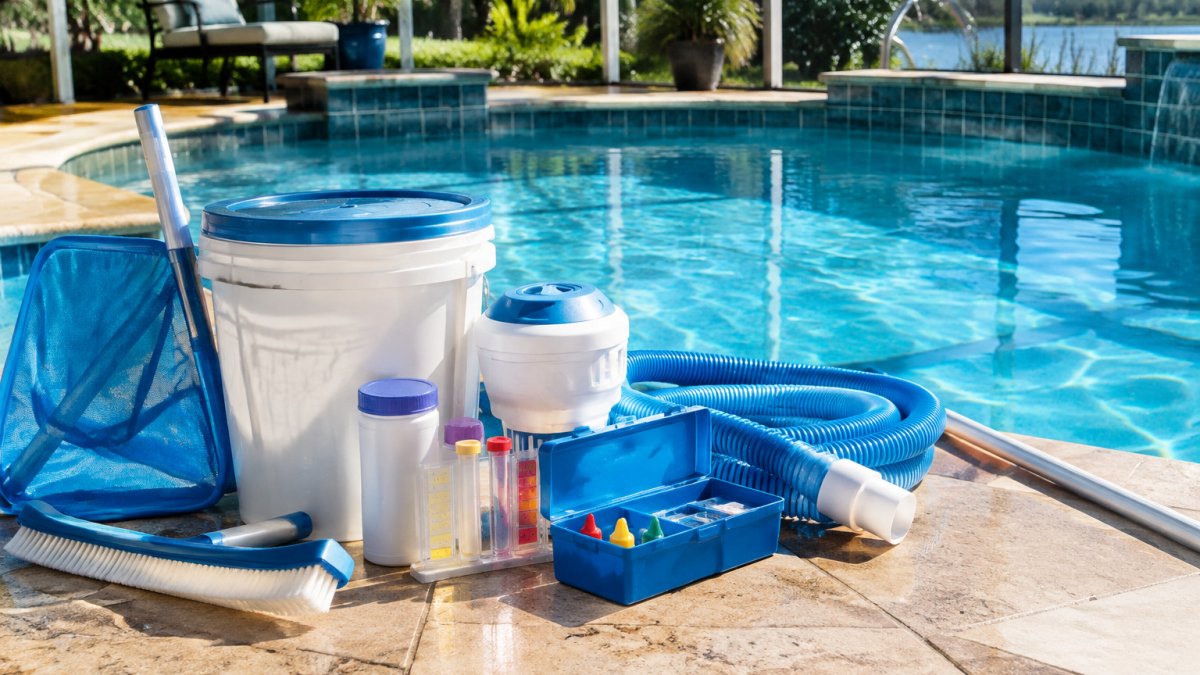
- Test the water. Check chlorine, pH, and alkalinity at minimum.
- Balance the chemicals. Adjust based on your readings, not guesswork.
- Check the filter pressure. A rise of 8-10 psi above your clean baseline means it is time to clean the filter.
- Top off the water level. Keep it at the middle of the skimmer opening.
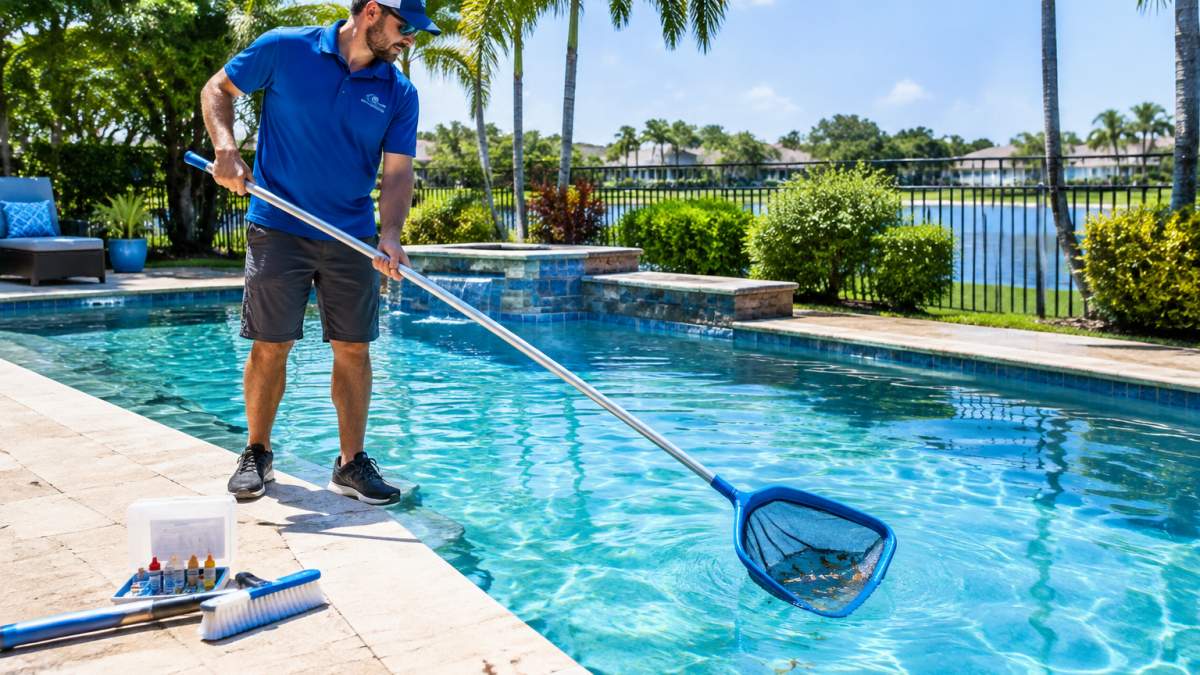
Weekly Tasks That Keep Water Clear
Small habits prevent big problems. Empty baskets before they overflow. Rinse the cartridge or backwash the sand filter when pressure climbs. And keep a written log of your readings.
That log is the most underrated tool in pool care.
Watch out: skipping a week because the water "looks fine" is the most common cause of a green pool. Clear water can hide low chlorine for days.
Water Testing and Chemical Balance in Peak Heat
Test your pool water regularly in summer, and more often during heat waves or heavy use. Test strips work for quick checks, but a liquid test kit gives more accurate chlorine and pH readings.
Test in the morning before the sun burns off chlorine for a truer picture of overnight sanitizer levels.
Concrete Testing Targets to Aim For
These are the ranges we aim for on Central Florida pools. Follow the CDC guidance on pool water quality for public health context, and always read your test kit instructions.
| Chemical | Target Range | Why It Matters |
|---|---|---|
| Free chlorine | 2-4 ppm | Kills bacteria and algae |
| pH | 7.4-7.6 | Keeps chlorine effective and water comfortable |
| Total alkalinity | 80-120 ppm | Stabilizes pH against swings |
| Cyanuric acid | 30-50 ppm | Shields chlorine from sunlight |
| Calcium hardness | 200-400 ppm | Protects plaster and equipment |
Adjust one thing at a time and retest before adding more. Dumping in extra chemicals "to be safe" is how pools get out of balance.
Pool Pump Runtime in Summer: How Long to Circulate
Run your pump 8-12 hours per day in summer, and longer during heat waves or after storms.
Watch your filter pressure and flow. Learn the warning signs in this guide to signs of pool pump failure before a small issue becomes a repair bill.
Energy costs matter too. Check local energy guidance on energy-efficient pool pump operation for efficiency tips.
How to Prevent Algae in a Pool During Summer
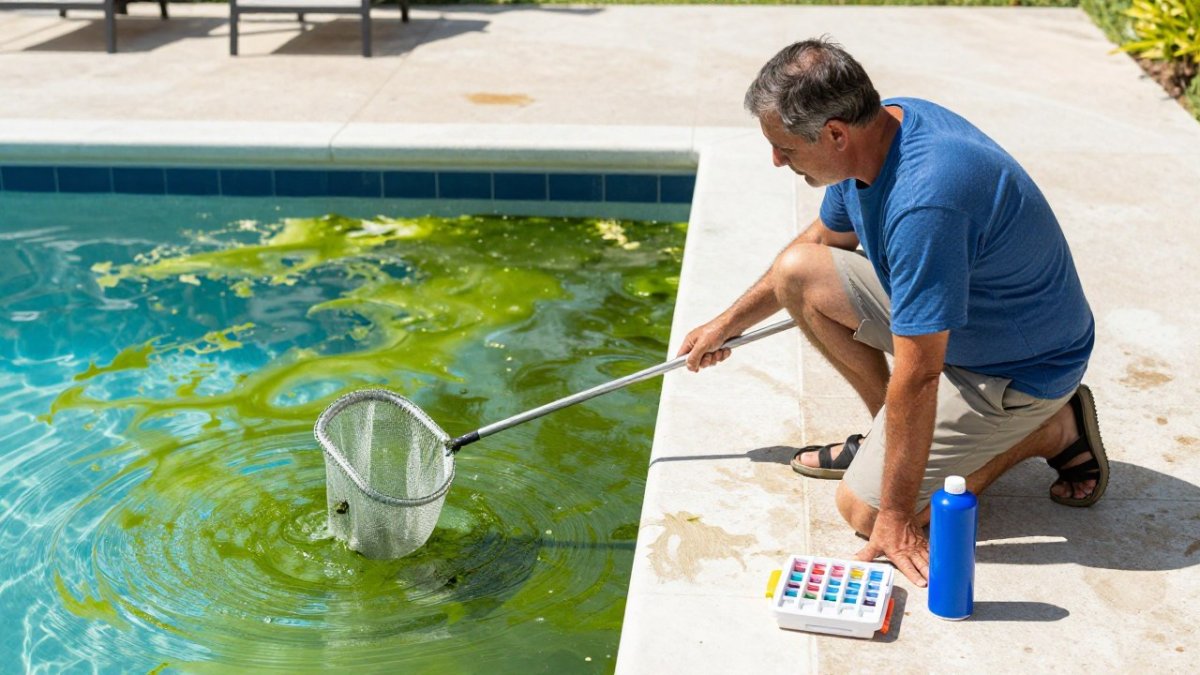
Preventing algae in a pool comes down to three things: steady chlorine, good circulation, and a clean filter. Algae needs sunlight, warmth, and low sanitizer to bloom. Remove any one of those and it struggles.
Keep free chlorine in range every day, not just on service day. Brush weekly, even where you see no growth. And never let debris sit on the floor.
If green water shows up anyway, act fast. Read why pool water turns green to identify the cause before it spreads.
Troubleshooting Cloudy Water and Early Algae: A Symptom-to-Action Guide
Most summer water problems fall into a few patterns. Use the symptom to narrow the cause, then take the matching action. Test the water first in every case; guessing makes things worse.
Symptom: water is cloudy but still blue.
- Likely cause: low free chlorine, a dirty filter, or high pH reducing chlorine effectiveness.
- Action: test free chlorine, pH, and filter pressure. If chlorine is below 2 ppm, shock and retest the next morning. If pressure is 8-10 psi above baseline, clean or backwash the filter. If pH is above 7.8, lower it gradually and retest before adding more chlorine.
Symptom: water has a green tint but you can still see the floor.
- Likely cause: early algae bloom from low chlorine or poor circulation.
- Action: brush walls, steps, and shaded corners, then shock. Run the pump continuously until the water clears, and clean the filter once pressure rises. Retest chlorine daily until it holds overnight.
Symptom: water is dark green and the floor is not visible.
- Likely cause: established algae bloom, often after a storm or a week of low chlorine.
- Action: this is a multi-day recovery. Brush thoroughly, shock at a higher dose, run the pump around the clock, and clean the filter daily. If the water does not improve within 48-72 hours, or you see black or mustard-colored patches, call a professional; some algae types require targeted treatment.
Symptom: slippery walls or a slimy feel on steps and ladders.
- Likely cause: biofilm forming on surfaces before the water turns green.
- Action: brush the affected surfaces and shock. Slippery surfaces are an early warning that chlorine is not reaching the walls, often because circulation is poor or stabilizer is too high.
Symptom: chlorine will not hold, even after shocking.
- Likely cause: high cyanuric acid locking up chlorine, or an organic load (leaves, runoff, heavy bather use) creating chlorine demand.
- Action: test cyanuric acid. If it is above 50 ppm, partial draining and refilling is the standard fix; adding more chlorine will not solve it. If stabilizer is in range, the pool likely needs a longer shock and a filter cleaning. When leaves and runoff are driving chlorine demand, keeping debris out of the water starts with cleaning pool lanais without damaging their screens.
Symptom: water is clear but has a strong chlorine smell.
- Likely cause: chloramines, formed when chlorine combines with sweat, sunscreen, and body oils.
- Action: shock to break the chloramines, and clean the filter. A strong smell with clear water usually means the pool needs oxidation, not more chlorine.
Watch out: do not shock and then immediately retest and add more chemicals.
For a full walkthrough on clearing a cloudy pool, follow this guide on how to clear cloudy pool water.
Florida Pool Storm Preparation and Post-Storm Recovery
Summer thunderstorms are a weekly pattern from June through September. A single afternoon cell can drop an inch of rain in under an hour, and a tropical system can push several inches in a day. Each storm resets your water chemistry and pushes debris and runoff into the pool, so treating storms as routine, rather than a crisis, separates a pool that recovers in a day from one that turns green for a week.
Before the Storm
- Do not drain the pool. Lowering the water level to prepare for rain risks floating the shell or cracking plaster if the surrounding soil is saturated. Keep the water at the middle of the skimmer opening and let the overflow or a manual drain handle the rest.
- Secure loose items. Patio furniture, umbrellas, toys, and pool floats become projectiles in high wind and end up in the water or the skimmer lines.
- Turn off the pump if flooding is likely. A pump running dry or pulling debris-laden water during a storm can burn out the motor or damage the impeller. If the equipment pad is at risk of flooding, cut power at the breaker.
After the Storm: A Step-by-Step Recovery
- Remove debris before it stains or sinks. Skim the surface and floor. Leaves and twigs release tannins that stain plaster and consume chlorine, so remove any large debris load before running the pump.
- Check the water level and drain excess if needed. If water is above the skimmer opening, drain to the middle before restarting the pump; an overfull pool will not skim properly and can overflow into the equipment area.
- Inspect the skimmer and pump baskets. Storm runoff carries leaves, mulch, and grit. Empty the baskets before restarting, and check the pump basket for fine debris that can clog the impeller.
- Test the water before adding anything. Rain dilutes chlorine, alkalinity, and stabilizer, and runoff can introduce phosphates and organic matter. Test free chlorine, pH, total alkalinity, and cyanuric acid, and let the readings decide whether the pool needs shock.
- Rebalance in the right order. Adjust alkalinity first, then pH, then chlorine. If cyanuric acid dropped below 30 ppm, bring it back into range so the chlorine you add is not burned off by the next day's sun.
- Clean or backwash the filter. A storm pushes fine debris into the filter and pressure will climb. Clean the cartridge or backwash the sand filter when pressure rises 8-10 psi above the clean baseline.
- Shock if the water is dull, cloudy, or has a chlorine demand. A post-storm shock is often necessary after heavy rain or runoff. Brush the walls and floor first so the shock can reach the surfaces where algae and bacteria settle.
- Run the pump long enough to turn over the pool. After a storm, run the pump for a full turnover cycle, typically 8-12 hours for most residential pools, to clear suspended debris and distribute sanitizer.
Watch out: do not restart the pump until you have removed debris and confirmed the water level is correct. Running a pump with a clogged basket or a dry skimmer is one of the most common causes of mid-summer equipment failure.
The National Weather Service hurricane preparedness guidance is worth bookmarking before storm season, and local rainfall totals can help you decide whether a storm was a minor event or a full chemistry reset. A prepared pool recovers in a day.
Saltwater Pools, Chemical Storage, and Equipment Care in Extreme Heat
Saltwater pools still need testing and balancing. The salt cell generates chlorine, but pH still drifts, stabilizer still matters, and the cell needs cleaning when scale builds up.
Store chemicals in a cool, shaded, ventilated spot, never in a hot garage or shed. Keep them dry and separate from each other.
Equipment needs attention too. Check the pump, heater, and fittings monthly. Clean the filter on schedule. Shade your equipment pad if you can.
Request a Quote for Weekly Pool Maintenance
Summer pool care is a weekly commitment, and missing a week costs more than it saves. If you would rather hand off the testing, brushing, and balancing, we can help.
Clear Water Pools provides weekly pool cleaning and equipment repair for homes and properties across Central Florida, with digital service reports that include photos and water readings. The team is fully licensed and insured.
Curious what weekly service costs? Read what weekly pool service costs in Florida for a clear breakdown with no hidden fees. When you are ready, request a quote for weekly pool cleaning and we will build a plan for your pool.
Frequently Asked Questions
How many hours a day should I run my pool pump in Florida during summer?
Most Florida pools need 8 to 12 hours of pump runtime in summer, depending on pool size and bather load. A common rule is to turn over the full volume of water once per day, which often works out to 8 to 10 hours for an average residential pool. Run it during daylight hours so chlorine circulates while the sun is strongest. If water looks dull or chlorine drops fast, add an hour or two and check filter pressure.
How often should I test pool water in hot weather?
Test free chlorine and pH every day or two during peak summer, and run a full panel for total alkalinity, calcium hardness, and cyanuric acid once a week. Heat and heavy bather load burn through chlorine faster, so daily checks catch problems before algae starts. After a storm or a big pool party, test again within 24 hours. Keep a log of readings so you can spot trends instead of reacting to a green pool.
How do I prevent algae in a pool during a Florida summer?
Keep free chlorine in the 2 to 4 ppm range, maintain cyanuric acid around 30 to 50 ppm so sunlight does not burn off chlorine, and brush walls and steps weekly. Run the pump long enough to circulate all the water daily, clean the filter when pressure rises 8 to 10 psi above the clean baseline, and shock after heavy rain or high bather load. Consistent pool maintenance beats any single algae treatment.
How do I prepare my pool for a Florida summer storm?
Before a storm, lower the water level a few inches so heavy rain does not overflow the deck, turn off and cover the pump and electrical equipment, remove loose furniture and toys, and shock the pool if a storm is forecast. After the storm, skim debris, check the water level, test chemistry, clean the filter, and shock again if the water is cloudy. Document readings so you can track recovery over the next few days.
Your pool should be the easiest part of summer, not the source of weekly worry. Get started with Clear Water Pools and keep your water clear, balanced, and ready for every swim.