 how-to
How to Clear Cloudy Pool Water Quickly
Last Updated: October 25, 2026
Quick Summary
Clear cloudy pool water quickly by testing first, then fixing the one cause that is out of range: dead algae, unbalanced chemistry, a filtration problem, or debris the filter cannot catch. Balance total alkalinity to 80-120 ppm and pH to 7.4-7.6 before shocking, then run the pump continuously and clean or backwash the filter.
- Read test results in order: free chlorine, pH, total alkalinity, calcium hardness, then cyanuric acid.
- A filter pressure reading 8-10 psi above the clean baseline means it needs backwashing or cleaning.
- Shock at dusk, not in direct sun, and brush walls and floor while chlorine circulates.
- Cloudiness lasting past 48 hours with good chemistry and a clean filter points to a filtration problem.
- Use clarifier for light haze with cartridge or sand filters; never use flocculant in a cartridge filter.
Table of Contents
- Start With a Water Test, Not a Chemical
- Why Is My Pool Cloudy? The Four Causes That Matter
- Balance pH and Total Alkalinity Before Anything Else
- How to Shock a Pool Without Wasting Chlorine
- Pool Filter Troubleshooting: Pressure, Media, and Backwashing
- Cloudy Pool Water After Shocking: What It Means
- Clarifier or Flocculant? Pick Based on Your Filter
- When to Call Clear Water Pools for a Quote
- Frequently Asked Questions
Start With a Water Test, Not a Chemical
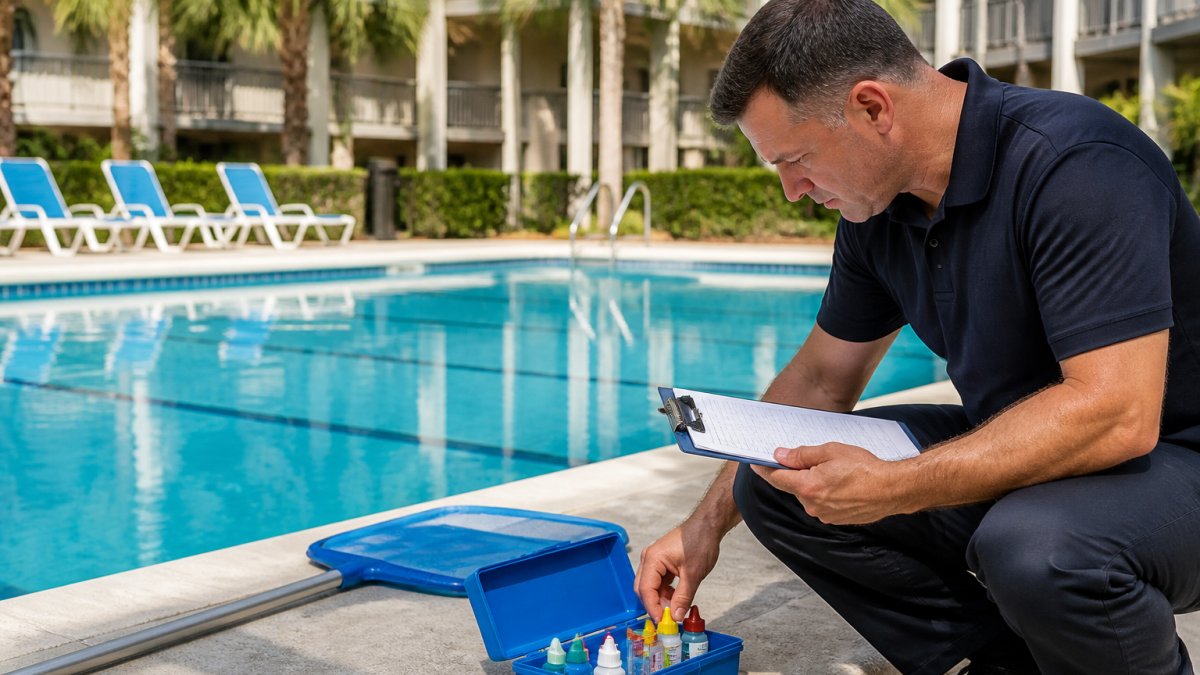
Cloudy pool water is almost never solved by guessing. It is solved by testing first, then treating the one thing that is actually out of range.
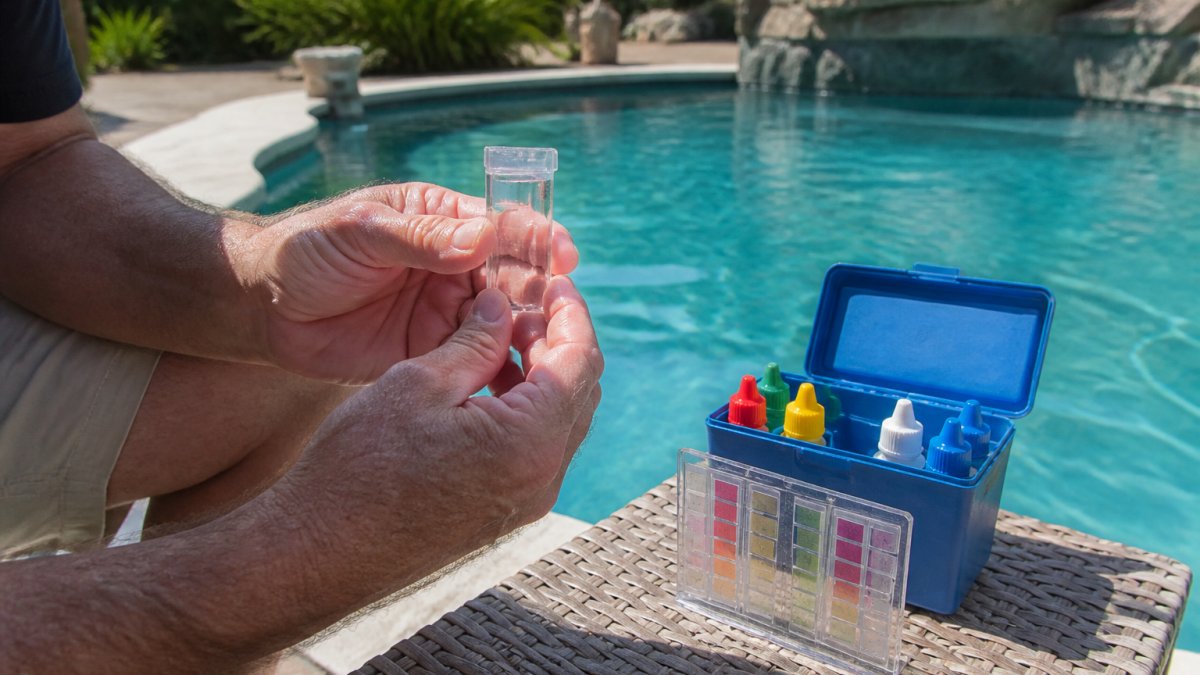
A basic test kit or test strips take about five minutes and tell you which of the four causes below is driving the cloudiness. Skip it, and you risk adding chemicals that cancel each other out.
Read the Results in This Order
Read test results in this order:
- Free chlorine, is there enough sanitizer to kill what is growing?
- pH, is it between 7.4 and 7.6, where chlorine works best?
- Total alkalinity, is it holding pH steady?
- Calcium hardness, is the water too hard or too soft?
- Cyanuric acid, has stabilizer built up too high?
Each number changes what the next one means. High pH, for example, weakens chlorine even when the free chlorine reading looks fine.
Why Is My Pool Cloudy? The Four Causes That Matter
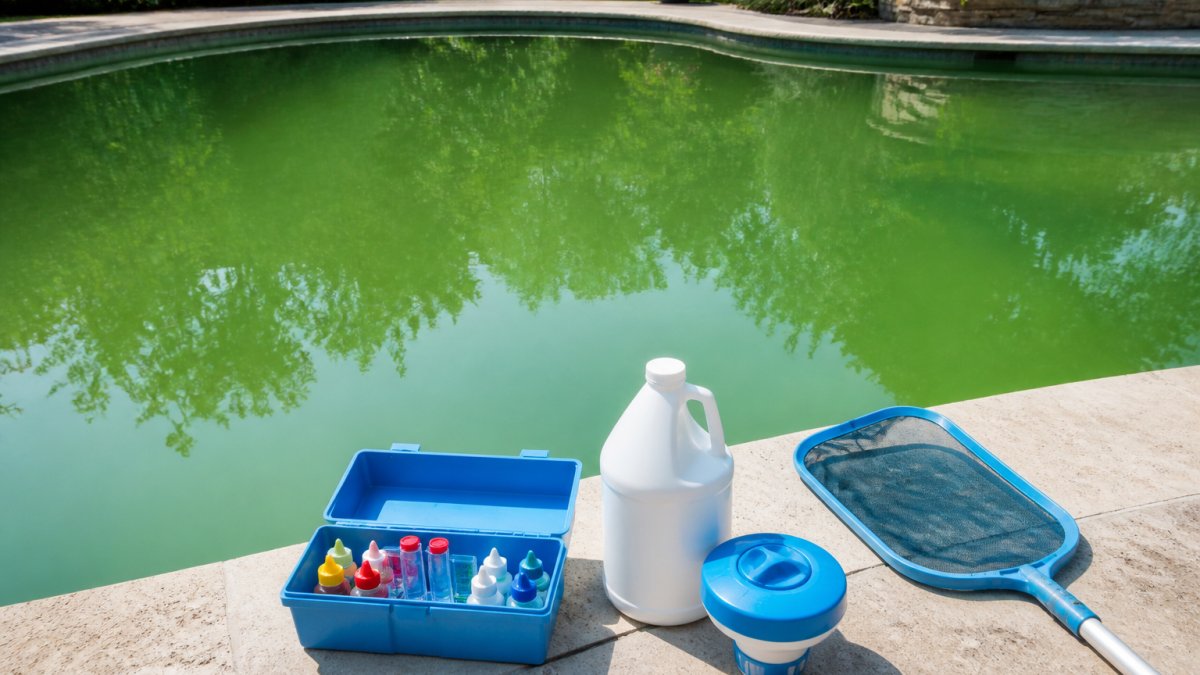
Every cloudy pool traces back to one of four causes: dead algae, unbalanced chemistry, a filtration problem, or debris the filter cannot catch. If the water has a green tint instead, see why is my pool water green for causes and fixes. Finding which one applies saves you from dumping in chemicals you do not need.
Match the Cause to the Fix
| What You See | Likely Cause | First Fix |
|---|---|---|
| White or gray haze, chlorine reads fine | High pH or high alkalinity | Balance pH and total alkalinity |
| Green tint turning milky | Algae bloom dying off | Shock, then filter 24 hours |
| Cloudy only after heavy rain or storms | Environmental debris | Skim, brush, then run the pump |
| Cloudy for days despite good chemistry | Filter issue | Check filter pressure and media |
Most homeowners skip straight to shock. That works for algae. It does nothing for a filter that needs backwashing or water with high calcium hardness.
Balance pH and Total Alkalinity Before Anything Else
Chlorine cannot do its job in water that is out of balance. If pH sits above 7.8, free chlorine loses much of its killing power, even at a normal reading. Fix the balance first, then treat the cloudiness.
Here is the order we use:
- Total alkalinity first. Aim for 80-120 ppm. Low alkalinity makes pH swing; high alkalinity locks pH in place.
- pH second. Aim for 7.4-7.6. Add pH decreaser or increaser in small doses, then retest after a few hours.
- Calcium hardness third. Aim for 200-400 ppm. Hard water in Central Florida often pushes this high, which causes haze.
Wait at least four hours between adjustments. Adding everything at once is the fastest way to make cloudiness worse.
How to Shock a Pool Without Wasting Chlorine
Shocking a pool means raising free chlorine high enough to burn off contaminants in one pass. Do it wrong and you waste chlorine, bleach the liner, or leave the water cloudy for days. The biggest reason a shock treatment fails is a guessed dose instead of a calculated one.
Calculate the Dose From Pool Volume
Every shock product label lists a dose per 10,000 gallons. To use it, you need your pool's volume in gallons. Two formulas cover most residential pools:
- Rectangular pool: length × width × average depth × 7.5 = gallons. A 30 ft × 15 ft pool with an average depth of 5 ft holds 30 × 15 × 5 × 7.5 = 16,875 gallons.
- Round pool: diameter × diameter × average depth × 5.9 = gallons. A 24 ft round pool with a 4 ft average depth holds 24 × 24 × 4 × 5.9 = 13,594 gallons.
Average depth is (shallow end + deep end) ÷ 2. For a spa, sun shelf, or irregular shape, break the pool into rectangles and circles, calculate each, and add them.
Once you have gallons, read the label. A typical liquid chlorine product (10%-12.5% sodium hypochlorite) lists a dose to raise free chlorine by a set ppm per 10,000 gallons. Multiply that dose by your volume divided by 10,000, for a 16,875-gallon pool, 1.69 times the label dose.
Adjust the Target for Cyanuric Acid
Shock level is not one number. It scales with your stabilizer (cyanuric acid) reading, because cyanuric acid binds free chlorine and slows its kill rate. A common rule is to shock to roughly 10 times the cyanuric acid level, capped at the label's maximum.
If cyanuric acid is above roughly 80-100 ppm, shock alone often will not clear the water. Partial drain and refill to lower stabilizer is the standard fix before shocking again.
The Shock Sequence
- Test free chlorine and cyanuric acid first. Calculate your target from the stabilizer reading, then calculate the dose from pool volume.
- Balance pH to 7.4-7.6 before shocking. Chlorine is far more effective at that pH; shocking into high pH wastes most of the dose.
- Run the pump continuously during and after shocking so the chlorine distributes and the filter can catch what dies.
- Add at dusk, not in direct sun. Sunlight burns off unstabilized chlorine within hours.
- Brush the walls and floor while the chlorine circulates. Biofilm and algae on surfaces shelter from the chlorine until you break it loose.
- Retest free chlorine after 12-24 hours. If it has fallen back near zero, the chlorine was consumed by contaminants and a second dose may be needed. If it is still at shock level, the water is still sanitizing, wait.
- Do not swim until free chlorine drops back to 1-3 ppm and pH is in range.
CDC guidance on pool water treatment and chlorine levels recommends keeping free chlorine between 1 and 3 ppm for normal swimming. Shock levels sit well above that, so wait for the reading to fall before anyone gets back in.
What 'Wasting Chlorine' Actually Looks Like
Three patterns burn through product without clearing the water: shocking in full sun, shocking at high pH, and shocking without first removing debris the chlorine has to consume. Skim and brush before you dose, and the same amount of chlorine goes further. If the water is still cloudy 48 hours after shocking with good chemistry, the problem is almost certainly filtration, not sanitizer.
Pool Filter Troubleshooting: Pressure, Media, and Backwashing
The filter is where cloudy pool water either clears or lingers. A filter that is clogged, torn, or running on worn media cannot catch the fine particles causing the haze. Here is how we troubleshoot one, in order.
Step 1: Read the Pressure Gauge
A reading 8-10 psi above the clean baseline means the filter is loaded and needs backwashing or cleaning. Note the baseline when the filter is new or freshly cleaned, without it, the gauge tells you nothing. A reading that stays low despite visible cloudiness points to a pump or suction issue, not a dirty filter.
Step 2: Clean or Backwash by Filter Type
- Sand filters: backwash until the sight glass runs clear, then rinse for 15-30 seconds. Sand lasts about five years; after that, the grains round off and stop catching fine particles.
- DE filters: backwash, then recharge with the label's specified amount of DE powder. DE grids crack and tear, inspect them annually. A torn grid lets DE into the pool and lets particles straight through.
- Cartridge filters: hose off the pleats from top to bottom, then soak in a cartridge cleaner if the media is greasy or scaled. Cartridges tear at the pleat seams and the end caps; replace when damaged, not just when dirty.
Step 3: Check Pump and Circulation
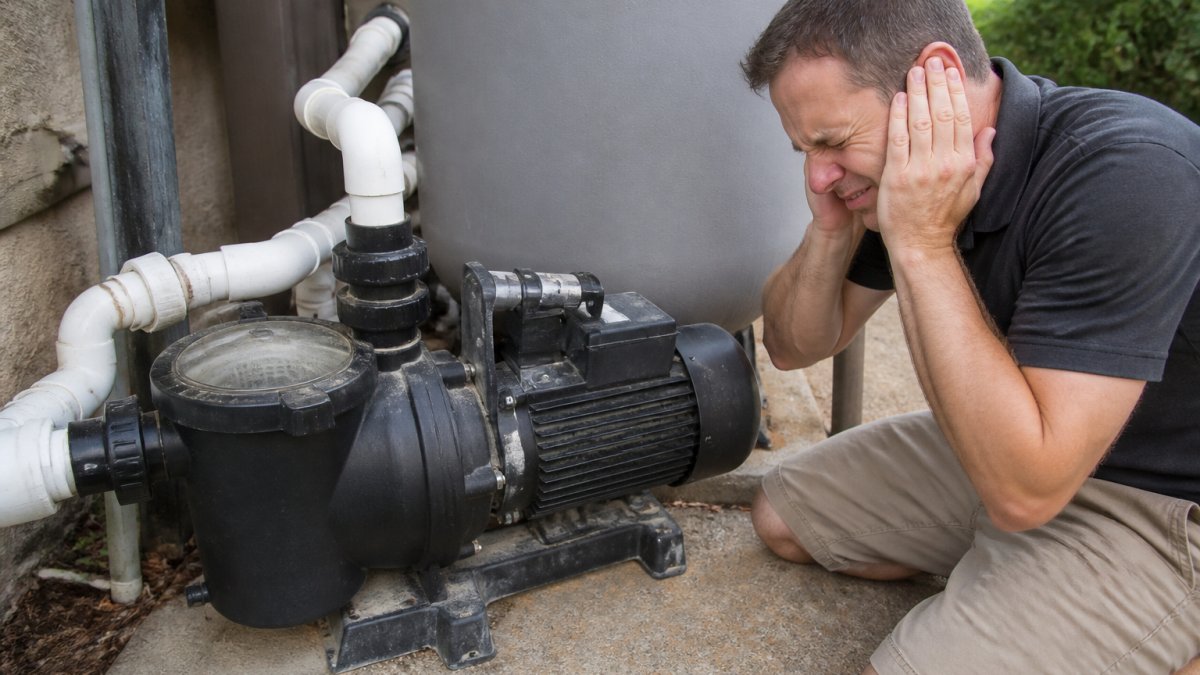
Weak return flow means poor turnover, and no filter clears water it never sees. Check the skimmer and pump baskets first, they clog fast in summer and near trees. Then check the impeller for debris, the pump for air leaks (bubbles in the pump basket), and the return jets for aim. A pool needs a full turnover roughly every 8-12 hours to clear haze; if the pump runs only a few hours a day, filtration is the bottleneck regardless of filter condition.
Step 4: When the Water Stays Cloudy After a Clean Filter
If chemistry is in range, the filter is clean, and the pump is moving water, the cloudiness has a persistent cause. Work through these:
- High calcium hardness. Above roughly 400 ppm, calcium precipitates out as a white haze that no filter catches. Test hardness; if it is high, partial drain and refill with softer water is the standard fix. In hard-water areas this is a common recurring cause.
- Metals. Iron or copper in the water can oxidize into a tint or haze, especially after shocking. A sequestering agent and a metals test are the starting point.
- Undersized filter. A filter rated for a smaller pool than yours will never keep up during an algae bloom. Check the filter's rated flow against your pump's output.
Step 5: Know When to Stop and Call
If chemistry is balanced, the filter is clean at normal pressure, and circulation is strong, yet the water is still cloudy past three days, the cause usually needs a trained eye, a failing pump, a filter due for replacement, or hardness and metals requiring a drain and refill. For equipment issues beyond a backwash, with a professional repair assessment.
Cloudy Pool Water After Shocking: What It Means
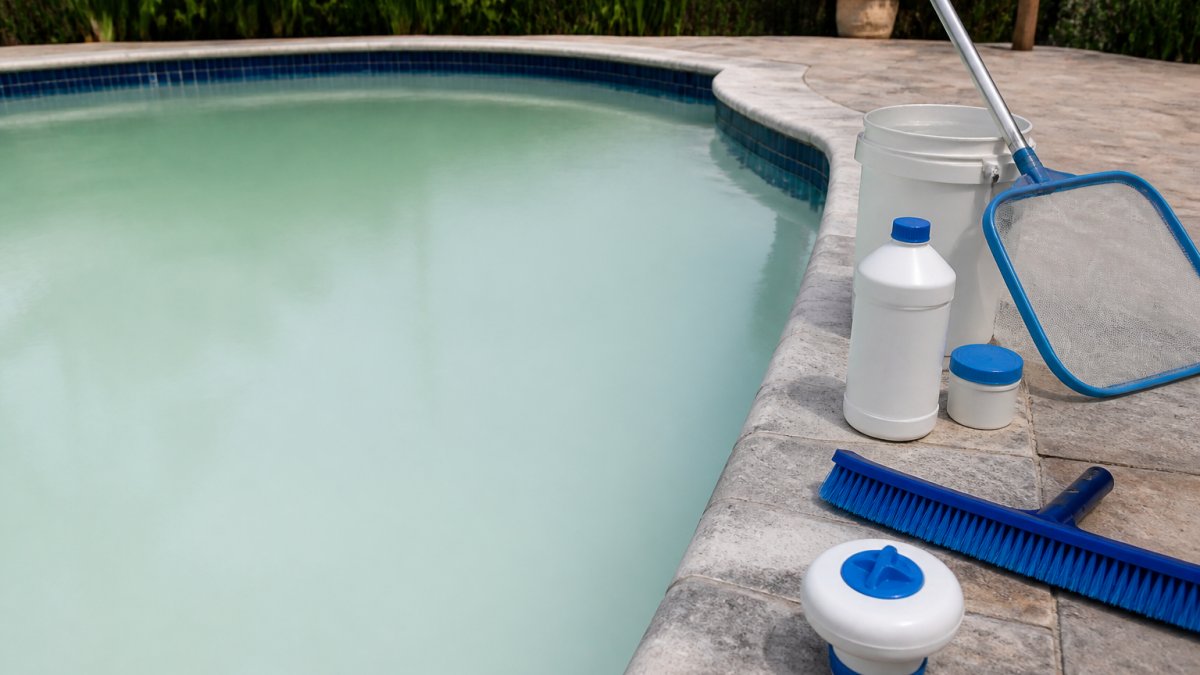
Cloudy pool water after shocking usually means the chlorine is working. Dead algae and oxidized contaminants turn the water milky white, then the filter clears it over the next day or two. That is normal.
What is not normal: cloudiness that lasts past 48 hours with good chemistry and a clean filter. That points to one of three things:
- The shock dose was too low for the stabilizer level in the pool.
- The filter is undersized or the media is worn out.
- pH drifted high during treatment, weakening the chlorine.
Run the pump 24 hours straight and retest. If the water is still hazy on day three, stop adding chemicals and check the filter.
Clarifier or Flocculant? Pick Based on Your Filter
Clarifier and flocculant both clear cloudy pool water, but they work differently and suit different filters. Choosing the wrong one wastes money and can make things worse.
- Clarifier binds tiny suspended particles into slightly larger clumps the filter can catch. It suits cartridge and sand filters and works best on light haze.
- Flocculant drops particles to the pool floor as a settled layer you vacuum to waste. It suits sand and DE filters and handles heavy cloudiness. Do not use flocculant in a cartridge filter; the sticky clumps ruin the cartridge.
Pick based on your filter type first, then on how cloudy the water is. Light haze with a cartridge filter calls for clarifier. You can find the right chemical with local guidance on dosing for your pool size.
When to Call Clear Water Pools for a Quote
Some cloudiness clears in a day. Some keeps coming back no matter what you add. The difference is usually a hidden equipment problem or a chemistry issue that needs a trained eye.
Call us when:
- The water stays cloudy past three days of correct treatment.
- The filter pressure will not stay in range after backwashing.
- You are managing multiple properties and cannot keep up with weekly testing.
We provide weekly cleaning and equipment repair, digital service reports with photos and water readings, and responsive communication for homeowners and property managers. If you would rather stop fighting the water yourself, request a weekly cleaning quote, or see pool service in Kissimmee for recurring care in your area.
Frequently Asked Questions
Is it safe to swim in cloudy pool water?
No. Cloudy pool water can hide harmful bacteria and reduce the effectiveness of your sanitizer, so swimming before the water clears raises the risk of illness and makes it hard to see a struggling swimmer. Wait until you can clearly see the main drain at the deep end and your free chlorine and pH read in range. If guests are arriving, tell them the pool is closed for treatment rather than letting them swim in water you cannot see through.
How long does it take to clear cloudy pool water?
Most mild cases clear within 24 to 48 hours once you correct chemistry and run the pump continuously. Heavier cloudiness from algae or a filter problem can take three to five days. Check progress at the 24-hour mark by looking at the deep end drain, and re-test free chlorine and pH. If nothing improves after two full days of filtration and correct dosing, the cause is usually filtration, not chemicals.
Will shock clear a cloudy pool?
Shock clears cloudy pool water when the cause is low free chlorine or combined chloramines, because it breaks down the contaminants clouding the water. It will not fix cloudiness caused by high pH, high calcium hardness, or a clogged filter. Test first: if free chlorine is already high and pH is above 7.8, adding more shock wastes money and can make the water cloudier.
Should I use clarifier or flocculant for cloudy pool water?
Use a clarifier when particles are fine and suspended and your filter is running normally; it clumps them so the filter can catch them. Use a flocculant when the water is heavily clouded with dead algae or silt and you can shut the pump off so particles settle to the floor for vacuuming to waste. Never run a flocculant through a cartridge filter, and never add both at the same time.
Cloudy water is a symptom, not the problem. The fix is a test, a balanced pool, and a filter that actually works. Clear Water Pools handles all three on a weekly schedule, with photos and readings you can check after every visit. Get started with Clear Water Pools and keep your pool guest-ready all year.