 how-to
How to Fix a Noisy Pool Pump: 2026 Diagnostic Guide
Table of Contents
- Start With the Sound: A Noisy Pool Pump Diagnostic Decision Tree
- Safety First: When to Turn Off the Pump and Stop
- Fixing a Pool Pump Rattling Noise: Baskets, Mounts, and Loose Parts
- Tracing a Pool Pump Grinding Noise: Impeller, Diffuser, and Debris
- Pool Pump Humming but Not Starting: Air Leaks, Power, and Seals
- Pool Pump Bearing Replacement: Diagnosing Worn Motor Bearings
- Verify the Repair and Keep the Noise From Coming Back
- Frequently Asked Questions
Last Updated: October 19, 2026
Start With the Sound: A Noisy Pool Pump Diagnostic Decision Tree
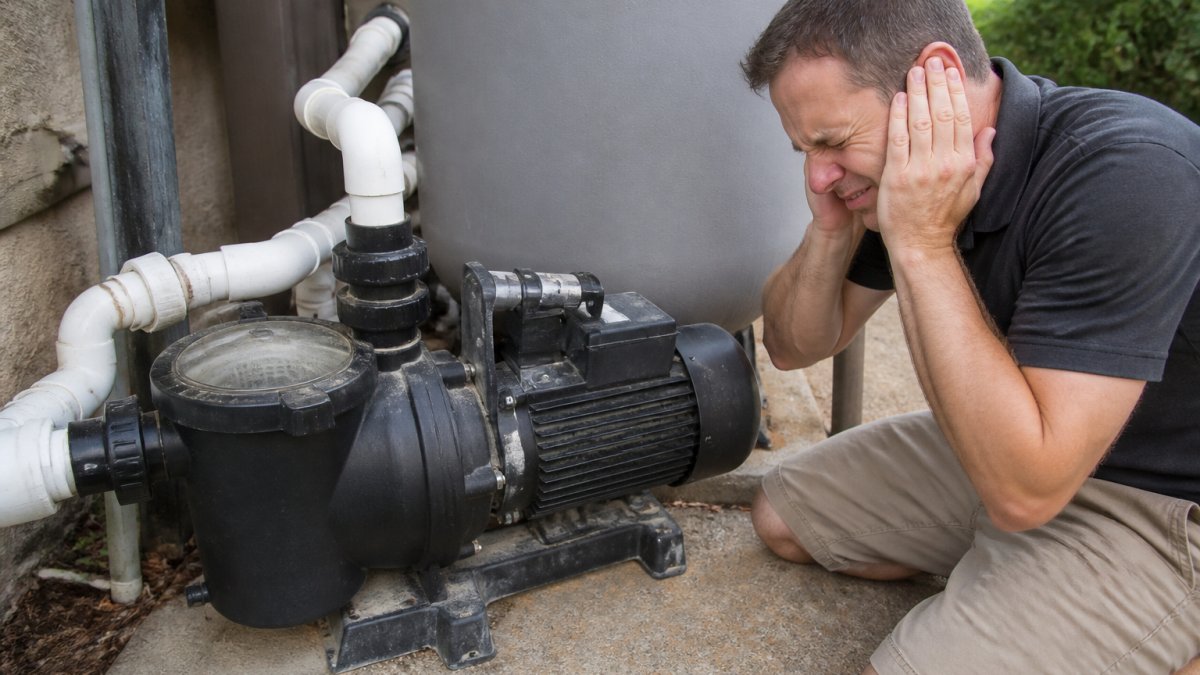
A noisy pool pump usually tells you exactly what is wrong, if you know how to listen. We diagnose by sound first, because the type of noise narrows the cause faster than visual inspection. Most homeowners jump straight to "the pump is dying" and start pricing replacements, almost always the wrong first move.
Here is the diagnostic decision tree we use on service calls:
- Rattling or vibrating → loose parts, debris in the basket, or a bad mounting pad
- Grinding or screeching → debris in the impeller or worn motor bearings
- Humming without water movement → air leak, power problem, or a stuck impeller
Each sound points to a different repair. Guessing wastes money. Listening saves it.
Safety First: When to Turn Off the Pump and Stop
Shut off the pump at the breaker before any inspection, not just at the timer switch.
Stop and call a licensed technician if you see any of these:
- Scorched or melted wiring at the motor housing
- Water pooling around the pump base or seal area
- A burning smell near the motor
The Occupational Safety and Health Administration electrical safety guidance is written for workplaces, but the principle applies at home: de-energize, verify, then work.
Repair boundaries matter: baskets, lids, O-rings, and mounts are homeowner-level work; bearings, seals, and motor internals are not. Bearing replacement on a sealed motor usually means disassembly that voids warranties and can damage the windings.
Fixing a Pool Pump Rattling Noise: Baskets, Mounts, and Loose Parts
A pool pump rattling noise almost always traces to something loose or caught in the water path. Work from the cheapest, most likely cause outward, and understand why each part rattles so you can confirm the fix instead of guessing.
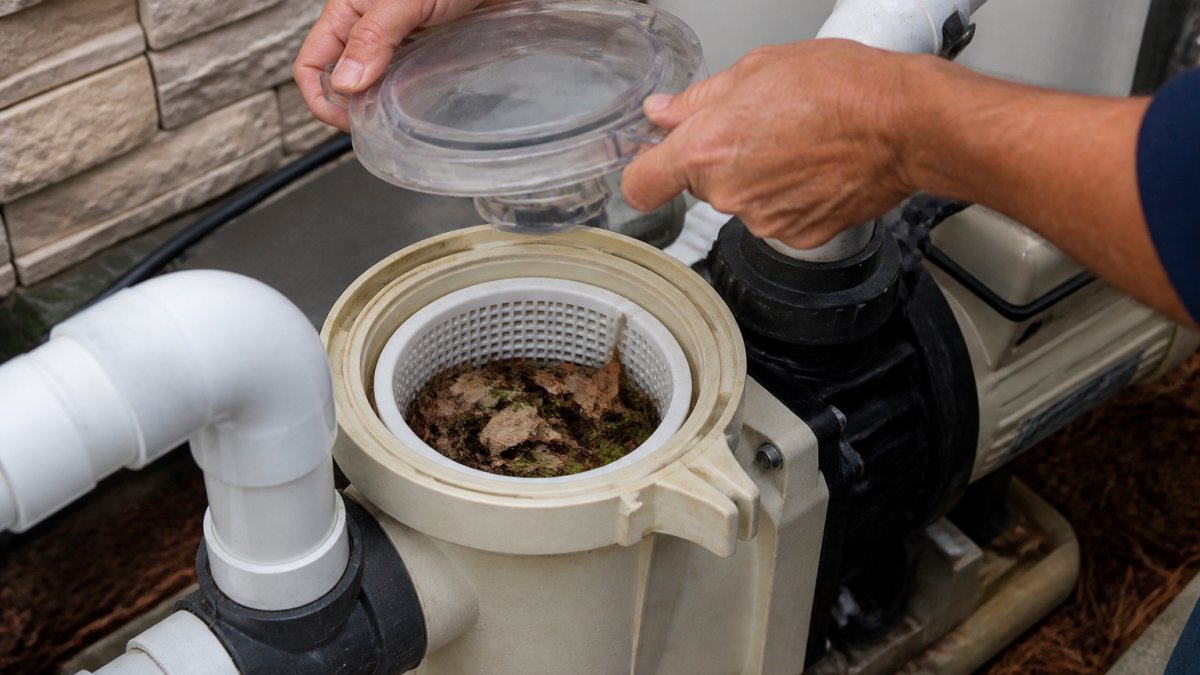
Clear the Pump Basket and Skimmer Basket
Turn off the pump at the breaker, remove the lid, lift out the pump basket, empty and rinse it.
Check the skimmer basket too. A clogged skimmer lets the pump draw air, making the system noisy and potentially damaging the seal. Clean both baskets weekly during leaf season and inspect for cracks or split seams, a cracked basket lets debris reach the impeller, turning a simple rattle into a grinding repair.
Check the Mounting Pad and Vibration-Dampening Mounts
Grab the pump housing and try to rock it gently. Any movement means the mounting pad is cracked or the vibration-dampening mounts have worn out.
Replace worn mounts as a set, not one at a time, because a single new mount changes the load on the others. Confirm the pump sits level; a settled or cracked pad stresses the housing and unions and produces a rattle no basket cleaning will fix.
Check the Unions, Valves, and Plumbing
Loose union collars and partially closed valves are underrated rattle sources. With the pump off, hand-tighten every union on the suction and return side, then check the valve handles, a valve stuck partway open can chatter as water rushes past the gate. Also look for pipe touching the pump housing or pad; vibration travels through contact points. A short length of foam pipe insulation between pipe and hard surface is a cheap fix.
Tracing a Pool Pump Grinding Noise: Impeller, Diffuser, and Debris
A pool pump grinding noise points to something physically interfering with the rotating assembly. The impeller is the first suspect, and debris is the first cause.
Inspect the Impeller and Impeller Shaft
With the pump off and the breaker tripped, remove the pump basket and reach into the housing. You can usually feel the impeller through the inlet. Spin it gently.
If it feels rough, debris is wrapped around the impeller or jammed against the diffuser, small twigs, pine needles, and hair slip past baskets more often than people expect. Clear it by hand or with a soft brush.
Check the Diffuser and Pump Housing for Clogs
The diffuser sits behind the impeller and directs water flow. Debris caught there causes grinding and reduced pressure. Remove it carefully, inspect for cracks, and clear any blockage.
While you have it open, look at the pump housing for scoring or pitting. Deep wear means the pump has run dry at some point, and that damage does not reverse itself.
Pool Pump Humming but Not Starting: Air Leaks, Power, and Seals
A pool pump humming but not starting is the most misdiagnosed symptom in pool care: the motor gets power but cannot turn. That is either a water problem, an electrical problem, or a mechanical bind.
Inspect the Pump Lid, O-Ring, and Suction Line
Air in the system is the most common cause. Check these in order:
- Pump lid: cracked or not seated fully
- O-ring: dried out, flattened, or nicked
- Suction line: loose union, cracked fitting, or a valve stuck partway
Lubricate the O-ring with a silicone-based pool lubricant, reseat the lid, and restart. If the pump catches, you found it. If the pump basket will not fill with water, the suction line is pulling air from somewhere upstream.
Check Electrical Connections and the Pump Seal
If water flow is fine and the pump still hums, the problem is mechanical or electrical. A failed capacitor is a common culprit on older motors, and a failed shaft seal can let water reach the bearings and seize the shaft.
Tighten all electrical connections at the pump and the timer. Look for corrosion. If the shaft will not turn by hand with the power off, the motor is bound and needs professional service.
Pool Pump Bearing Replacement: Diagnosing Worn Motor Bearings
Motor bearings are the last stop in the diagnostic chain, not the first. Confirming them takes one simple test; deciding whether to repair or replace takes a clear-eyed look at cost and pump age.
How to Confirm the Bearings Are the Source
With the pump off and the breaker locked out, remove the basket and spin the impeller by hand. Smooth and silent means the bearings are fine; rough, gritty, or loud means you found the problem.
Listen at the back of the motor housing too. Bearing noise comes from the motor end, not the pump end, pump-end noise is a water or debris issue.
Repair or Replace: Decision Criteria by Pump Type
This is where most guides stop short, and it is the decision that costs homeowners the most. Get a written quote before you commit.
| Pump Type | Bearing Repair Makes Sense When | Replace Instead When |
|---|---|---|
| Above-ground pump | Motor is under 5 years old, housing is sound | Housing is cracked or motor is near end of life |
| Inground pump | Motor is serviceable and under warranty | Sealed motor or unit is 8+ years old |
| Variable-speed pump | Under warranty, use an authorized shop | Out of warranty and drive electronics are aging |
| Any pump | Water damage is limited to the seal area | Water reached the windings or rust is widespread |
An above-ground pump is simple to swap, so a bearing job is often not worth the labor once you factor in a new unit. An inground pump is more involved, and bearing replacement can be the cheaper path if the motor is otherwise healthy.
Verify the Repair
After a bearing or seal repair, restart the pump and listen at the motor end for a full minute, then again after an hour. The screech should be gone and the pump should spin up smoothly. Check the seal area for weeping water, confirm the basket fills fully within seconds, and feel the motor housing after an hour, warm, not hot enough to sting.
Verify the Repair and Keep the Noise From Coming Back
Restart the pump and watch the basket fill; it should fill fully within a few seconds. If not, you still have an air leak or suction blockage.
Listen for a full minute at startup and again after an hour of running. Noise that returns once the pump warms up points to a bearing or alignment issue you have not fully solved.
Preventive Maintenance Schedule
A little routine work prevents most noisy pump calls:
- Weekly: empty the pump basket and skimmer basket, skim debris
- Monthly: check the O-ring, inspect the pump pad, listen for new sounds
- Quarterly: backwash or clean the filter, check unions and fittings
- Seasonally: lubricate the O-ring, test the breaker, inspect mounts
Documenting what you find each month makes changes obvious. That is the approach at Clear Water Pools: our digital service reports include photos and water readings, so equipment concerns get flagged before they become breakdowns. For property managers juggling multiple pools, that paper trail is the difference between a routine fix and an emergency call.
Frequently Asked Questions
Why does my pool pump make a loud noise?
A noisy pool pump usually points to one of four sources: debris in the pump basket or impeller, vibration from a loose mounting pad or worn vibration-dampening mounts, air pulled in through a bad pump lid O-ring or suction line, or worn motor bearings. The type of sound narrows it fast. Rattling points to loose parts or debris, grinding points to the impeller or diffuser, and humming without water movement points to air or an electrical problem. Match the sound to the cause before buying any parts.
Can bearings be replaced on a pool pump motor?
Yes. Pool pump bearing replacement is a standard repair on most above-ground and in-ground pump motors, and the bearings themselves are inexpensive. The job requires pulling the motor, separating the wet end from the motor housing, pressing out the old bearings, and pressing in new ones, then replacing the pump seal and shaft seal at the same time. Because it involves motor disassembly and electrical reconnection, many homeowners hand this one to a licensed tech rather than risk damaging the motor or the seal.
Why is my pool pump rattling or vibrating?
A pool pump rattling noise almost always comes from something loose or something unbalanced. Check the pump basket and skimmer basket for debris first, then look at the mounting pad and vibration-dampening mounts, since a cracked pad or worn rubber feet let the motor shake the whole plumbing run. Loose union fittings and pipes that touch the pump housing also rattle. Tighten connections, clear the baskets, and replace worn mounts before assuming the motor is failing.
What should I check if my pool pump is humming but not starting?
A pool pump humming but not starting is usually starved of water or power. Turn off the pump, then check the pump lid and O-ring for a bad seal, inspect the suction line for a blockage or air leak, and confirm the skimmer basket is clear. If water flow is fine, check the electrical connections and the pump seal. If the motor hums and gets hot without spinning, stop and call a licensed technician, since a seized shaft or failed capacitor is not a homeowner fix.
A noisy pump is rarely a mystery once you match the sound to its cause. The challenge is doing that consistently, week after week, across every pool you are responsible for. Clear Water Pools handles weekly cleaning and equipment repair with fully licensed and insured technicians, documented digital reports with photos and water readings, and responsive communication when something sounds off. Request a quote and let us keep your pump quiet and your pool ready.