 blog
Reliable Residential Pool Cleaning Services in 2026
Table of Contents
- What to Expect from Reliable Residential Pool Cleaning Services in 2026
- Pool Cleaning Service Cost: What Drives Your Weekly Price
- A Complete Pool Maintenance Service Checklist
- Professional Pool Water Testing: Why It Matters More Than Ever
- Questions to Ask a Pool Service Company Before You Sign
- How to Compare Service Plans Like a Pro
- Conclusion
- Frequently Asked Questions
Last Updated: October 18, 2026
What to Expect from Reliable Residential Pool Cleaning Services in 2026
Reliable residential pool cleaning services in 2026 are built on three things: a fixed schedule, documented chemistry, and technicians who know your equipment by name.
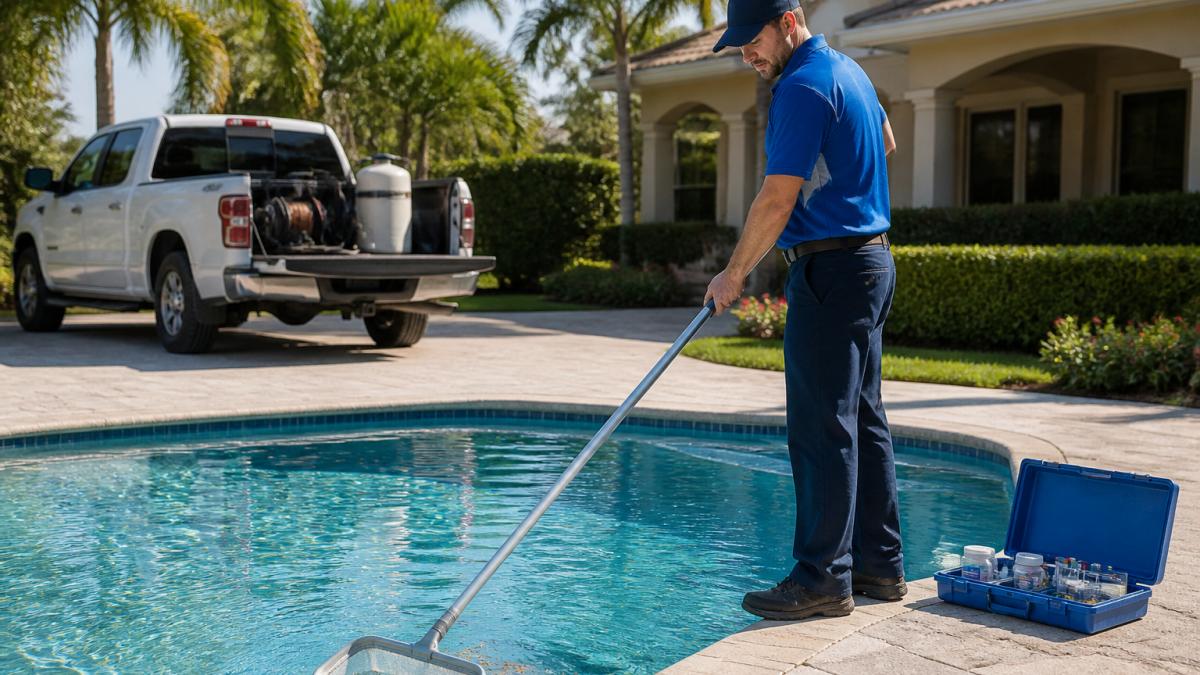
Homeowners increasingly ask for proof of work, not just a clean surface.
Below, we'll show what separates a dependable weekly provider from a crew that dumps chlorine and leaves, plus the questions that expose weak operators fast.
The Core Services: Weekly Cleaning, Water Testing, and Equipment Checks
A standard maintenance visit covers three jobs. First, physical cleaning: skimming debris, brushing walls and tiles, and vacuuming the floor. Second, water testing and chemical balancing to keep pH, chlorine, and alkalinity in range.
What most guides miss is how much the third item matters. CDC guidance on healthy swimming water treats water chemistry as a public health issue, not a cosmetic one.
Why Consistency Beats One-Time Deep Cleans
One-time deep cleans fix a moment. Weekly service prevents the problem from returning.
Algae, scale, and cloudy water build over days, not hours. A pool left alone for three weeks needs a shock treatment and a filter clean to recover.
We schedule recurring visits because consistency is the biggest factor in water clarity and equipment life. A balanced pool stays cheaper to own.
Pool Cleaning Service Cost: What Drives Your Weekly Price
Pool cleaning service cost depends on pool size, debris load, chemical demand, and route density, not a flat national rate. Providers price by the visit, and the visit price reflects how much labor and chemistry your pool consumes. In 2026, read a quote by separating recurring maintenance pricing from one-time cleanup pricing, the two are built from different inputs.
Recurring vs. One-Time Pricing: Two Different Math Problems
A recurring weekly or biweekly price is a route price: labor, chemicals, and drive time spread across many pools in a tight area, so the per-visit number stays stable month to month.
That is why a low weekly rate often comes with a much higher first-visit or one-time rate: the first visit usually includes a recovery clean, a full chemical baseline, and an equipment assessment.
How Providers Build the Number
Most residential pool service pricing follows a simple build-up:
- Base labor time. How long the pool takes to skim, brush, vacuum, test, and balance. A small rectangle with a screen enclosure may take 20-30 minutes; a large freeform pool with a spa and heavy landscaping can take 45-60 minutes or more.
- Chemical allowance. A per-visit chemical budget based on pool volume and bather load. High-use pools and pools in full sun consume more chlorine and acid.
- Route and drive time. Pools clustered near other accounts cost less to service than isolated pools that require a dedicated trip.
- Equipment and access. A pool with a failing pump, a clogged filter, or difficult access (locked gates, steep grades, no parking) adds monitoring and handling time.
- Frequency discount. Weekly accounts usually carry a lower per-visit price than biweekly accounts because the provider can plan the route and the pool stays more stable between visits.
What Moves Your Quote Up or Down
- Pool size and shape. A large freeform pool with a spa takes longer to brush and balance than a small rectangle.
- Debris environment. Pools under oak or palm canopy need more skimming and more frequent filter attention.
- Chemical demand. High bather load or heavy sun exposure raises chlorine consumption.
- Equipment condition. Aging pumps and filters mean more monitoring time and more frequent backwashing.
Reading a Quote Without Getting Surprised
A quote built without seeing your pool is a guess. Ask for a written scope stating visit frequency, what each visit includes, the chemical allowance (or how overages are billed), and the first-visit charge.
We don't publish flat rates because every pool consumes a different amount of labor and chemistry. Request a quote from Clear Water Pools for pricing tied to your actual pool.
Plan Structures: Weekly vs. Biweekly vs. One-Time
| Plan | Best For | Visit Frequency | Trade-off |
|---|---|---|---|
| Weekly service | Year-round pools, heavy debris, rentals | Every week | Highest total cost, best water stability |
| Biweekly service | Light-use pools, screened enclosures | Every two weeks | Lower cost, more chemistry swings |
| One-time cleaning | Opening, event prep, post-storm recovery | Single visit | No ongoing protection |
Weekly plans suit most Central Florida pools because heat and rain push algae growth fast. Biweekly works for screened, lightly used pools. One-time cleans are a reset, not a strategy.
A Complete Pool Maintenance Service Checklist
A pool maintenance service checklist should cover cleaning, chemistry, and equipment in every visit. If your provider can't tell you what's on theirs, that's your first warning sign.
What a Thorough Visit Should Cover
- Skim surface debris and empty skimmer baskets
- Brush walls, steps, and waterline tile
- Vacuum the pool floor
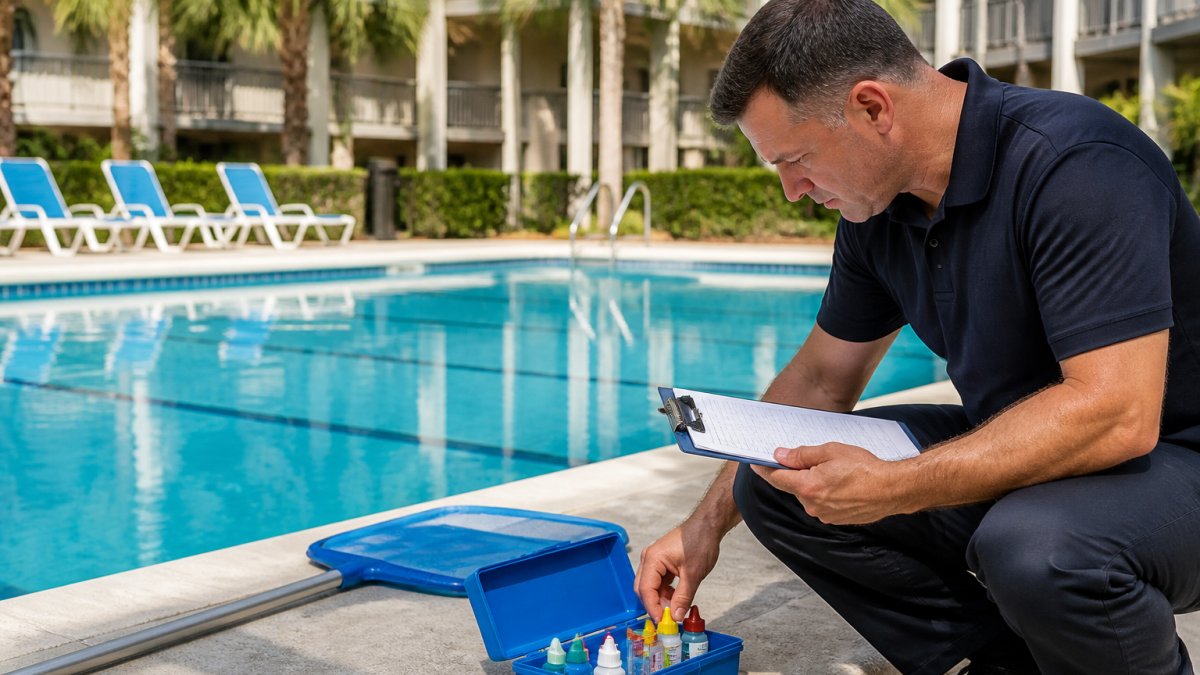
- Test pH, free chlorine, total alkalinity, and stabilizer
That last item separates professional service from a guy with a net. Documentation is how you verify the work happened.
Professional Pool Water Testing: Why It Matters More Than Ever
Professional pool water testing means measuring pH, chlorine, alkalinity, calcium hardness, and stabilizer with calibrated equipment, then adjusting chemistry to target ranges. It matters because clear water is not the same as safe water.
EPA information on recreational water quality frames water quality as a shared responsibility between operators and users. For a residential pool, that responsibility sits with whoever services it.
Digital Reports and How to Verify Readings
Ask for readings with every visit, not a summary. A good report shows the actual numbers, the target range, and what was adjusted. If you don't trust the numbers, buy your own test kit and compare. A reputable provider welcomes the check.
Questions to Ask a Pool Service Company Before You Sign
Questions to ask a pool service company should focus on scheduling reliability, documentation, licensing, and how they handle repairs. But the stronger move is to verify reliability before you hire with a checklist you can actually run, most homeowners ask good questions and then accept verbal answers, when a reliable provider will hand you proof.
The Reliability Verification Checklist
Run these checks in order. Each one either produces a document or exposes a gap.
- Licensing where applicable. Pool service licensing varies by state and locality. Ask whether the provider holds any required local business or contractor license for the work they perform, get the license number, and verify it with the issuing agency rather than accepting a logo on a truck.
- Insurance. Ask for a current certificate of general liability insurance. If a technician damages a screen enclosure, a pump fitting, or a deck, you want coverage in place before the visit, not after.
- References for similar pools. Ask for two or three references from pools similar to yours in size, type, and debris load. A provider who services mostly small screened pools may not be the right fit for a large, heavily landscaped pool.
- A written service agreement. It should state visit frequency, the day of service, what each visit includes, the chemical allowance, the first-visit charge, the repair authorization process, and cancellation terms. If the schedule is not in writing, it is not a schedule.
- Response-time commitment. Ask how quickly they respond to calls or messages during peak season and what happens if a visit is missed. A named contact and a stated response window are stronger than a general inbox.
- Documentation sample. Ask to see a sample service report from a comparable pool. You want actual readings, a target range, what was adjusted, and photos, not a text that says "serviced."
- Repair authorization policy. Confirm that any repair beyond routine service requires a written quote and your approval before work begins. You want a quote before work, not a surprise invoice.
Questions That Expose Weak Operators Fast
- "What happens if my scheduled day is rained out?" A firm answer shows they have a plan; a vague answer shows they do not.
- "Will I get the same technician each week?" Consistency reduces mistakes and makes documentation more reliable.
- "How do you handle repairs you find during service?" The right answer includes photos, a written quote, and your approval.
- "Can you show me last month's reports for a pool like mine?" A provider who documents every visit will have them ready.
Red Flags and Reliability Checks
Watch for providers who won't put a schedule in writing, skip water testing, push expensive repairs without photos and a written quote, use vague pricing with add-on fees, or can't produce a certificate of insurance or a sample service report on request. Reliability shows up in small ways, showing up on the promised day, answering calls during summer, flagging equipment problems before they fail, and the checklist above turns those signals into verifiable evidence you can review before you sign.
How to Compare Service Plans Like a Pro
Compare plans on what's included, not just the visit price. Two quotes at different prices can hide very different scopes.
Use this framework:
- Scope: Does the plan include brushing, vacuuming, full chemistry, and equipment checks, or just skimming and chlorine?
- Frequency: Weekly, biweekly, or on-call? Match frequency to your pool's debris load and use.
- Documentation: Are readings and photos included, or is it a text saying "serviced"?
- Repair policy: Written quote before work, or open-ended billing?
A lower price with a thinner scope usually costs more over a season. Compare the full picture, then decide.
Conclusion
The hard part of pool ownership isn't finding someone to skim the surface.
Clear Water Pools handles that for homeowners and property managers across Central Florida with weekly cleaning and equipment repair, digital service reports with photos and water readings, responsive communication, and fully licensed and insured technicians.
Request a quote from Clear Water Pools and get a service plan built around your pool.
Frequently Asked Questions
How much does it cost to professionally clean a pool?
Pricing for professional pool cleaning depends on your pool size, service frequency, and local labor rates. Most companies offer weekly, biweekly, or one-time plans. Because costs vary by provider and region, request a written quote that itemizes cleaning, water testing, and chemical balancing. Avoid companies that quote a low base rate but add surprise fees for chemicals or equipment checks. A transparent provider will explain what is included before you commit.
How often should a residential pool be cleaned?
Most residential pools benefit from weekly service, especially in warm climates where algae and debris accumulate quickly. Biweekly visits can work for lightly used pools with screened enclosures, but they may not keep water balanced between visits. One-time cleanings are best for opening, closing, or recovering from a neglected pool. Your service provider should recommend a schedule based on your pool's usage, surrounding trees, and filtration system.
What should a weekly pool cleaning service include?
A thorough weekly visit typically includes skimming debris, brushing walls and tile, vacuuming the floor, emptying baskets, checking the filter and equipment, testing water chemistry, and balancing chemicals. Reliable companies also provide a written or digital report with photos and readings. Ask for a checklist upfront so you know exactly what happens each visit. If a provider cannot list their standard tasks, that is a warning sign.
How can I tell if a pool cleaning company is reliable?
Look for proof of licensing and insurance, consistent communication, and documented service visits. Ask for a sample service report and check online reviews for complaints about missed visits or surprise charges. A reliable company will offer a clear schedule, a named contact, and a written agreement. During the first month, verify that visits happen as promised and that water readings match your own test strips. Reliability shows up in records, not just promises.
Clear water and a dependable schedule shouldn't be a gamble. Get a quote from Clear Water Pools and put your pool on a maintenance plan you can actually verify.