 how-to
Why Is My Pool Water Green? Causes and Fixes
Table of Contents
- What Causes Green Pool Water?
- Pool Water Testing: Find the Actual Cause
- How to Clear a Green Pool
- Green Pool Water After Shocking: Why It Happens
- How Long Does It Take to Clear a Green Pool?
- When Green Pool Water Needs a Professional
- Frequently Asked Questions
Last Updated: October 16, 2026
What Causes Green Pool Water?
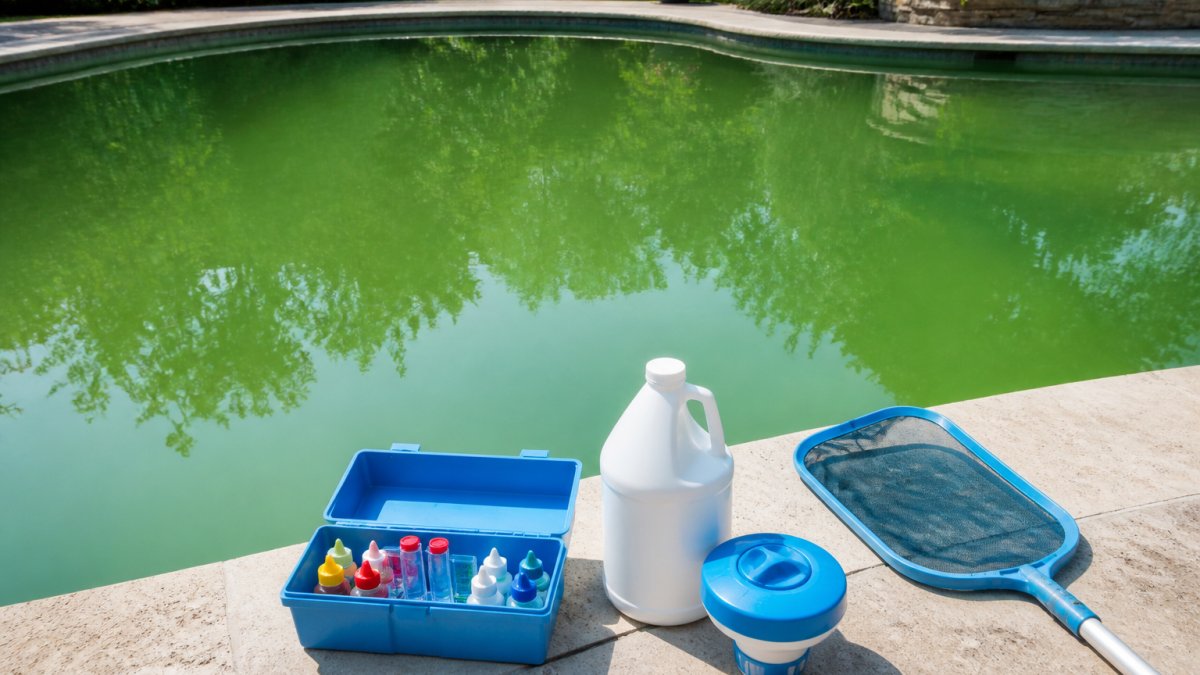
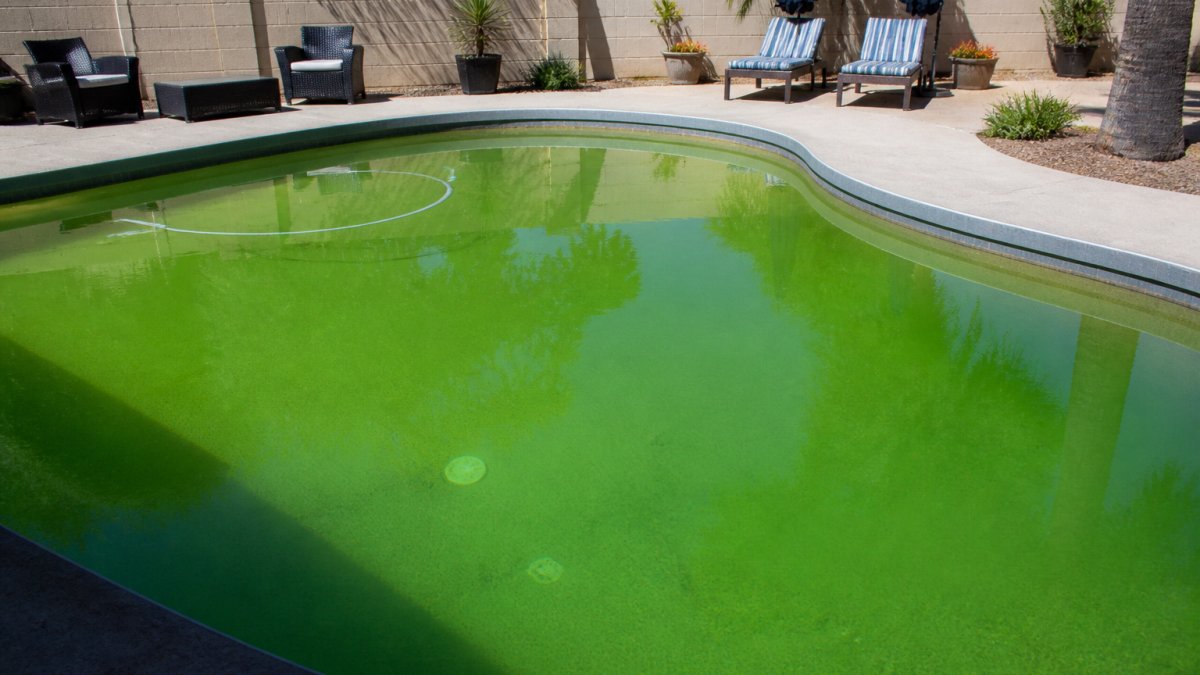
If you are asking why is my pool water green, it almost always means one of two things: algae is growing in the water, or metals and pollen are staining it. Algae is the cause in most cases, and it shows up when free chlorine drops too low to keep the water sanitized. We see this most often after heavy rain, a heat wave, or a stretch of skipped maintenance.
The fix depends entirely on which cause you have. Treat algae when the problem is metals, and you will waste shock and still have green water. So before you buy anything, test the water.
Algae Growth and Low Free Chlorine
Free chlorine is the active sanitizer in your pool. When it falls below the level needed to kill contaminants, algae takes hold fast. In warm weather, a pool can go from clear to green in a single day.
Common triggers include:
- Heavy rain that dilutes chlorine
- High heat and direct sun that burn off sanitizer
- A clogged filter or weak pump
- High cyanuric acid locking up chlorine
- Skipped shock treatments
Metals, Pollen, and Other Non-Algae Causes
Green water is not always alive. Metals like iron and copper turn water green through oxidation, not algae growth. Pollen and organic debris can also tint the water. Here is how to tell them apart:
| Sign | Algae | Metals or Pollen |
|---|---|---|
| Water texture | Cloudy, slimy | Clear but tinted |
| Pool walls | Slippery film | No slime |
| After shocking | Clears slowly | Gets worse or turns brown |
| Test result | Low free chlorine | Metals present |
If shocking makes the water darker instead of clearer, you are likely dealing with metals, not algae.
Pool Water Testing: Find the Actual Cause
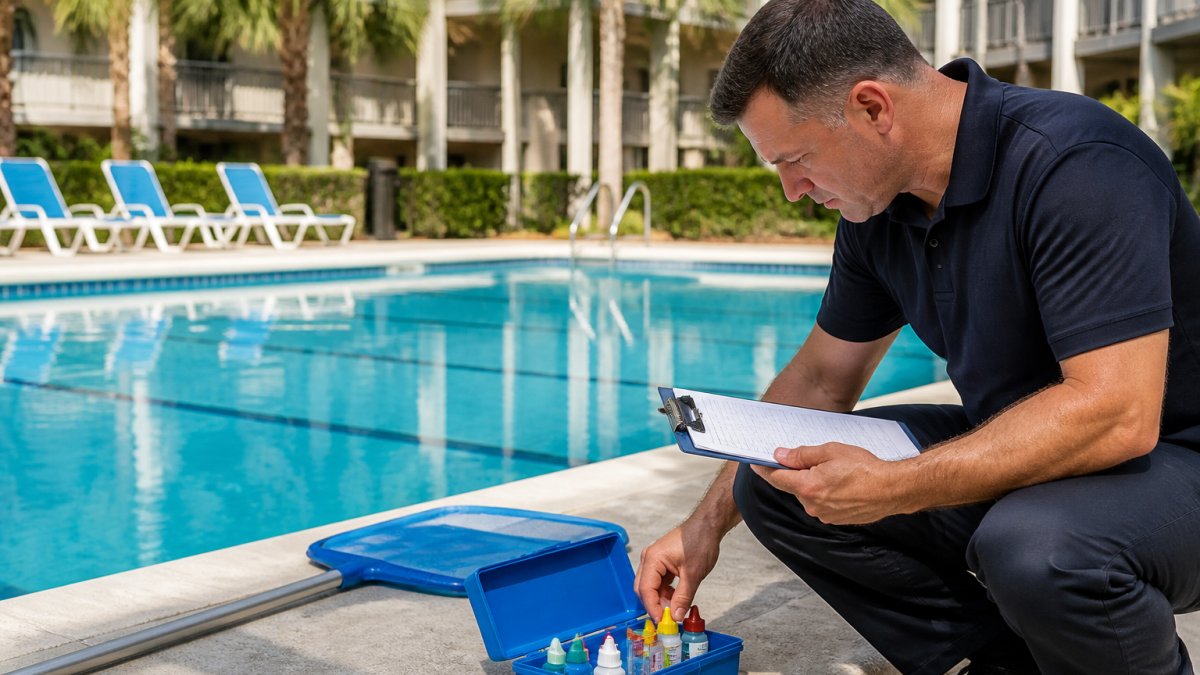
Testing is the only way to know why is my pool water green and what you are treating, and the order you test in matters as much as the numbers. A good kit checks free chlorine, combined chlorine, pH, total alkalinity, calcium hardness, cyanuric acid, and metals. Test before you add anything, and write the readings down so you can compare them after treatment.
Your targets should look like this:
| Reading | Ideal Range | What It Tells You |
|---|---|---|
| Free chlorine | 1-3 ppm | Active sanitizer available to kill algae |
| Combined chlorine | 0 ppm | Above 0.5 ppm means chloramines, not enough free chlorine |
| pH | 7.4-7.6 | Outside this range, chlorine loses killing power |
| Total alkalinity | 80-120 ppm | Buffers pH so it does not swing |
| Calcium hardness | 200-400 ppm | Too low corrodes surfaces, too high clouds water |
| Cyanuric acid | 30-50 ppm | Above 50 ppm locks up free chlorine |
| Metals (iron, copper) | 0 ppm | Any reading points to a non-algae cause |
According to the CDC guidance on pool water and swimmer health, keeping sanitizer and pH in range is the main defense against algae and waterborne illness.
Reading the Results Like a Diagnostician
Do not just check whether a number is in range. Check the pattern:
- Free chlorine at 0 ppm, cyanuric acid above 50 ppm. The chlorine is locked up by stabilizer and cannot sanitize. This is a chlorine lock problem, not a dosing problem. Partially drain and refill to bring cyanuric acid down before you shock.
- Free chlorine at 0 ppm, cyanuric acid in range. You have a chlorine demand problem. Something in the water is consuming chlorine faster than you add it. A full shock, not a maintenance dose, is the answer.
- Free chlorine in range, water still green. Algae is unlikely. Test for metals and check for pollen. Shocking will make metals worse, not better.
- pH above 7.8. Even with chlorine present, it is far less effective. Bring pH down first, then treat.
- Combined chlorine above 0.5 ppm. The pool is not fully sanitized. Shock to break the chloramines.
If your free chlorine reads zero but your cyanuric acid is sky-high, that is your answer: the chlorine is locked up and not working.
Testing for Metals
Standard test strips often miss metals. If the water is clear but tinted green, or if it turned brown after shocking, use a dedicated metals test kit or take a sample to a pool store for a lab reading. Iron and copper are the two metals that most often cause green water. Iron usually enters through source water or corroded equipment; copper usually comes from heater parts, algaecides, or plumbing. Knowing which metal you have changes the treatment, so do not skip this step.
How to Clear a Green Pool
Clearing a green pool takes three things done in the right order: shock, brush, and filter. Skipping a step is why many pools stay green for days.
Shock, Brush, and Run the Filter
- Balance pH first. Bring pH to 7.4-7.6 so shock works properly.
- Brush the walls and floor. Algae clings to surfaces and hides in corners.
- Add pool shock. Use a shock dose based on your pool volume, not a guess.
- Run the pump 24 hours. Constant circulation pushes dead algae into the filter.
- Backwash or clean the filter as pressure rises.
- Retest and repeat if chlorine drops back to zero.
For a metal problem, add a metal sequestrant instead of more shock, then filter and retest.
Green Pool Water After Shocking: Why It Happens
Green pool water after shocking usually means one of three things: the shock dose was too small, the filter is clogged, or metals are present. A proper shock dose is high enough to burn through the chlorine demand, not just top off the level.
If the water turns cloudy white or blue-gray after shocking, that is good news. Dead algae is what makes it cloudy, and the filter will clear it. If it turns brown or stays green, suspect metals.
A common mistake is adding a small "maintenance" dose when the pool needs a full shock. When chlorine demand is high, a light dose gets used up in minutes.
How Long Does It Take to Clear a Green Pool?
Most green pools clear in one to three days with proper shock, brushing, and filtering. Light green water can clear overnight. A dark, swampy pool can take a week or more.
The timeline depends on:
- How green the water is
- Whether the filter is working well
- How high the chlorine demand is
- Whether metals are involved
Do not swim until free chlorine is back in range and the water is clear. Cloudy water can hide hazards you cannot see.
When Green Pool Water Needs a Professional
Some green pools will not clear no matter how much shock you add. That is the point where a pro saves you money. If repeated shocking fails, the cause is usually deeper: a failing pump, a filter that needs service, hidden metals, or water chemistry that will not hold.
At Clear Water Pools, we test the water, service the equipment, and document every reading with photos, so you know exactly what was done and why. We handle weekly cleaning, equipment repair, and the water balance that keeps algae from coming back. For homeowners, rental managers, and commercial properties, that means a pool that stays ready instead of one that turns green every few weeks.
If your pool keeps going green, it is not bad luck. It is a system that needs a closer look.
Frequently Asked Questions
Why is my pool still green after adding chlorine?
Chlorine gets consumed fast when algae is heavy. If free chlorine reads zero shortly after you add it, the pool has high chlorine demand and needs a larger dose, often 2 to 3 times the normal shock amount. Check cyanuric acid too. Above 70 to 80 ppm, it locks up chlorine and slows the kill. Brush the walls, run the pump 24 hours, and retest before adding more.
Is it safe to swim in green pool water with algae?
No. Green pool water usually means low or zero sanitizer, so bacteria and algae are present. Swallowing that water can cause stomach illness, and skin or eye irritation is common. Keep everyone out until free chlorine holds at 1 to 3 ppm, pH sits between 7.2 and 7.8, and the water is clear enough to see the drain. Testing the water before anyone swims is the only reliable check.
How long does it take to clear a green pool?
A light green pool often clears in 24 to 48 hours after a proper shock and brushing routine. Heavier algae, or water that has been green for weeks, can take 3 to 5 days with repeated treatments and constant filtration. Metals and pollen clear faster once you use a sequestrant or skim and vacuum the debris. Run the pump around the clock and clean or backwash the filter daily until the water is clear.
Can high pH make pool water turn green?
High pH does not turn water green on its own, but it weakens chlorine. When pH climbs above 7.8, free chlorine loses much of its killing power, so algae grows even though you added sanitizer. That is why a pool can look fine one day and green the next. Test pH and alkalinity first, bring pH into the 7.2 to 7.8 range, then shock and brush.
A green pool is a signal that something in your water or equipment is off, and guessing at fixes wastes time and chemicals. Clear Water Pools takes the guesswork out with weekly cleaning, expert equipment repair, and digital service reports that show every water reading and photo from each visit. Our team is fully licensed and insured, so your pool stays clean, balanced, and ready. Request a quote from Clear Water Pools and get a pool you never have to worry about.