 How-to
7 Signs of Pool Pump Failure Every Owner Should Know
Last Updated: November 2, 2026
Quick Summary
The signs of pool pump failure include grinding or screeching noises, weak return jets, failure to prime, water pooling under the pump, a motor that runs hot or smells like burning wiring, a tripping breaker, and a motor that hums but won't spin. Any one symptom deserves a look, and two or more together usually means the pump is already failing.
- A grinding noise points to worn motor bearings, while a hum with no spin points to a bad capacitor or seized shaft.
- A filter pressure gauge climbing above its normal clean level points to a clogged filter or blocked impeller.
- If the strainer basket stays half empty, air is entering somewhere on the suction side.
- Never reset a tripping breaker repeatedly, because a shorted winding can damage the breaker panel and create a shock hazard.
- A pump 10 or more years old with two or more failures in 24 months is usually better replaced than repaired.
Table of Contents
- 7 Warning Signs of Pool Pump Failure
- Why Is My Pool Pump Making Loud Noise?
- Troubleshooting Pool Pump Not Priming
- Overheating, Burning Smells, and Tripped Breakers
- Pool Pump Motor Replacement Cost: Repair or Replace?
- Safety First: DIY Testing Limits and When to Call a Pro
- Schedule a Pool Pump Inspection with Clear Water Pools
- Frequently Asked Questions
7 Warning Signs of Pool Pump Failure
A pool pump rarely dies without warning. Most failures announce themselves weeks in advance through noise, weak flow, or a motor that runs hot. Catching those signs of pool pump failure early is the difference between a simple fix and a flooded equipment pad, and this guide from Clear Water Pools walks through each one in the order we see them on service calls.
The core issue is simple: water flow, electrical load, and mechanical wear all talk to each other. When one drifts, the others follow.
Below, we'll show you exactly what each symptom points to, which checks are safe to run yourself, and when to stop and call a licensed technician.
Watch for these seven symptoms. Any one alone deserves a look. Two or more together usually means the pump is already failing.
- Grinding, screeching, or rattling noises from the motor housing
- Weak return jets or a pressure gauge reading that keeps climbing
- The pump won't prime or the strainer basket stays half empty
- Water pooling under the pump or a dripping shaft seal
- A motor that runs hot or smells like burning wiring
- The circuit breaker trips when the pump starts
- The motor hums but won't spin the impeller
Each of these has a distinct cause. A grinding noise points to bearings. A hum with no spin points to a bad capacitor or a seized shaft. A tripped breaker points to an electrical fault. Matching the symptom to the cause is the whole game.
Unusual Noises and What They Mean
A healthy pump makes a low, steady hum. Anything else is a signal.
- Grinding or rumbling: worn motor bearings. The shaft is no longer spinning smoothly.
- Screeching or squealing: dry bearings or a failing shaft seal letting water into the motor.
- Rattling: loose debris in the impeller or a cracked strainer basket.
- Clicking on startup: a failing capacitor struggling to start the motor.
Bearings and seals are cheap parts. Left alone, they take the motor winding with them, and that turns a small repair into a full motor replacement.
Reduced Water Flow and Pressure Drops
Weak flow is a sign that is often misread as a filter problem when the pump is the cause.
Check the pressure gauge on your filter. A reading that climbs well above its normal clean level points to a clogged filter or a blocked impeller. A reading that drops below normal usually means the pump is pulling air or losing suction.
Then look at the return jets. If they feel weak but the gauge is normal, the impeller may be partially clogged with debris. If both are weak, suspect an air leak on the suction side.
Why Is My Pool Pump Making Loud Noise?
A pool pump making loud noise is almost always telling you about mechanical wear, not water chemistry. The three most common culprits are worn bearings, a failing shaft seal, and debris caught in the impeller.
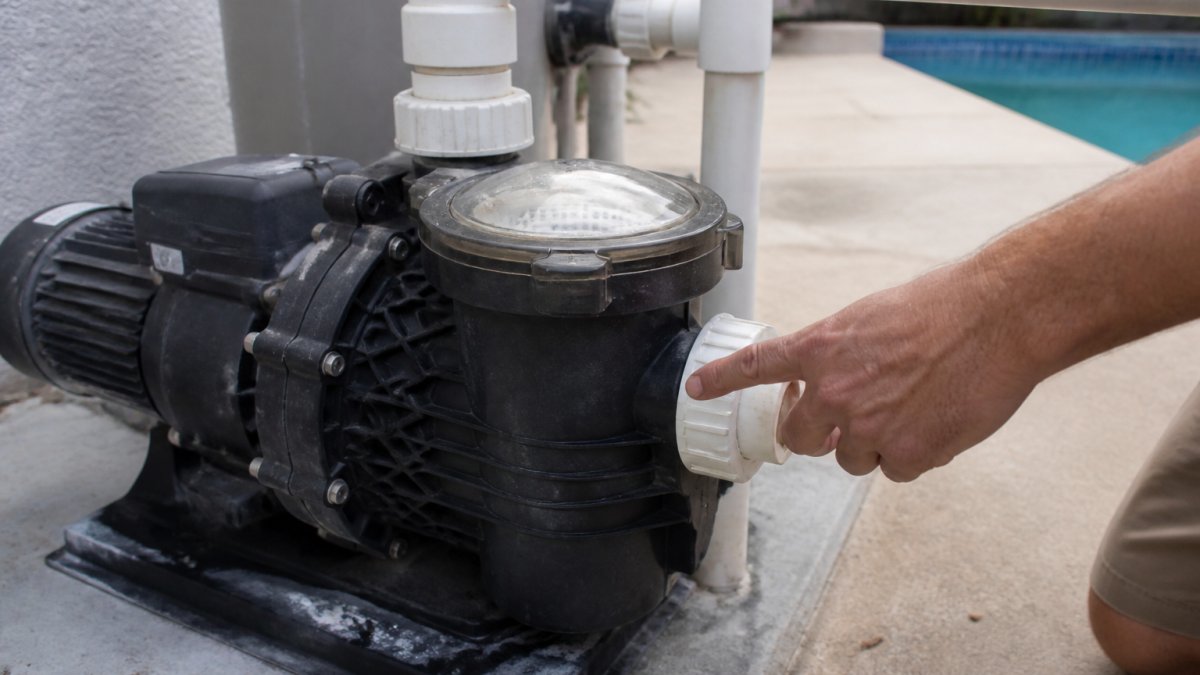
Here is how to narrow it down:
- Noise from the back of the motor: bearings. The motor needs service or replacement.
- Noise plus water under the pump: shaft seal. Water is getting into the bearing housing.
- Noise plus low flow: debris in the impeller. Shut off power before opening anything.
Ignoring a screech for a few weeks can let the repair cost grow as the motor wears.
For a deeper walkthrough of each noise type and the fix, see our guide on how to fix a noisy pool pump.
Troubleshooting Pool Pump Not Priming
Troubleshooting a pool pump not priming starts with one question: is the pump pulling air, or is it losing water?
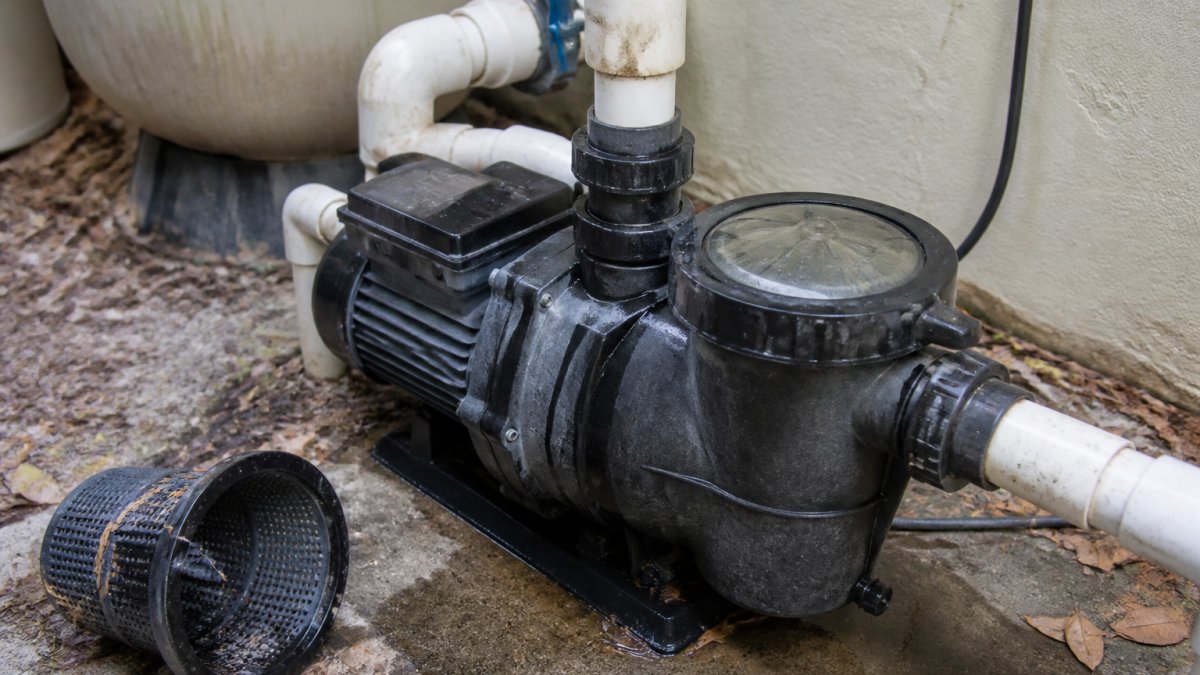
Priming means the pump pulls water from the pool and fills the strainer basket. If the basket stays half empty, air is entering somewhere on the suction side. Work through these steps:
- Check the water level. If the pool is below the skimmer mouth, the pump sucks air. Raise the water to mid-skimmer.
- Inspect the strainer basket lid. A worn O-ring or a loose lid lets air in. Clean and lubricate the gasket.
- Look for cracks in the pump housing, union fittings, and suction lines.
- Check the skimmer and suction line for a blockage from leaves or debris.
- Open the air relief valve on the filter and let trapped air escape.
If the pump primes, then loses prime within minutes, the air leak is likely underground or in a valve. That is a job for a pressure test, not a guess.
Overheating, Burning Smells, and Tripped Breakers
A pump motor that runs hot, smells like burning, or trips the breaker has an electrical problem. Stop running it and cut power at the breaker.
Overheating usually traces to one of three causes:
- Blocked airflow: a clogged fan or debris packed around the motor housing.
- Low water flow: a pump running dry or starved of water cannot cool itself.
- Electrical fault: a failing capacitor, a shorted winding, or a loose connection.
A breaker that trips on every start points to a short or a motor drawing too much amperage. A breaker that trips after the pump has run a while points to overheating or a weakening motor.
Watch out: never reset a tripping breaker repeatedly to "see if it holds." A pump with a shorted winding can damage the breaker panel and create a shock hazard.
Pool Pump Motor Replacement Cost: Repair or Replace?
The repair-or-replace question is really an age-and-amperage question. The decision generally depends on how old the motor is and what it is drawing.
Start with the motor nameplate. It lists the rated voltage, the rated amperage (often marked "A" or "FLA" for full-load amps), and the service factor. A clamp meter reading taken at the breaker while the pump runs tells you the actual draw.
Use this framework to sort the case:
| Situation | Better choice | Why |
|---|---|---|
| Bad capacitor, seal, or O-ring only | Repair | Low-cost part; motor and winding are sound |
| Worn bearings, motor otherwise fine | Repair | Bearing service is far cheaper than a new motor |
| Shorted winding or seized shaft | Replace motor | Repair cost approaches a new motor |
| Pump 10+ years old with two or more failures in 24 months | Replace whole pump | Repeated repairs compound; new pump resets the clock |
| Single-speed pump with high electric bills | Upgrade to variable speed | Lower run cost over the pump's life |
Age matters more than most homeowners expect. A pump that has already had a seal and a capacitor replaced within two years is telling you the motor is on its way out.
Variable-speed pumps change the math. A VSP motor and drive can cost meaningfully more than a single-speed motor, so a drive failure on a 4-year-old VSP is usually worth repairing, while a drive failure on a 12-year-old VSP is usually not.
Ask three questions before you commit: How old is the pump? How many repairs has it had in the last two years? What is the actual amperage draw versus the nameplate rating? You can also browse pumps, parts and supplies with local guidance.
If a replacement is on the table, you can if you want to spread the cost.
Safety First: DIY Testing Limits and When to Call a Pro
Most pump-failure guides treat safety as a disclaimer. It is not. A pool pump combines 240-volt power, stored energy in the capacitor, and water in the same enclosure, and the failure modes that bring homeowners to this article are exactly the ones that make testing dangerous.
The single most important fact: a pump motor's run capacitor can hold a lethal charge for minutes after the breaker is off.
Safe to do yourself (power off at the breaker, verified with a non-contact voltage tester):
- Visual inspection of the pump, seals, unions, and fittings
- Cleaning the strainer basket and skimmer
- Checking water level and the filter pressure gauge
- Lubricating O-rings and gaskets
- Reading the digital display and error code on a variable-speed pump
Stop and call a licensed technician:
- Any test involving a multimeter on live wiring
- Discharging or replacing a capacitor
- Opening the motor housing or pump volute
- Diagnosing a tripped breaker or a short
- Pressure testing underground suction lines
A multimeter check for continuity or voltage looks simple in a video. It is not simple when the pump is wet, the pad is damp, and the circuit is live.
Watch out: never reset a tripping breaker repeatedly to "see if it holds." A pump with a shorted winding can damage the breaker panel and create a shock hazard, and each reset puts full fault current through wiring that is already stressed.
Modern variable-speed pumps add a diagnostic layer worth knowing about. The drive's digital display shows fault codes, common families include over-current, over-voltage, under-voltage, over-temperature, and prime or flow faults.
When the next step involves opening an electrical enclosure, it helps to know who you are calling. You can book pool pump and equipment repair for your Central Florida community.
Schedule a Pool Pump Inspection with Clear Water Pools
Most pump failures we see could have been caught weeks earlier. A grinding bearing, a slow seal leak, or a pressure gauge creeping up all show up on a routine inspection long before the motor quits.
That is the argument for scheduled service. Weekly service includes digital reports with photos and water readings.
We are fully licensed and insured.
Ready to get ahead of a failing pump? Request a quote and we will build a plan for your pool.
Frequently Asked Questions
What does a burning smell from a pool pump mean?
A burning smell usually points to an overheating motor, often caused by a failing capacitor, worn bearings, or a blocked impeller that forces the motor to work harder than it should. Shut the pump off at the breaker immediately and let it cool. Do not restart it until the cause is found, because continued operation can damage the winding and turn a small repair into a full motor replacement.
How do I know if my pool pump capacitor is bad?
A bad capacitor often shows up as a pump that hums but will not start, or one that starts slowly and trips the circuit breaker. The motor may feel hot to the touch while making no water movement. A failed capacitor is one of the cheaper fixes on a pump, so it is worth checking before assuming the whole motor is gone.
What does it cost to replace a pool pump motor?
Cost depends on the motor's horsepower, whether it is a single-speed or variable speed model, and labor rates in your area. Pricing depends on pump type, setup, and the work required, so request a quote from Clear Water Pools for current pricing.
Should my pool pump run 24/7?
Most residential pools do not need round-the-clock circulation. A common approach is running the pump long enough to turn over the full volume of pool water at least once per day, which often works out to six to eight hours in summer and less in cooler months. Running it constantly wastes electricity and adds wear to the motor. Variable speed pumps let you run longer at lower speeds for better filtration and lower energy use, which is easier on the equipment.
A failing pump rarely fixes itself, and the cost of waiting is usually a bigger repair. Clear Water Pools offers weekly cleaning, equipment repair, digital service reports with photos and water readings, and responsive communication for homeowners and property managers. Get started with Clear Water Pools and keep your pool ready for family, residents, and guests all season.