 How-to
9 Common Pool Heater Problems and How to Fix Them
Last Updated: November 17, 2026
Quick Summary
Most pool heater problems start with water flow, not the heater itself: a clogged filter or full pump basket trips the pressure switch and shuts off the burner. Check the pump basket, filter pressure gauge, and bypass valve first, then move to power, thermostat, and ignition checks. Gas, refrigerant, and heat exchanger repairs belong to a licensed technician.
- A pressure switch only lets the heater fire when water moves fast enough through the heat exchanger.
- Never reset a breaker repeatedly; a breaker that trips twice means something is wrong.
- A yellow, lazy flame instead of a blue, crisp flame is a combustion warning sign.
- Start the pump first, then the heater, and never fire a heater with no water flow.
- Write down any error code before cycling power, or you lose the diagnostic clue.
Table of Contents
- Pool Heater Running but Not Heating: Low Water Flow and Pressure Switch Checks
- Pool Heater Not Turning On: Power Supply, Breaker, and Safety Switch Checks
- Pool Heater Not Heating to Set Temperature: Thermostat and Sensor Calibration
- Gas Supply, Pilot Light, and Ignition Failure Troubleshooting
- Heat Pump vs. Gas Heater: Specific Issues and Seasonal Startup
- Using Your Pool Heater Troubleshooting Manual and Decoding Error Codes
- When to Call a Professional for Pool Heater Repair
- Request a Heater Inspection from Clear Water Pools
- Frequently Asked Questions
Pool Heater Running but Not Heating: Low Water Flow and Pressure Switch Checks
A pool heater that runs but won't heat usually has a water flow problem, not a heating problem. A heater that fires, runs its fan, and still leaves the water cold is one of the most common pool heater complaints.
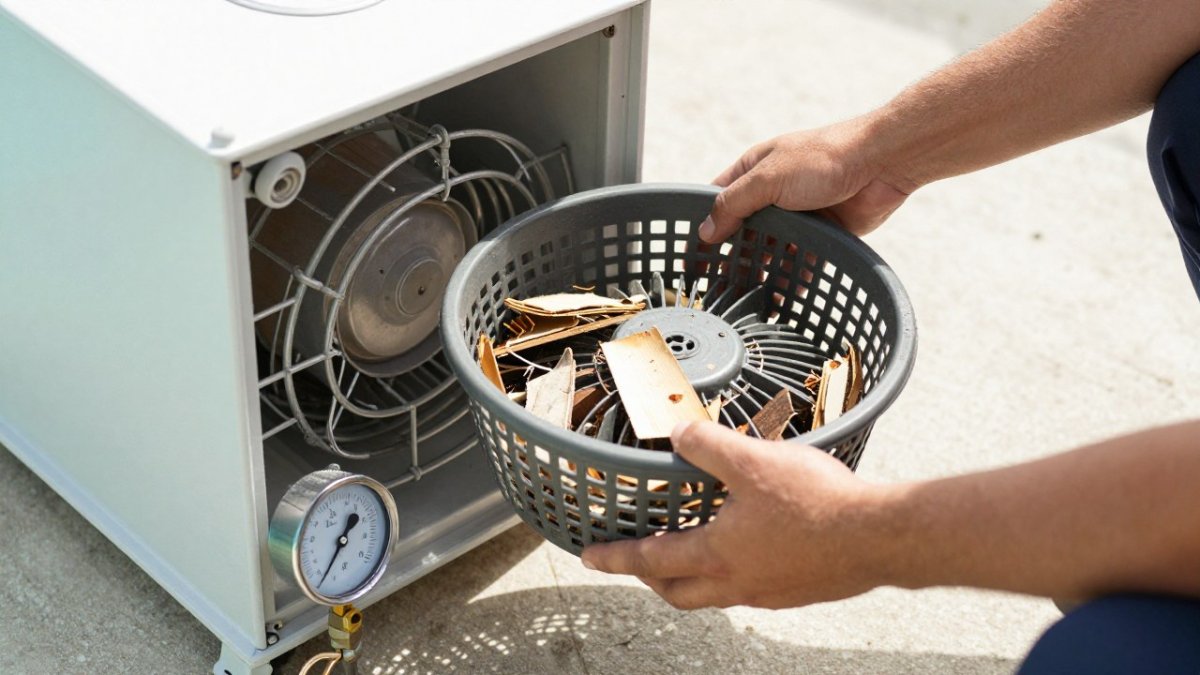
Your heater has a pressure switch that only lets it fire when water moves fast enough through the heat exchanger. Slow flow trips that switch and the burner shuts off to protect itself.
Clean the Filter and Clear the Pump Basket
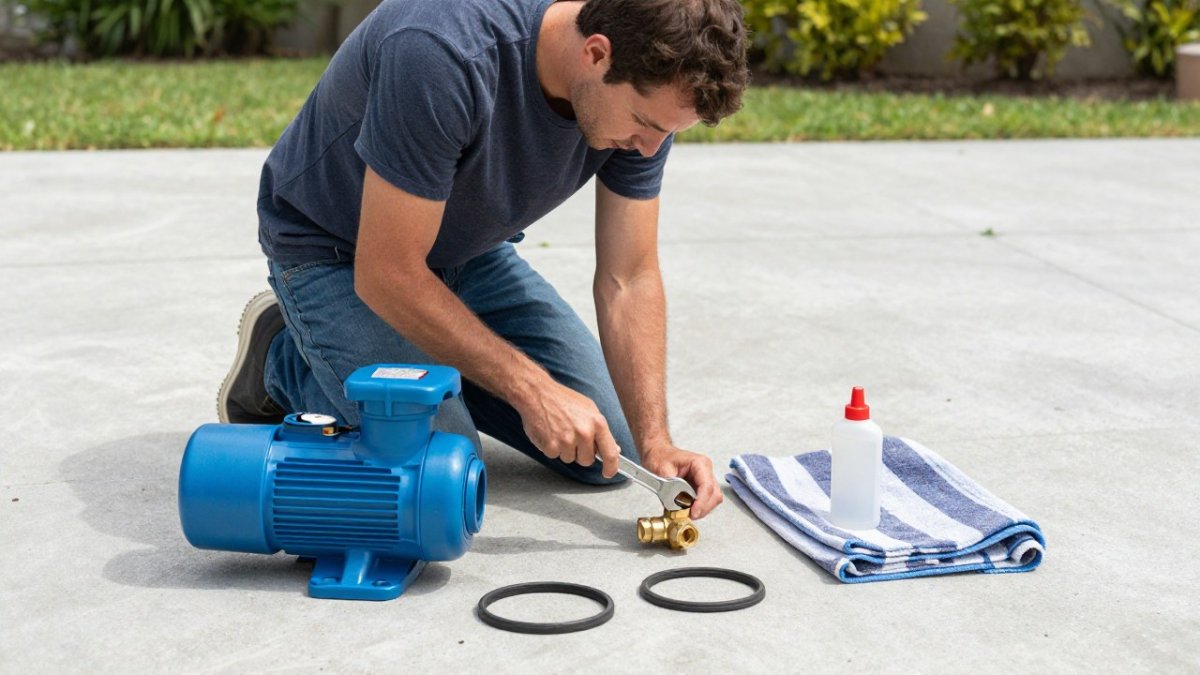
Start with the simplest cause. A clogged filter or a full pump basket chokes flow and trips the pressure switch.
Do this first:
- Turn off the pump at the breaker
- Pull the pump basket and clear debris
- Backwash or hose down the filter cartridge
If filter pressure sits well above the clean reading, the filter is still restricting flow. Clean it again before you blame the heater.
Test the Pressure Switch and Plumbing Valves
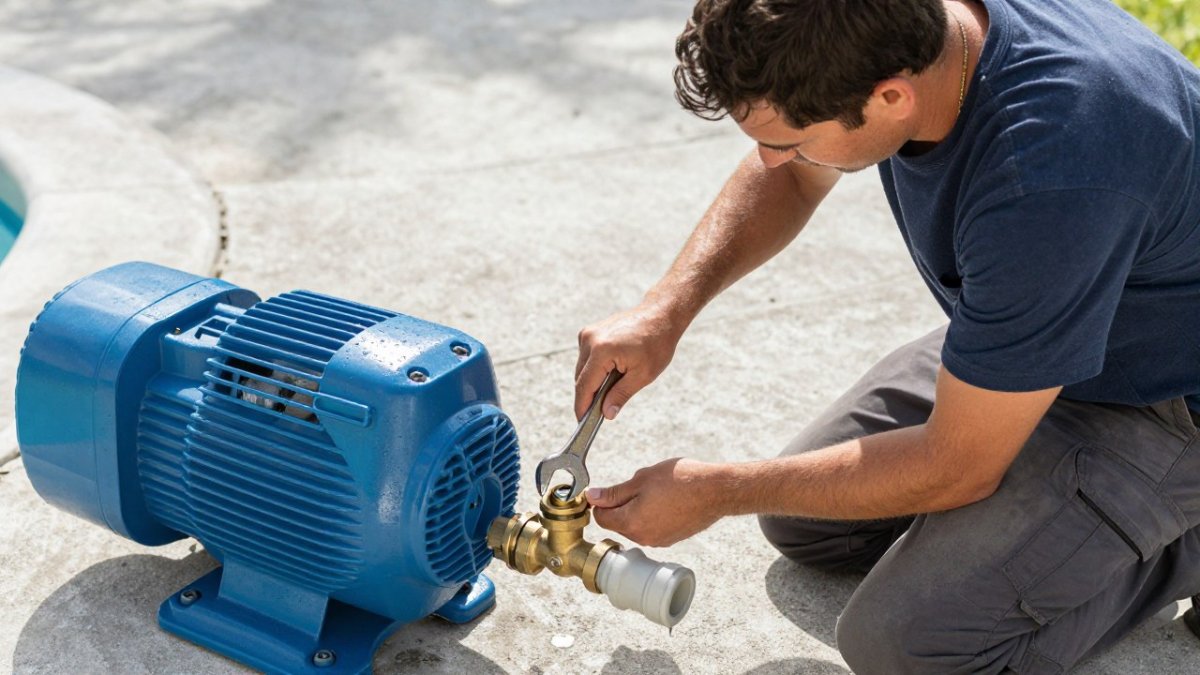
If flow looks fine and the heater still won't fire, check the switch and valves. A stuck bypass valve or half-closed plumbing valve will starve the heater.
- Confirm the bypass valve sends water through the heater, not around it
- Open every valve on the heater loop fully
- Check the pressure switch tubing for clogs or cracks
Low flow often traces back to the pump itself. If the pump sounds rough or struggles to prime, 7 signs of pool pump failure will help you rule that out, and our noisy pump diagnostic guide covers what each sound means.
When a heater runs but won't heat, the cause usually comes down to flow, so check these items in order.
| Check | What to look for | Fix |
|---|---|---|
| Pump basket | Full of debris | Turn off pump, pull basket, clear debris |
| Filter | Pressure well above clean baseline | Backwash or hose down cartridge |
| Bypass valve | Sends water around heater | Confirm it sends water through heater |
| Plumbing valves | Half-closed on heater loop | Open every valve fully |
| Pressure switch tubing | Clogs or cracks | Check tubing, test switch with multimeter |
Pool Heater Not Turning On: Power Supply, Breaker, and Safety Switch Checks
A heater that won't turn on at all is almost always a power or safety issue.
Work through it in order:
- Check the circuit breaker at the main panel for a tripped switch
- Confirm the heater's own power switch is on
- Test voltage at the heater with a multimeter
A safety switch can also stop the heater cold, shutting it down when water flow, temperature, or pressure falls outside safe limits.
Never reset a breaker repeatedly to "see if it holds." A breaker that trips twice means something is wrong with the wiring or the unit.
Pool Heater Not Heating to Set Temperature: Thermostat and Sensor Calibration
A heater that runs but stops short of your set temperature usually has a thermostat or sensor problem. The unit thinks it has hit the target when it hasn't.
Check these:
- Confirm the thermostat setting is actually higher than the current water temperature
- Look for a sensor that reads the wrong temperature
- Check the sensor wiring for loose or corroded connections
If the display reads warmer than the water actually is, the sensor is likely off. Sensor calibration is a common fix, but it's also where DIY repairs go wrong. A sensor replaced incorrectly can cause short-cycling, which wears out the heat exchanger fast.
Gas Supply, Pilot Light, and Ignition Failure Troubleshooting
A gas heater that won't light has a fuel or ignition problem. The pilot light, gas valve, and ignition system are the usual suspects.
Start here:
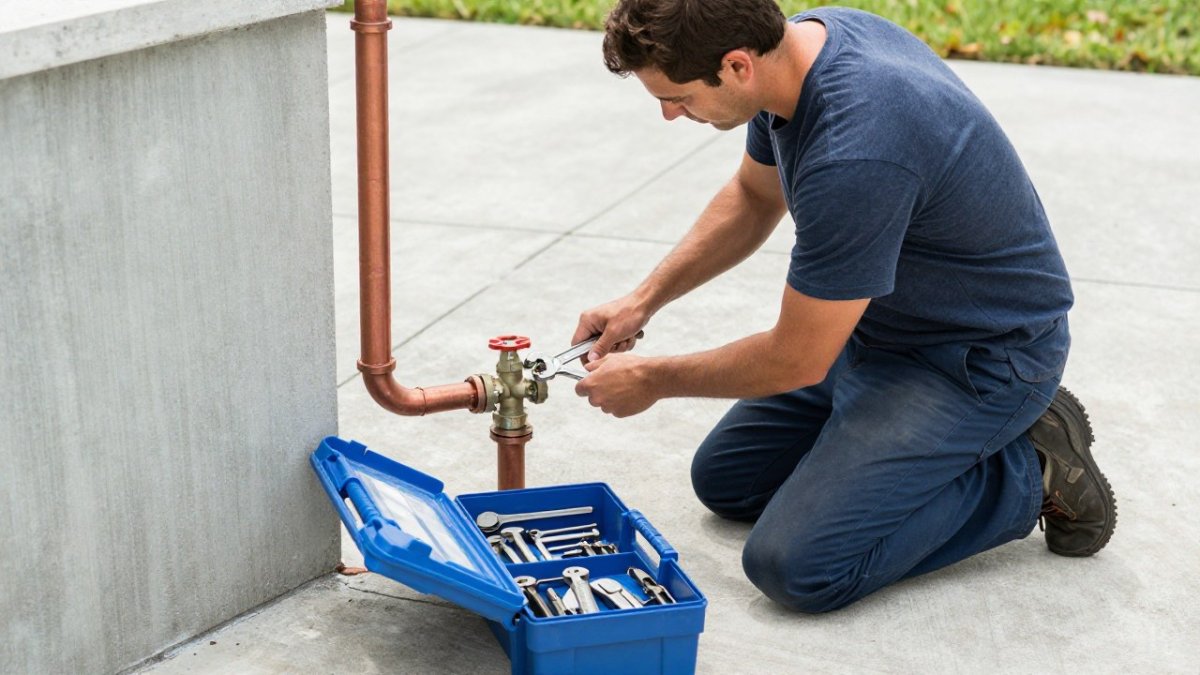
- Confirm the gas valve at the supply line is fully open
- Check the pilot light if your unit has a standing pilot
- Look for a dirty or misaligned igniter on electronic ignition models
If the pilot won't stay lit, the thermocouple may be failing. If the igniter clicks but nothing lights, the gas valve or supply is the issue. Gas work is not a DIY job, and anything beyond opening the supply valve should be handled by a licensed technician.
Heat Pump vs. Gas Heater: Specific Issues and Seasonal Startup
Heat pumps and gas heaters fail in different ways, so the fix depends on what you own. A heat pump moves heat from the air into the water, while a gas heater creates heat by combustion, so the same symptom, such as "runs but won't heat," points to completely different causes. Because a heater that runs without warming the pool may be responding to low water levels rather than a heating fault, checking for pool water loss causes can help narrow down the problem.
Heat Pump Failure Mechanisms
A heat pump's output depends on outdoor air temperature. As air temperature drops, the unit has less heat to move and efficiency falls. Most residential heat pumps still produce heat in cool air, but output drops sharply and the unit may run continuously without reaching the set point.
Common heat pump faults and what causes them:
- Iced-over coils: Low airflow from a dirty evaporator coil, a failed fan motor, or a blocked intake. Ice on the coil insulates it and stops heat transfer.
- Fan not running: A failed capacitor, fan motor, or control board. Without airflow, the compressor can overheat and trip on high pressure.
- Low refrigerant: A slow leak reduces heating capacity and can freeze the coil. Refrigerant handling generally requires a licensed technician (the EPA).
Gas Heater Failure Mechanisms
A gas heater's output depends on clean combustion and a proven flame. Most gas heater faults trace to one of three systems: fuel supply, ignition, or safety lockout.
Common gas heater faults and what causes them:
- Pilot or ignition failure: A dirty igniter, a failed thermocouple or flame sensor, or a gas valve that is not opening. If the igniter clicks but no flame appears, the gas supply or valve is the suspect.
- Combustion problems: A dirty burner or blocked flue causes sooting, weak flame, and reduced heat output. A yellow, lazy flame instead of a blue, crisp flame is a warning sign.
- Heat exchanger leaks: Corrosion or thermal stress cracks the exchanger, allowing water and combustion gases to mix. This is a safety issue and requires replacement, not repair.
Seasonal Startup Procedure
A proper startup catches small issues before they become expensive repairs. Work through this sequence at the start of the season:
- Clear the equipment pad. Remove leaves, debris, and any covers from the heater and pump.
- Inspect the heater cabinet. Look for rodent nests, insect nests, or corrosion on the burner tray and wiring.
- Check the water flow path. Clean the pump basket and filter, open all valves on the heater loop, and confirm the bypass valve sends water through the heater.
- Confirm the gas supply (gas units). Open the supply valve fully and check for the smell of gas before firing. If you smell gas, stop and call a licensed technician.
- Inspect the coils and fan (heat pumps). Clear debris from the evaporator coil, confirm the fan spins freely, and check that the unit has clear airflow on all sides.
- Start the pump first, then the heater. Never fire a heater with no water flow. Run the pump for a few minutes and confirm flow before turning on the heater.
- Watch the first heat cycle. Stay with the unit through the first ignition or compressor start. Note any error code, unusual sound, or smell.
Seasonal Shutdown and Winterization
Shutdown matters as much as startup, especially in climates with freezing temperatures. A heater left full of water through a freeze can crack the heat exchanger or the pump housing.
- Gas heater: Shut off the gas supply, run the pump to cool the exchanger, then drain the heater according to the manual. Some models require removing drain plugs and blowing out the water passages.
- Heat pump: Shut off power at the breaker, clean the coils, and cover the unit to keep debris out. Do not cover a unit that is still running.
- Both types: Record the clean filter pressure and the date so next season's startup has a baseline.
A common pattern is a heater that worked fine at the end of last season but fails on the first cold morning of the new one. That failure is usually a freeze crack, a rodent-chewed wire, or a corroded connection that sat all winter, not a sudden part failure.
Using Your Pool Heater Troubleshooting Manual and Decoding Error Codes
Your heater's troubleshooting manual is the fastest path to a fix, and most owners never open it. Every model has its own error code list, and those codes point straight at the problem. This section gives you a decoder framework you can apply to any brand.
How to Read the Display
Most residential heaters use a two- or three-character alphanumeric code on a small LCD or LED display. The code flashes or holds steady, and the pattern matters:
- A steady code usually means the heater has locked out and will not retry until power is cycled or the fault clears
- A flashing code usually means the heater is in a retry loop and may fire again if the condition resolves
- A code that appears only at startup and then clears is often a sensor self-test, not a fault
Write the code down before you reset anything. Once you cycle power, the code may clear and you lose the diagnostic clue.
A Practical Decoder Framework
Brands number their codes differently, but the underlying faults fall into four families. Match the code family first, then confirm in your manual.
Flow and pressure faults (often E01, E02, FLO, or PS):
- The pressure switch did not close because water is not moving fast enough
- Check the pump basket, filter pressure gauge, and bypass valve before anything else
- A flow code that returns after cleaning usually means a failing pressure switch or a clogged heat exchanger
Sensor and temperature faults (often E03, E04, SEN, or HLS):
- The water temperature sensor, air sensor, or high-limit switch is reading out of range
- Compare the displayed temperature to a separate pool thermometer
- A high-limit code means the unit overheated and shut down for safety; do not clear it repeatedly without finding the cause
Ignition and flame faults (often E05, E06, IGN, or AFS):
- The ignition sequence ran but no flame was proven, or the flame sensor lost signal
- Check the gas supply valve, listen for the igniter click, and inspect the flame sensor for soot
- Repeated ignition codes after a gas valve check belong to a licensed technician
Communication and control faults (often E07, E08, COM, or PCB):
- The control board lost communication with a keypad, display, or remote
- Check low-voltage wiring connections and any remote control wiring before replacing a board
Build Your Own Code Card
Because codes vary by manufacturer, the highest-value move is to build a one-page code card for your specific model:
- Photocopy or screenshot the error code table from your manual
- Tape it inside the heater access panel or store it in a zip bag near the equipment pad
- Add the date you last cleaned the filter and the clean filter pressure reading
When a code appears, you can match it in seconds instead of searching online while the heater sits locked out. If the manual points to a part you need to replace, pool supplies and replacement parts can get you the right component.
When to Call a Professional for Pool Heater Repair
Some fixes are safe to try yourself. Others are not. The line is simple: anything involving gas, refrigerant, or the heat exchanger belongs to a licensed technician.
Call a pro when you see:
- A gas smell or any gas leak
- Repeated breaker trips after one reset
- A cracked or leaking heat exchanger
A common mistake is chasing a repair that turns into a bigger bill. To avoid paying for unnecessary work, how to avoid unnecessary pool equipment repair costs walks through what to check before you call. When you're ready, our team can assess and restore your heater and equipment so you're not guessing at the fix.
Request a Heater Inspection from Clear Water Pools
Pool heater problems rarely fix themselves, and a small flow or sensor issue can turn into a dead heat exchanger if you ignore it.
Clear Water Pools provides weekly pool cleaning and equipment repair for homeowners and property managers across Central Florida. Our team is fully licensed and insured, and our digital service reports include photos and water readings.
To learn more or request a quote, contact Clear Water Pools through our website.
Frequently Asked Questions
Why is my pool heater running but not heating?
The most common cause is low water flow. A clogged filter, debris in the pump basket, or a mispositioned plumbing valve restricts flow, and the pressure switch shuts off the burner to protect the heat exchanger. Compare the filter pressure to its clean starting reading, clear the pump basket, and confirm the bypass valve is open. If flow is fine, the pressure switch itself may be faulty and needs testing.
What should I check first when my pool heater will not turn on?
Start at the power source. Confirm the circuit breaker has not tripped, then check the heater's control board fuse and any ground fault protection. Next, verify the thermostat is set above the current water temperature and the safety switch has not tripped from low flow or high temperature. If the display is blank after those checks, the issue is likely wiring or the control board, which calls for a licensed technician.
Can low water flow prevent a pool heater from working?
Yes. Every pool heater relies on a pressure switch that senses water moving through the heat exchanger. When a clogged filter, blocked intake, or closed valve drops the flow rate, the switch cuts the burner or compressor to prevent overheating and cracking. Clean the filter, empty the pump basket, and open all plumbing valves before assuming the heater itself has failed.
How do I troubleshoot a Hayward pool heater that is not heating?
Use the same sequence as any brand: confirm water flow and a clean filter, check the pressure switch, verify power at the breaker and fuse, then read the error code on the display against the pool heater troubleshooting manual. Consult your model's troubleshooting manual for its specific error codes. If the code points to a failed sensor, igniter, or gas valve, stop there and call a professional rather than opening the combustion chamber.