 How-to
How to Avoid Unnecessary Pool Equipment Repair Costs
Last Updated: November 10, 2026
Quick Summary
Avoiding unnecessary pool equipment repair costs starts with a written preventive maintenance schedule of weekly, monthly, and seasonal tasks that keep water moving and wear slow. Catching warning signs early, like pump noise or rising filter pressure, lets you fix small problems before they become costly failures. Always get a written estimate with parts and labor split out before approving any work.
- Weekly tasks include skimming debris, emptying pump baskets, checking filter pressure, and testing water chemistry.
- Grinding or squealing from a pump often means a failing bearing or a dry pump running without water.
- Backwash sand filters when pressure rises and change the sand every few years.
- Replace a pump over 8 years old with motor or impeller failure rather than repairing it.
- Ask whether the diagnostic fee is credited toward the repair if you approve the work.
Table of Contents
- Start With a Preventive Pool Equipment Maintenance Schedule
- Pool Pump Troubleshooting: Catch Small Problems Before They Cost You
- Common Pool Filter Problems and How to Fix Them Early
- Pool Pump Repair or Replacement: Making the Call
- Repair Cost Benchmarks, Diagnostic Fees, and What a Fair Estimate Looks Like
- Where DIY Pool Care Ends and Professional Pool Service Begins
- Protect Your Warranty, Records, and Equipment Lifespan
- Request a Quote From Clear Water Pools
- Frequently Asked Questions
Start With a Preventive Pool Equipment Maintenance Schedule
The cheapest pool equipment repair is the one you never need. A pump that ran fine for years can quit in the middle of summer, leaving the owner facing a rushed replacement instead of a small fix.
A preventive maintenance schedule is a written plan of small tasks done on a set rhythm. It keeps water moving, filters clean, and wear slow. Here is how we break it down by equipment type.
Weekly, Monthly, and Seasonal Tasks by Equipment Type
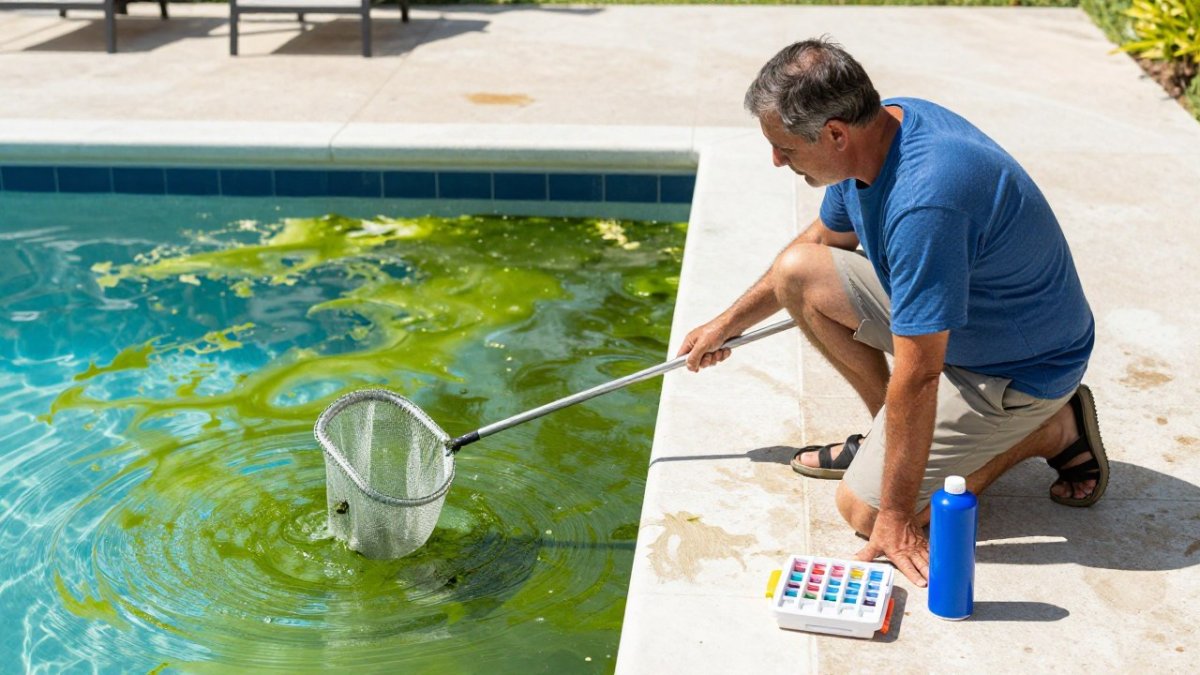
- Every week: Skim debris, empty pump baskets, check the filter pressure gauge, and test water chemistry.
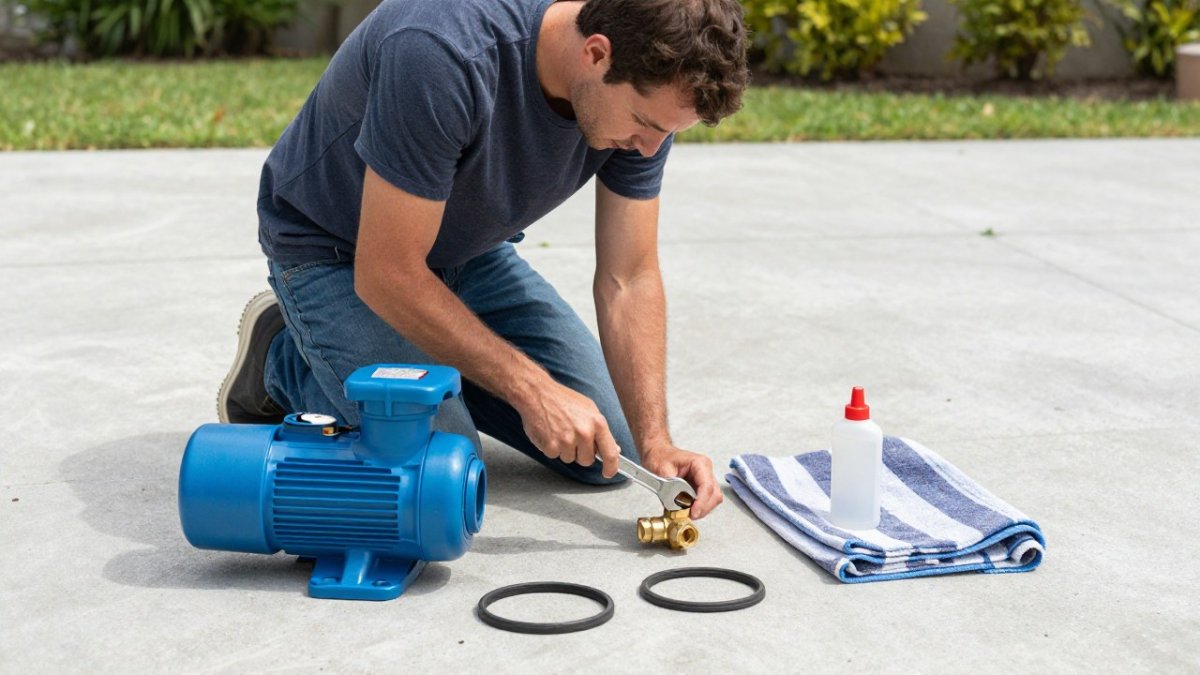
- Every month: Rinse cartridge filters, inspect O-rings, and check for leaks at unions and valves.
- Each season: Deep-clean the filter, inspect the heater, and look over the pump for vibration or noise.
Small tasks done often beat one big repair. A clogged basket strains the pump motor; a dirty filter cuts circulation. Both are cheap to prevent and costly to ignore. If you would rather hand the list to someone, our weekly pool cleaning plan keeps equipment protected on a set schedule.
Pool Pump Troubleshooting: Catch Small Problems Before They Cost You
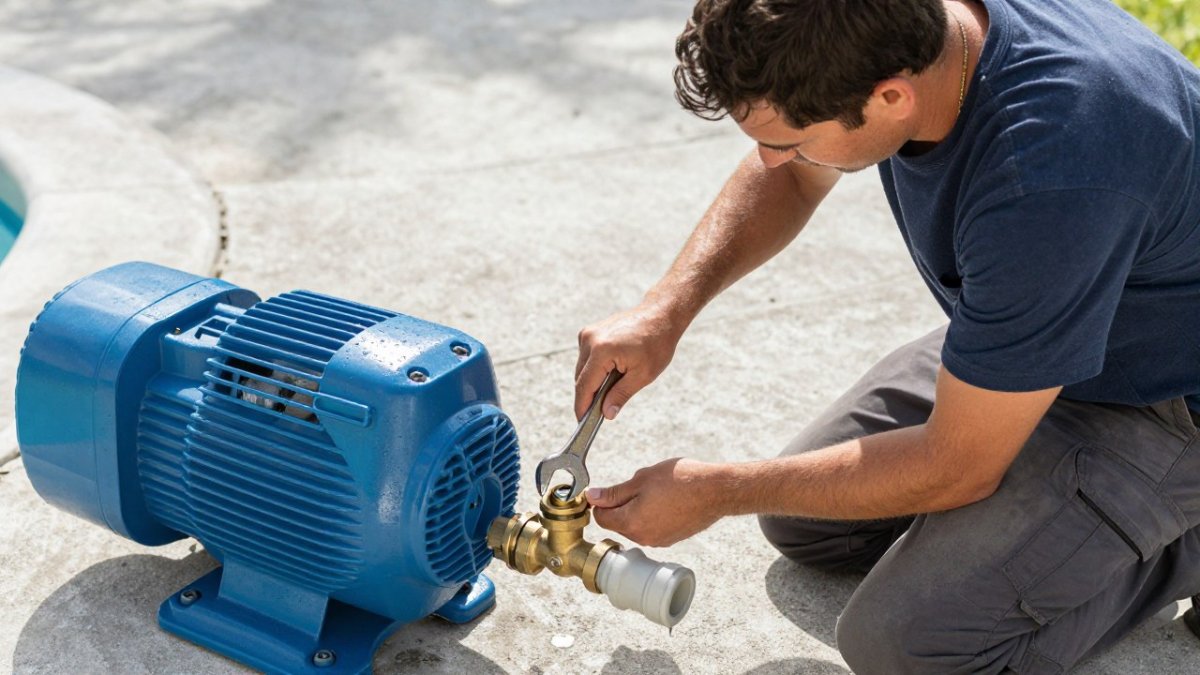
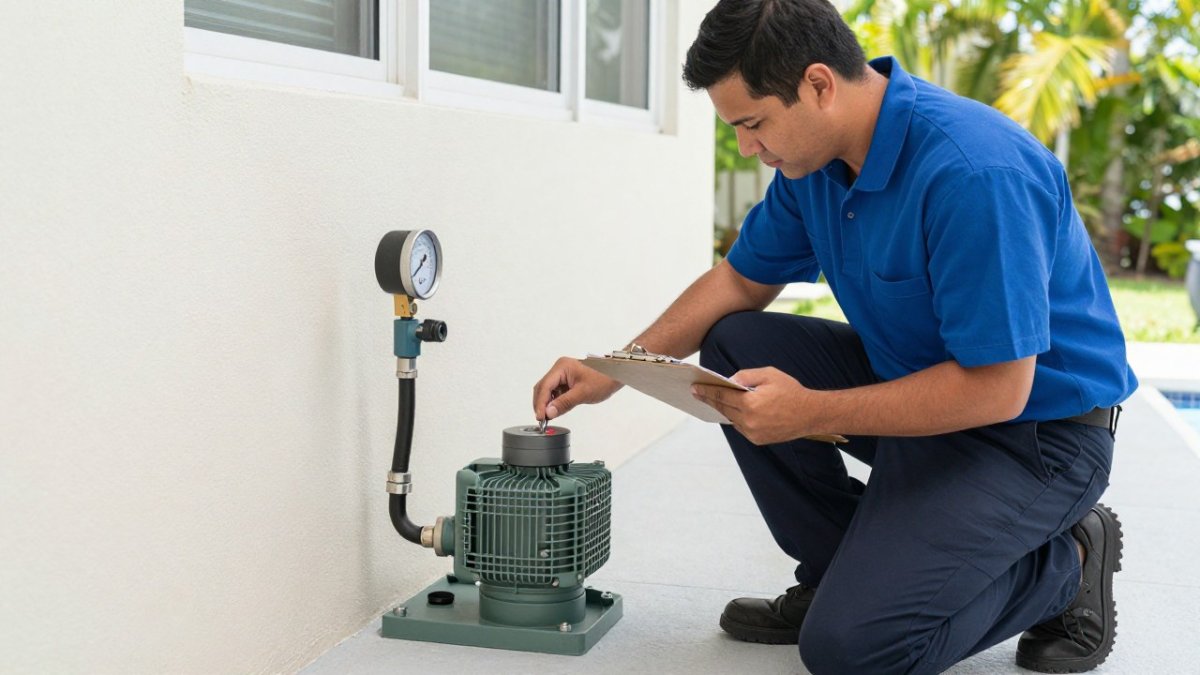
Most pool pump failures announce themselves first. A whine, a rattle, or a weak return jet is the pump telling you something is wrong. Catching those signals early is the core of pool pump troubleshooting.
Noise, Pressure, and Flow Warning Signs
- Grinding or squealing: Often a failing bearing or a dry pump running without water.
- Rattling: Usually debris in the impeller or a loose part.
- Low pressure on the gauge: A clogged basket, a suction leak, or a failing pump.
A useful rule of thumb for any homeowner: if the pump sounds different than it did last week, stop and check it. Addressing a worn part early generally costs less than waiting until a motor fails. For a full walkthrough of each sound, see our guide on how to fix a noisy pool pump.
Common Pool Filter Problems and How to Fix Them Early
Pool filter problems rarely start as emergencies. They build slowly, and the pressure gauge is your first warning. When the gauge climbs well above its clean starting point, the filter is loading up with debris and flow is dropping.
The fix depends on your filter type:
- Cartridge filters: Pull the cartridge and rinse it with a hose. Soak it in cleaner when it stays dirty after rinsing.
- Sand filters: Backwash when pressure rises, and change the sand every few years.
- DE filters: Backwash, then recharge with diatomaceous earth. Inspect the grids for tears.
A filter that runs too long between cleanings forces the pump to work harder, raising energy bills and shortening equipment life. Clean on schedule, not on panic.
Pool Pump Repair or Replacement: Making the Call
The repair-versus-replace decision is where pool owners most often overspend in both directions: sinking money into a dying pump, or replacing a unit that had years left. A disciplined framework beats a gut call. Work through these five factors in order before you approve any major pump work.
1. Age Against Expected Service Life
Pull the manufacture date off the pump label rather than guessing, and weigh that age against the cost of the repair.
2. Repair Quote as a Share of Replacement Cost
Get the repair quote in writing with parts and labor split out, then compare it against a replacement quote for the same horsepower and configuration.
3. Energy Efficiency and Run Cost
An old single-speed pump running six to eight hours a day is the largest electricity line item on most pool pads. Match the replacement to your filter and plumbing rather than upsizing.
4. Warranty Coverage and Remaining Life
Check whether the pump is still under a manufacturer warranty before you authorize any repair. Some pumps carry a warranty on the motor and housing, and coverage typically depends on the equipment being installed and maintained to the manufacturer's terms. Keep your installation receipt and service records, because a claim without proof of proper maintenance is often denied.
5. Downstream Risk
A pump that has already damaged a seal or run dry may have internal damage, and a cheap repair may not hold. Ask the technician whether the failure was isolated or a symptom of a deeper problem. If it is a symptom, replacement is usually the lower total cost.
A Simple Decision Table
| Situation | Recommended Call | Why |
|---|---|---|
| Pump under 5 years old, one failed part | Repair | Low cost, most of service life remains |
| Pump 5 to 8 years old, minor seal or O-ring fix | Repair | Cheap and keeps a healthy unit running |
| Pump over 8 years old, motor or impeller failure | Replace | Repair cost approaches a new unit and life is nearly spent |
| Repair quote near half of installed replacement cost | Replace | You are paying new-unit money for old equipment |
| Old single-speed pump still working | Plan an upgrade to variable-speed | Lower energy bills and less wear over time |
| Pump ran dry, overheated, or seized | Replace | Internal damage is usually not worth rebuilding |
A variable-speed pump is one upgrade option when replacement is the call. If you are unsure how far gone your pump is, our list of signs of pool pump failure helps you judge before you spend.
Watch out: a repair quote that does not name the failed part or split parts from labor is not a quote you can compare. Ask for the written diagnosis before you decide.
Repair Cost Benchmarks, Diagnostic Fees, and What a Fair Estimate Looks Like
Repair costs are built from a few common components, and understanding them helps you judge a quote. Prices vary by market, equipment model, and pad access, so treat any range as a planning tool, not a promise.
How a Pool Repair Bill Is Built
Every repair estimate has four components, and a fair quote shows all four:
- Diagnostic or service-call fee: A flat charge to come out, inspect the equipment, and identify the failure. This is separate from the repair itself.
- Parts: The replacement component, often marked up from the supplier price.
- Labor: Charged by the hour or by a flat job rate, and it rises for after-hours, weekend, or emergency calls.
Ask for the diagnostic fee upfront, and ask whether it is credited toward the repair if you approve the work. Many providers apply the fee to the job; some do not. Either answer is fine as long as it is stated before anyone touches the equipment.
What Drives the Number Up or Down
A common pattern is that the same nominal repair varies widely based on a few factors:
- Equipment type and age: A standard single-speed pump is cheaper to repair than a variable-speed unit with an integrated drive.
- Part availability: Common seals, O-rings, baskets, and capacitors are inexpensive and quick to swap. Proprietary control boards and motors cost more and may need to be ordered.
- Access: A pad with clear space and shutoff valves is faster to work on than a cramped, overgrown equipment area.
Diagnostic Fees and What They Should Cover
A diagnostic visit should produce a written finding: the failed component, the reason it failed, and a recommended fix with parts and labor separated. If a provider cannot tell you what is wrong in writing, the fee bought you very little. Ask these questions before you book:
- What does the diagnostic fee cover, and does it apply to the repair if I approve it?
- Is the estimate written, with parts and labor split out?
- Are there after-hours or emergency surcharges, and what triggers them?
- Is the replacement part under a manufacturer warranty, and for how long?
Judging a Fair Estimate
A fair estimate is specific, not the cheapest one on the page. If a large repair is coming, you can explore financing for pool repairs and plan the budget instead of scrambling.
Watch out: a verbal estimate with no part name or labor split is not a benchmark you can compare against another quote. Insist on the written version before you approve anything.
Where DIY Pool Care Ends and Professional Pool Service Begins
Some pool care is safe to do yourself. Skimming, emptying baskets, and testing water are all fair game. Other work is not, and knowing the line protects both your safety and your wallet.
Watch out: opening a pump to fix an internal part while the power is on is a real shock risk.
A professional pool service earns its cost by catching problems early. Our team provides pump, filter, and heater repair assessments with documented findings, so you know exactly what is wrong before you approve any work.
Protect Your Warranty, Records, and Equipment Lifespan
Paperwork saves money. Keep a simple log of every service visit, part replaced, and water reading. When a warranty claim comes up, that record proves the equipment was maintained, and manufacturers often require proof of proper care before honoring a claim.
Your log should include:
- Date of each service or DIY task
- Parts replaced and who did the work
- Water chemistry readings over time
- Photos of the equipment pad at each visit
Good records also help you spot patterns. If the same part fails twice, you have evidence to ask for a warranty fix instead of paying again. Clear Water Pools provides digital service reports with photos and water readings.
Request a Quote From Clear Water Pools
The real cost of pool ownership is not one repair. It is the pile of small problems you never caught.
Clear Water Pools provides recurring weekly cleaning, equipment repair, and digital service reports with photos and water readings.
Request a quote from Clear Water Pools to keep your pool ready for family, residents, or guests.
Frequently Asked Questions
What pool equipment problems can I troubleshoot myself?
You can safely check a few basics: a clogged pump basket, a dirty filter, a skimmer blocked by debris, a tripped breaker, and low water level at the skimmer. Clean the baskets, backwash or clean the filter, and confirm the pump is getting water. Anything involving electrical components, sealed pump motors, heater gas lines, or opening a filter housing under pressure should go to a licensed professional. Knowing where to stop is the cheapest skill in pool equipment repair.
What are the signs that a pool pump needs repair?
Watch for loud grinding or squealing, a pump that runs hot, weak return flow, air bubbles in the pump basket, frequent breaker trips, or a pressure gauge that won't hold steady. Any one of these points to a developing issue. Catching it during pool pump troubleshooting, before the motor fails completely, usually means a smaller repair bill instead of a full replacement.
How can regular pool equipment maintenance prevent costly repairs?
Routine pool equipment maintenance keeps small faults from becoming failures. Cleaning baskets and filters protects the motor from strain, checking water chemistry prevents scale and corrosion, and inspecting seals and fittings catches leaks early. A documented schedule also protects your manufacturer warranty, since most brands require proof of proper care. Clear Water Pools provides digital service reports with photos and water readings.
When should I choose pool pump repair or replacement?
Repair often makes sense when the fix is a small part such as a seal, capacitor, impeller, or basket. Replacement is worth considering when repairs become costly relative to a new unit, the motor has already been rebuilt, or you're paying for repeated service calls. Ask for a written estimate that lists both options.