 blog
Best Pool Repair Services in 2026: How to Choose
Last Updated: November 24, 2026
Quick Summary
The best pool repair services in 2026 are chosen on diagnostic depth, parts access, and documentation rather than a low monthly cleaning rate. Confirm licensing, insurance, and a written workmanship warranty before hiring, and get a written estimate with parts and labor separated after an on-site assessment.
- Repair capability matters more than a low monthly cleaning rate when choosing a provider.
- Ask whether the diagnostic fee is credited toward the repair if you approve it.
- A pump that hums but doesn't spin may only need a bad capacitor replaced.
- Reviews naming a specific repair and outcome are more trustworthy than star averages alone.
- Confirm a workmanship warranty and proof of insurance in writing before hiring.
Table of Contents
- What Separates the Best Pool Repair Services in 2026
- Pool Repair Cost: What Drives the Bill Up or Down
- Pool Leak Detection and Repair: Why Guessing Costs More
- Pool Pump Repair: Fix, Replace, or Wait?
- How to Read Pool Repair Company Reviews Without Getting Fooled
- Warranty, Insurance, and Workmanship Protections to Confirm
- Request a Repair Quote from Clear Water Pools
- Frequently Asked Questions
What Separates the Best Pool Repair Services in 2026
A pool that sits idle for a week in the Florida heat tells you fast whether your service provider is actually paying attention. Finding the best pool repair services in 2026 starts with one shift in thinking: repair capability matters more than a low monthly cleaning rate. Homeowners and property managers who choose on price alone can end up paying twice, once for the cheap service and again for the repair it missed.
So what actually separates a good repair provider from a mediocre one? Three things: diagnostic depth, parts access, and documentation. A company that only cleans pools will spot a failing pump eventually. See the full pool pump, filter, heater, salt system, automation and plumbing repair offering for Davenport, Kissimmee, Reunion, ChampionsGate and nearby Central Florida communities.
Repair-Focused Criteria That Actually Matter
Star averages and years in business are a starting point, but they are incomplete. For repairs specifically, weigh these instead:
- Diagnostic capability: Can they test a pump, heater, and filter on site, or do they guess and replace?
- Parts sourcing: Access to common pump motors, seals, and filter cartridges shortens downtime.
- Licensing and insurance: Confirm both before anyone touches your equipment.
- Documentation: Photos and readings from every visit, not just a text saying "all good."
- Response time: How fast can they get to an urgent leak or dead pump?
A provider that checks all five is worth more than one with a slightly lower monthly rate. That's the trade-off most guides skip.
Pool Repair Cost: What Drives the Bill Up or Down
Pool repair cost rarely comes down to one number. It's a stack of labor, parts, and diagnostic time, and each moves independently. Pricing depends on the equipment involved, the parts required, and how quickly the problem is caught, so we quote after an assessment rather than guessing over the phone.
Here's how the pieces fit together:
| Cost Driver | What Pushes It Up | What Keeps It Down |
|---|---|---|
| Labor | Emergency or after-hours calls | Scheduled weekday visits |
| Parts | Specialty motors, heaters | Common seals, cartridges |
| Diagnostics | Multiple failed components | One clear fault found fast |
| Delay | Water damage, algae bloom | Early detection |
Typical 2026 Price Ranges by Repair Type
Pricing depends on the equipment involved, the parts required, and how quickly the problem is caught. For current pricing on your specific repair, request a quote from Clear Water Pools.
A written estimate should state what happens if additional faults are uncovered during a repair.
Labor, Parts, and Diagnostic Fees Explained
Labor reflects time on site and technician skill. Emergency and after-hours calls can carry a premium. Parts vary widely by equipment brand and age, and older or discontinued equipment can push parts cost up because the component may need to be sourced or adapted. Diagnostic fees cover the testing that tells you what's actually wrong. Ask whether the fee is credited toward the repair. Skipping diagnostics to save a little upfront usually costs more later. For a closer look at keeping repair bills lean, read our guide on how to avoid unnecessary pool equipment repair costs.
Watch out: an estimate given over the phone without equipment model, age, and symptom details is a guess, not a quote.
What Changes an Estimate
Several factors move a repair estimate before any work begins. Equipment age and brand matter: a pump still under a manufacturer's parts warranty may cost only labor to fix. Access matters: a equipment pad crowded into a tight corner or a buried line under decking adds time. Water chemistry matters: a repair performed on a pool with aggressive water may reveal additional damage once the equipment is opened. And timing matters: a leak or dead pump discovered on a Friday afternoon will usually cost more than the same repair scheduled for a Tuesday. Ask for the estimate in writing with parts and labor separated, and confirm whether the diagnostic fee is credited if you approve the repair.
Pool Leak Detection and Repair: Why Guessing Costs More
A slow leak can drain a pool, damage surrounding decking, and destabilize water chemistry long before it's obvious.
Adding water for weeks instead of finding the leak masks the problem while the damage spreads. If you suspect a leak, get it tested before the next hot stretch.
Pool Pump Repair: Fix, Replace, or Wait?
Pool pump repair decisions come down to age, efficiency, and repair history. A noisy pump or one that loses prime usually signals a failing motor or seal, and those are often fixable. A pump that's already been repaired twice and runs hot is a candidate for replacement.
Match the Symptom to the Likely Fix
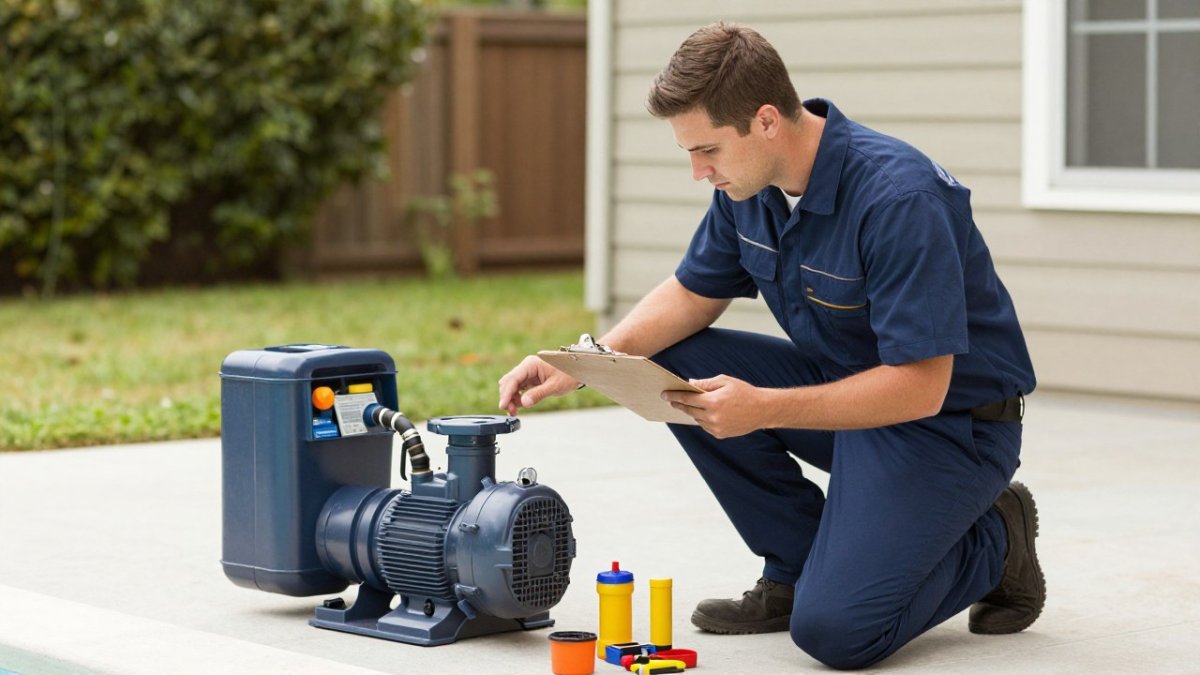
Most pump problems announce themselves before the pump fails completely. A high-pitched whine often points to a failing motor bearing, which is a motor or bearing replacement rather than a whole-pump job. A pump that loses prime after sitting, or pulls air at the strainer, usually has a suction-side leak, a bad lid gasket, or a failing seal. Water dripping from the bottom of the motor housing typically means the shaft seal has failed, and catching it early keeps water out of the motor windings. A pump that hums but doesn't spin may have a bad capacitor, which is one of the least expensive fixes on the list. A pump that trips the breaker or runs hot may have a winding or voltage problem that needs an electrician's involvement.
Fix or Replace: A Practical Threshold
A reasonable rule of thumb: if a repair costs a large share of a new pump's price and the unit is near the end of its typical lifespan, replacement often makes more sense. If it's a seal, capacitor, or impeller on a younger pump, fix it.
Watch out: replacing a pump without checking the filter, valves, and suction line can leave the real cause in place, and the new pump will fail the same way.
Efficiency and Code Considerations
Before approving a replacement, confirm the new pump's horsepower and flow match the pool's plumbing and filter, and ask whether the installer will set the pump's schedule and verify the system holds prime. Recognizing the signs early saves money. Our guides on the signs of pool pump failure and diagnosing a noisy pool pump walk through the symptoms in detail.
How to Read Pool Repair Company Reviews Without Getting Fooled
Pool repair company reviews reward a skeptical read. Star averages alone tell you little. Look for reviews that mention diagnostics, response time, and how a company handled a problem, not just "pool looks great."
Watch for these signals:
- Reviews that name a specific repair and outcome
- Consistent mentions of communication and showing up on time
- Responses from the company to negative reviews
- Patterns across many reviews, not one glowing outlier
A provider with a few honest four-star reviews that explain a delay is often more trustworthy than a wall of identical five-star praise.
Warranty, Insurance, and Workmanship Protections to Confirm
Before you hire anyone, confirm three protections in writing: a workmanship warranty, proof of insurance, and clear terms on parts warranties. A workmanship warranty covers the labor if a repair fails. Insurance protects you if something is damaged on site. Parts warranties come from manufacturers and vary by component.
Ask directly: "What's your workmanship warranty, and are you insured?" A reputable provider answers without hesitation and puts it in the quote. If a company dodges the question, that's your answer. These protections are the difference between a repair that's backed and one that's a handshake.
Request a Repair Quote from Clear Water Pools
At Clear Water Pools, we handle weekly pool cleaning and equipment repair for homeowners, property managers, and commercial facilities across Central Florida. Our service includes digital service reports with photos and water readings, and our team is fully licensed and insured.
Stop guessing whether your pool is actually being cared for. Clear Water Pools brings consistent weekly service, documented visits with photos and water readings, and proactive equipment monitoring to every property we manage. Get started with Clear Water Pools and keep your pool ready for family, residents, and guests all year. Let's talk about your pool and request a repair quote today.
Frequently Asked Questions
How much does pool repair cost?
Pool repair cost depends on the part and the labor involved, so there is no single figure. Small fixes like a valve or seal sit at the low end, while heater, pump, or leak repairs climb higher because of parts and diagnostic time. Ask for an itemized estimate that separates parts, labor, and any diagnostic fee before work starts. Clear Water Pools provides a quote for your specific repair, and you can request a quote to review the details.
How do I choose a reliable pool repair service?
Start with licensing and insurance, then ask how the company documents each visit. A reliable provider documents each visit, explains what it found, and gives you a written estimate before starting repairs. Read pool repair company reviews for patterns, not one-off complaints: repeated notes about missed appointments or surprise charges matter more than a single bad rating. Confirm the service area covers your address and ask about warranty terms on parts and workmanship.
Is it better to repair or replace a pool pump?
Repair usually wins when the motor, seal, or capacitor fails and the housing is sound. Replacement makes more sense when the pump is old, has needed repeated fixes, or costs more to run than a newer model. Ask the technician for the repair price against a replacement quote and how long each option is expected to last. Pool pump repair is often the cheaper call, but a pump on its third repair in two years is a signal to replace.
Does homeowners insurance cover swimming pool repairs?
Most homeowners policies cover sudden damage, such as a storm knocking out equipment, but not wear and tear, leaks from age, or routine maintenance. Read your policy's exclusions and call your insurer before authorizing a large repair if you think a covered event caused the damage. Keep the repair company's written findings and photos, since insurers often ask for documentation.