 blog
Weekly Pool Maintenance for Vacation Rentals
Last Updated: October 23, 2026
Quick Summary
Weekly pool maintenance for vacation rentals keeps water clear between guest turnovers by skimming, brushing, vacuuming, and testing chemistry on every visit. Test free chlorine at 1 to 3 ppm and pH at 7.4 to 7.6, and schedule service right after checkout so the pool is guest-ready before the next check-in.
- Skim the surface first, then brush walls and steps, then vacuum the floor, and empty baskets last.
- Move to twice-weekly service when occupancy exceeds roughly four swimmers per day for several days.
- Chlorine tablets add cyanuric acid over time, so test it monthly and dilute with fresh water if it climbs past 50 ppm.
- Close the pool when water temperature stays below about 60°F or bookings drop off for the season.
- A maintenance contract should state visit frequency, access arrangements, photo reports, and emergency response time.
Table of Contents
- Why Weekly Pool Maintenance for Vacation Rentals Is Non-Negotiable
- The Vacation Rental Pool Maintenance Checklist for Every Visit
- Water Chemistry Targets and the Testing Schedule That Keeps Water Clear
- A Pool Maintenance Checklist for Property Managers Running Multiple Doors
- The Vacation Rental Pool Safety Checklist Hosts Are Legally Expected to Follow
- Building a Pool Maintenance Schedule for Rental Properties Around Bookings
- What Weekly Pool Maintenance Costs and How to Vet a Provider
- Frequently Asked Questions
Why Weekly Pool Maintenance for Vacation Rentals Is Non-Negotiable
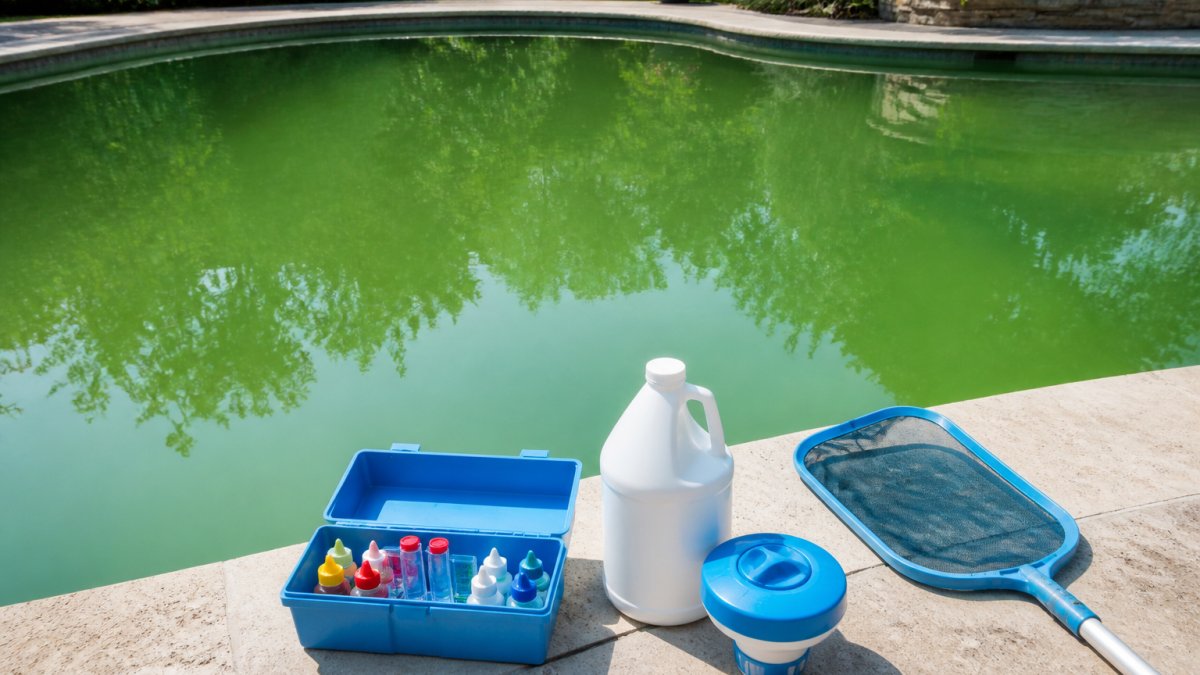
A pool that sits untouched for two weeks in summer heat turns green fast, and a guest who arrives to cloudy water does not stay quiet about it. Weekly pool maintenance for vacation rentals is the difference between a five-star review and a refund request. Clear Water Pools handles recurring service for rental homes and multi-door portfolios.
The math is simple. A rental pool serves more swimmers in one weekend than a family pool serves in a month. More bodies mean more sunscreen, sweat, and debris in the water, which eats through sanitizer faster than any homeowner expects. A pool maintenance schedule built for a quiet household falls apart under guest turnover.
What Goes Wrong Between Guest Turnovers
Most pool problems start small and compound quietly.
- Debris clogs the skimmer, so the pump starves and flow drops.
- Chlorine burns off under heavy swimmer load, leaving water unprotected.
- Filters load up with sunscreen and hair, cutting filtration.
Each issue is minor alone. Together, they turn clear water cloudy in days. A guest checks in Friday, sees a hazy pool, and calls the host. That call is the moment weekly service pays for itself.
The Vacation Rental Pool Maintenance Checklist for Every Visit
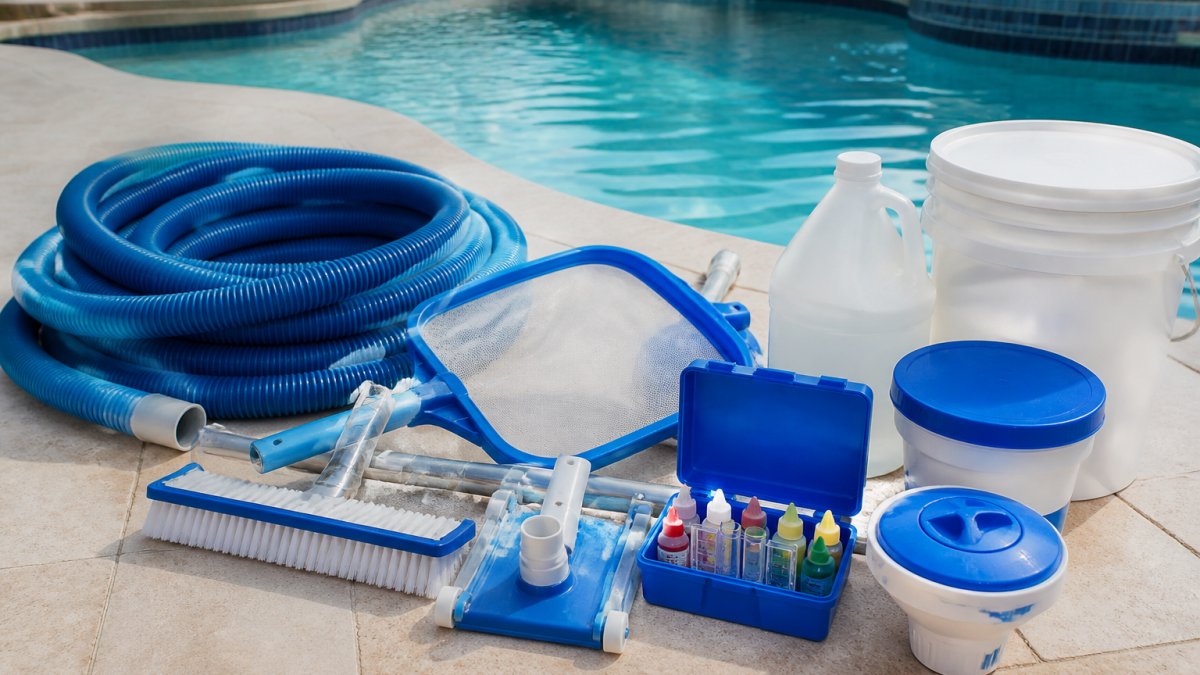
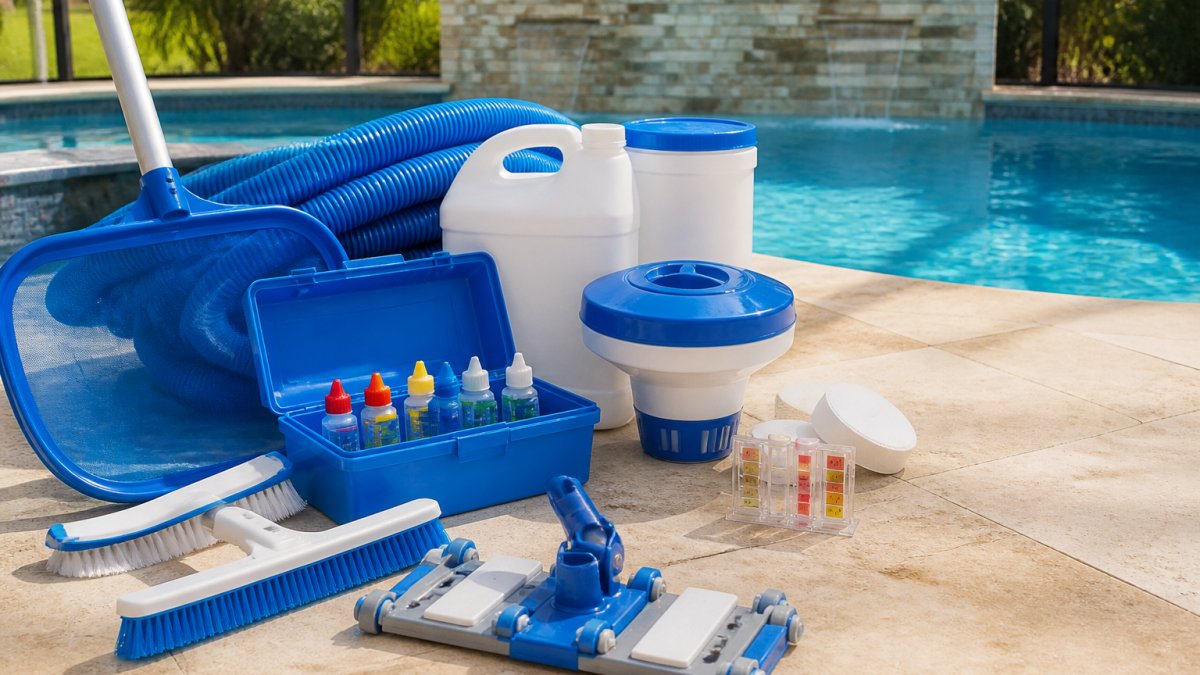
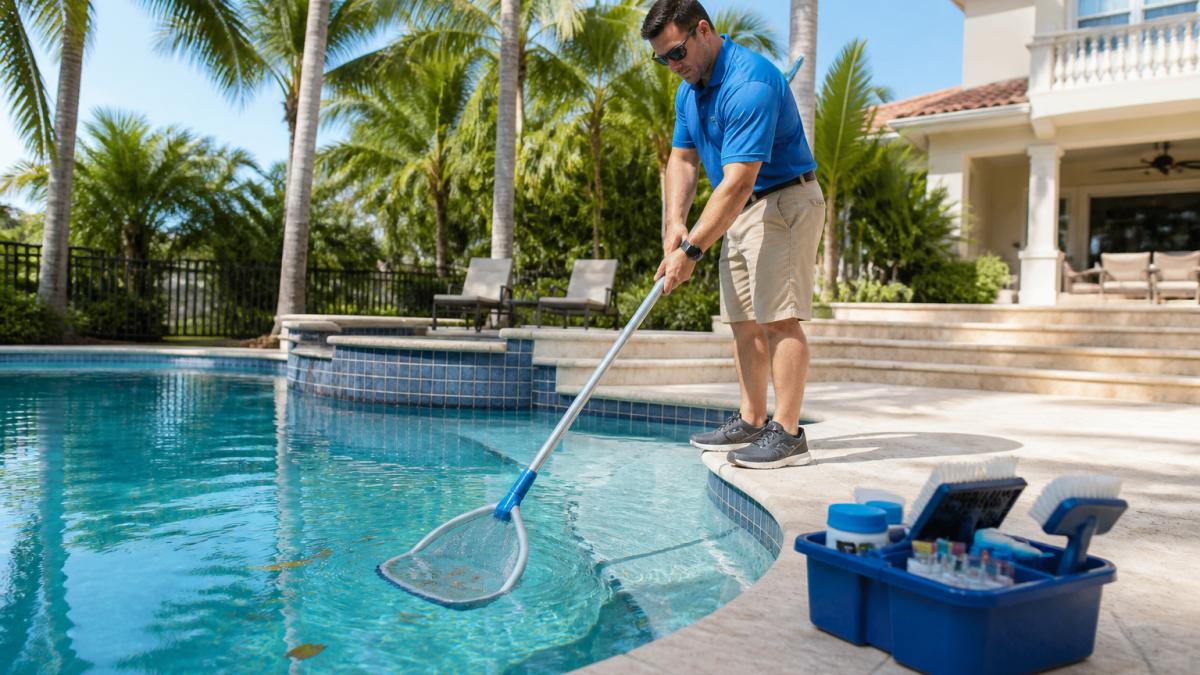
Every service visit should follow the same order, because doing tasks out of sequence wastes time and leaves dirt behind. Here is a vacation rental pool maintenance checklist.
Skimming, Brushing, and Vacuuming in Order
Start at the surface, then work down.
- Skim leaves and surface debris with a hand net before anything else.
- Brush walls, steps, and the waterline tile to loosen algae film.
- Vacuum the floor so brushed debris gets pulled out, not stirred up.
- Empty the baskets after vacuuming, not before.
Skimming first means less debris sinks. Brushing before vacuuming means the vacuum catches what the brush loosens. Skip the order and you clean the same water twice.
Baskets, Filters, and Pump Checks
Mechanical checks take minutes and prevent most emergency calls.
- Clear the skimmer and pump baskets of leaves and hair.
- Check the filter pressure gauge against the clean baseline.
- Confirm the pump is moving water, not air.
A rising pressure gauge means a dirty filter. A pump pulling air means low water or a clogged line. Catch either early and you avoid a repair bill.
Water Chemistry Targets and the Testing Schedule That Keeps Water Clear
Test the water on every visit, and test it again after heavy guest use. Confirm current ranges against CDC healthy swimming guidance before setting your targets.
A rental pool needs more testing than a home pool because swimmer load swings hard. A quiet Tuesday and a full-house Saturday are different pools.
| Timing | Test | Target Action |
|---|---|---|
| Day before check-in | Full panel: free chlorine, combined chlorine, pH, total alkalinity, cyanuric acid, calcium hardness | Balance to targets; shock if combined chlorine is above 0.5 ppm |
| Check-in day | Quick free chlorine and pH | Confirm sanitizer residual before guests arrive |
| Midweek (high occupancy) | Free chlorine and pH | Adjust feeder or add liquid chlorine if free chlorine drops below 1 ppm |
| Day after checkout | Full panel plus visual | Skim, clear baskets, shock if bather load was heavy |
| Low-occupancy week | Full panel once | Hold targets; reduce feeder output if cyanuric acid climbs |
Chlorine tablets in a feeder keep a baseline, but tablets add cyanuric acid over time.
When Weekly Service Is Not Enough
Weekly service assumes a normal guest load. Several conditions push a rental pool past what one weekly visit can hold:
- Occupancy above roughly four swimmers per day for several consecutive days.
- Air temperatures sustained above 90°F, which burns off chlorine faster.
- Heavy tree or pollen load that fills skimmers between visits.
When two or more of those apply, move to twice-weekly service for that stretch. The cost of an extra visit is almost always less than the cost of a green-pool recovery, which can take multiple days and a partial drain.
When to Close the Pool
A rental pool does not have to stay open year-round. Close it when water temperature stays below about 60°F, when bookings drop off for the season, or when the cost of maintaining clear water exceeds the rental revenue the pool supports. Before closing, balance the water, shock, lower the water level below the skimmer, and follow the manufacturer's guidance for the pump and filter.
Log every reading in a shared spreadsheet or service app. A week-by-week chlorine and pH trend tells you more about a pool's health than any single test, and it gives you evidence if a guest claims the water was cloudy on arrival.
A Pool Maintenance Checklist for Property Managers Running Multiple Doors
Managing several rentals means the pool cannot depend on memory. A pool maintenance checklist for property managers should be standardized across every door.
| Task | Frequency | Who Owns It |
|---|---|---|
| Skim, brush, vacuum | Every visit | Service tech |
| Test and balance chemicals | Every visit | Service tech |
| Clear baskets, check filter pressure | Every visit | Service tech |
| Confirm water level | Every visit | Service tech |
| Photo report to manager | Every visit | Service tech |
| Filter deep clean | Monthly or per gauge | Service tech |
| Equipment inspection | Monthly | Service tech |
Standard checklists also make vendor oversight possible.
The Vacation Rental Pool Safety Checklist Hosts Are Legally Expected to Follow
Safety is where hosts carry real exposure. A vacation rental pool safety checklist should cover barriers, signage, and equipment, and hosts should confirm local requirements with their own jurisdiction, since pool codes vary by state and county. Start with CPSC pool safety information for barrier and drain guidance.
- Self-closing, self-latching gate on any pool barrier.
- Working drain covers that meet anti-entrapment standards (Pool and Spa Drain Cover).
- Visible depth markings and no-diving signage where required.
Document every safety check. If a guest is injured, a written record of maintained barriers and equipment matters.
Building a Pool Maintenance Schedule for Rental Properties Around Bookings
The right pool maintenance schedule for rental properties follows the booking calendar, not a fixed weekday. Service should land between checkout and the next check-in whenever possible, so the pool is guest-ready when the door opens.
For a busy rental, that often means multiple visits per week in peak season and a lighter bi-weekly cleaning in the off months. A professional service can flex to the calendar; a neighbor check-in usually cannot.
- Schedule the main visit right after checkout.
- Add a midweek check during high-occupancy weeks.
- Plan a deeper cleanout before peak season.
What Weekly Pool Maintenance Costs and How to Vet a Provider
Pricing depends on pool size, guest load, travel, and whether chemicals are included, so ask for a written quote rather than a phone estimate. Request a quote for current pricing.
What Drives the Price
A weekly service quote is built from a handful of inputs. Knowing them lets you compare bids on equal terms instead of chasing the lowest headline number.
- Pool size and shape. A 15,000-gallon rectangular pool takes less time than a 30,000-gallon freeform pool with a spa and water features.
- Chemicals included or billed separately. Some providers bundle chlorine, acid, and shock into the weekly fee; others bill chemicals at cost plus a markup. Ask which model the quote uses.
- Repairs and parts. Pumps, filters, heaters, and valves are typically billed separately from routine service.
A transparent quote lists the base weekly fee, what chemicals are included, the per-visit rate for extra calls, and the hourly or flat rate for repairs.
What a Maintenance Contract Should Include
A host-focused service agreement should spell out the following, because each item is a point of friction when a guest complaint lands.
- Visit frequency and window. Which days, and what happens on holidays.
- Access arrangements. Gate codes, lockboxes, and how the tech coordinates with cleaners and guests.
- Visit log and photo proof. A digital report with water readings, tasks completed, and photos of the pool and equipment after each visit.
Questions to Ask Before You Sign
- Are you licensed and insured, and can you provide a certificate of insurance?
- Do you send a written or digital report with photos and water readings after each visit?
- Are chemicals included in the service minimum, or billed separately?
A cheap provider who skips reports and misses visits costs more in guest complaints than a reliable one costs in fees. Look for documented visits, clear communication, and a real plan for repairs.
Frequently Asked Questions
How often should a vacation rental pool be cleaned?
Weekly is the baseline for most rental pools, but occupancy drives the real answer. A pool serving back-to-back bookings with heavy swimmer load often needs two visits per week to keep chlorine levels steady and water clear. During quiet stretches, one weekly pool maintenance visit plus a quick midweek skim by a house sitter usually holds. Build the schedule around your booking calendar rather than a fixed day, and add an extra visit after any large group checks out.
What should a pool maintenance checklist for a rental property include?
A solid checklist covers surface skimming, wall and step brushing, vacuuming, emptying skimmer and pump baskets, checking the pump and filter pressure, testing and balancing chlorine, pH, alkalinity, and stabilizer, and confirming the water level. Add photos and written readings to every visit so you have a record. For rentals, also check the gate latch, safety signage, and any pool cover or alarm before the next guest arrives. That documentation is what protects you if a guest raises a complaint.
How can property managers keep a pool guest-ready between bookings?
Time the weekly pool maintenance visit for the gap between checkout and the next arrival, so the pool is at its best when guests walk in. Leave a skimmer net and written skim instructions for the cleaning crew, and ask them to flag cloudy water immediately. Keep chlorine tablets stocked in a feeder so sanitizer does not drop over a busy weekend. A provider that sends digital reports with photos lets you confirm condition remotely across multiple properties instead of driving to each one.
When should a vacation rental pool be closed to guests?
Close the pool when chlorine or pH readings are outside safe ranges, when the pump or filtration system is down, when water clarity is poor enough that the main drain is not visible, or when a gate latch, fence, or safety barrier is broken. Cloudy water can hide a swimmer in distress and often signals a sanitizer problem. Treat closure as a short pause, not a failure: fix the chemistry or equipment, retest, and reopen. Documenting each closure and reopening protects you with guests and with your insurer.
Running rental pools means juggling guests, turnovers, and equipment you cannot watch in person. Clear Water Pools takes that off your plate with consistent weekly cleaning, digital service reports with photos and water readings, and proactive alerts when equipment or chemistry needs attention. We are fully licensed and insured and built for hosts and property managers with multiple doors. Request a quote and get your pools guest-ready every week.